What Do Tigers Eat? Diet, Hunting Habits & Prey List
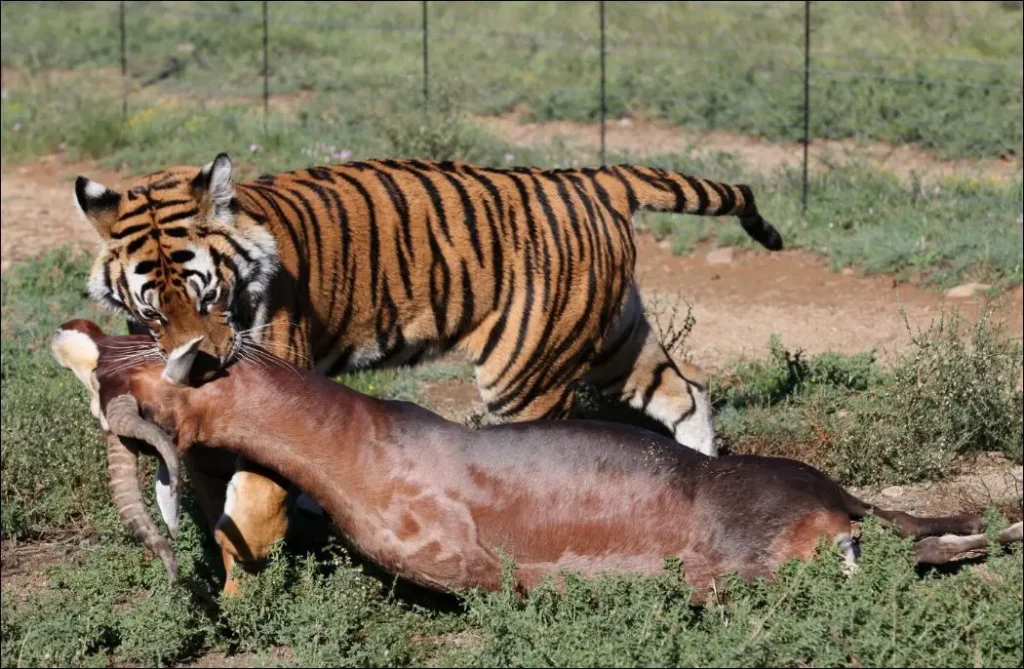
What do tigers eat: The tiger is a carnivore that mainly eats large animals such as deer, wild boar, and buffalo. Tigers are obligate carnivores with powerful jaws, sharp teeth, and a digestive system built for processing meat.
Their diet centers on medium to large ungulates, though they opportunistically take smaller prey when needed.
This comprehensive guide explores the tiger’s diet, hunting strategies, regional variations, and ecological importance while addressing common questions like “do tigers eat humans?”
Main Diet of Tigers
Tigers primarily target large-bodied prey weighing 20 kg (45 lbs) or more, as these provide the most energy. Preferred items include various deer species, wild boar, and buffalo. They also consume smaller animals to supplement their needs.
Key components of a tiger’s diet:
- Deer species: Sambar, chital (spotted deer), hog deer, barasingha, muntjac, and others form the bulk in many regions.
- Wild boar and pigs: Often a major part of the diet, especially for Siberian tigers where wild boar can exceed 50% of intake.
- Buffalo and large bovids: Water buffalo, gaur, and banteng are taken when available.
- Smaller animals: Monkeys (such as langurs), birds, fish, rodents, hares, porcupines, and even termites or reptiles in scarce times.
- Occasional larger or unusual prey: Young elephants or rhino calves, tapirs, bears, leopards, or crocodiles.
Tigers are not picky and will eat whatever is abundant and catchable, but large ungulates deliver the highest nutritional return.
What Animals Do Tigers Hunt?
Tigers hunt a wide variety of prey, with preferences shifting by habitat and availability.
Large prey examples:
- Deer (sambar, chital, elk, roe deer, sika deer)
- Wild pigs and boar
- Antelopes, nilgai, blackbuck
- Buffalo, gaur, banteng
- Moose (in northern ranges)
Smaller prey examples:
- Birds and peafowl
- Fish and amphibians
- Rodents, hares, pikas
- Monkeys, langurs
- Reptiles, including occasional crocodiles
In some areas, tigers take domestic livestock like cattle or goats when wild prey is scarce, leading to human-wildlife conflict. An adult tiger needs roughly 50–60 large prey animals per year to survive and reproduce. Females with cubs require more.

How Tigers Hunt
Tigers are classic ambush predators that rely on stealth rather than speed or endurance. They hunt alone, except for mothers teaching cubs.
Typical hunting sequence:
- Stalking: Using excellent camouflage from stripes, tigers approach silently from behind or the side. They rely more on sight and hearing than smell. Padded paws muffle footsteps, and they move low to the ground.
- Ambush: After closing to 20–30 meters (or less), they explode in a short, powerful charge. A tiger can reach speeds of 35–40 mph in bursts.
- Kill: They leap onto the prey’s back, bite the neck or throat to suffocate or sever arteries. For very large animals, they may pull backward to topple it. The attack is quick and efficient to minimize injury risk.
- Drag and cache: Tigers often drag kills (sometimes weighing hundreds of kilograms) into cover near water for safe feeding.
Success rate is low—often only 1 in 10–20 attempts succeeds—due to prey vigilance and the tiger’s energy-conserving strategy. They stalk for up to 30 minutes before committing.
When Do Tigers Hunt?
Tigers are mostly nocturnal or crepuscular, hunting at night or during early morning and late evening when prey is less alert and visibility favors their camouflage.
In some regions, they adjust to diurnal patterns if undisturbed or when targeting specific prey. Their night vision is six times better than humans’, aiding low-light ambushes. Daytime hunts occur more often in dense cover or during cooler seasons.
How Much Do Tigers Eat?
A tiger can consume up to 40 kg (88 lbs) of meat in a single meal, though 15–25 kg is more typical after a large kill. They gorge and then rest, sometimes staying with a carcass for several days, eating intermittently.
Daily average requirement is around 5–10 kg of meat, depending on size, activity, climate, and sex (males often need more). Tigers do not eat every day; after a big meal, they may go 4–8 days without another kill. In the wild, they consume about 50 deer-sized animals annually.
In captivity, tigers receive 10–15 kg of meat daily on average, often with bones for dental health and enrichment.
Do Tigers Eat Humans?
Tigers rarely eat humans. Most attacks are defensive or accidental, not predatory. Man-eating is uncommon and usually linked to specific circumstances:
- Old, injured, or sick tigers unable to hunt normal prey.
- Habitat loss and prey depletion forcing tigers near human settlements.
- Occasional opportunistic kills in high-conflict areas like the Sundarbans mangroves.
Historically, notorious man-eaters (like the Champawat tigress, blamed for over 400 deaths) existed, but modern records show far fewer incidents. In India, tiger-related human deaths average dozens per year, often not involving consumption. Tigers do not “develop a taste” for humans as a rule; most kill only once or incidentally. Healthy tigers with abundant wild prey almost never target people.
Differences in Diet by Region
Diet varies significantly with habitat:
- Dense forests: More deer, monkeys, birds, and smaller prey.
- Grasslands and open areas: Larger ungulates like buffalo or antelope.
- Mangroves (e.g., Sundarbans): Increased fish, crabs, and occasional livestock or human encounters.
- Cold northern forests: More boar, elk, and even bears or salmon.
Prey availability drives these differences; tigers adapt flexibly but thrive where large ungulates are plentiful.
Diet of Different Tiger Subspecies
- Bengal tiger (most numerous, India/Nepal/Bangladesh): Primarily sambar, chital, wild boar, water buffalo, gaur. Also takes monkeys, birds, and occasionally leopards or bears.
- Siberian (Amur) tiger: Wild boar (often over 50%), elk, Manchurian red deer, roe deer, sika deer. Supplements with lynx, bears, hares, pikas, fish, or salmon. Larger body size requires substantial caloric intake in harsh winters.
- Sumatran tiger (smaller island subspecies): Deer, wild boar, monkeys, birds, tapir, porcupines, and fish. More opportunistic due to smaller prey base.
Other subspecies (Indochinese, Malayan) follow similar patterns adapted to local ungulates.
Tigers vs Other Predators
Tigers are solitary and focus on medium-to-large prey, unlike lions, which hunt cooperatively in prides and tackle very large herd animals like zebra or wildebeest.
Tigers often take bigger individual prey than leopards, which have a broader, more opportunistic diet including smaller mammals, primates, and birds. Leopards frequently climb trees to cache kills, while tigers drag them on the ground.
Diet overlap exists, but tigers dominate and can displace or prey on leopards in shared habitats. Tigers exert stronger top-down control on large herbivores than smaller cats.
Role in the Ecosystem
As apex predators, tigers maintain balance by controlling herbivore populations. This prevents overgrazing, allowing vegetation and smaller species to thrive. Their kills provide carrion for scavengers like vultures, jackals, and insects, supporting biodiversity.
Tigers indirectly benefit farmers: their presence pushes secondary predators (leopards, dholes) toward crop-raiding wild boar and deer, reducing damage to fields and livestock. Healthy tiger populations signal intact ecosystems with sufficient prey and habitat.
Fun Facts About Tiger Diet
- Tigers have strong jaws and retractable claws for gripping and killing.
- They can drag prey several times their weight over long distances.
- Tigers eat nearly every part of a kill, including organs, meat, and sometimes bones or hide for minerals.
- Their rough tongue acts like sandpaper to scrape meat from bones.
- In one meal, a tiger might eat the equivalent of 400 hamburgers.
- They occasionally consume grass or plants for vitamins or to aid digestion, though they cannot survive on vegetation.
FAQs – What do tigers eat
What is a tiger’s favorite food?
Large ungulates like deer and wild boar are preferred, providing high energy with manageable risk.
Do tigers eat meat only?
Yes, they are obligate carnivores. Their physiology requires animal protein; plant matter is incidental or for digestive aid.
How often do tigers eat?
They make a large kill every few days to a week, gorging then fasting. Daily average intake is 5–10 kg, but meals are irregular.
Can tigers eat humans?
Technically yes, but it is extremely rare and not natural behavior. Most human-tiger conflicts stem from habitat overlap or injured animals, not preference.
What do tigers eat in captivity?
Ground meat (beef, horse, chicken), whole prey items, bones, and enrichment foods mimicking wild variety.
Tigers are magnificent predators whose diet and hunting shape entire ecosystems. Protecting prey populations and habitats is essential for their survival and the health of Asian forests and grasslands.