Where Do Zebras Live? Habitat, Range & Where to See Them in Africa
Where do zebras live: Zebras live in Africa, mainly in savannas, grasslands, and open woodlands across eastern and southern regions. These iconic striped equines thrive in open landscapes where they can graze on abundant grasses and spot predators from afar.
The question “where do zebras live” typically points to the African continent, with no wild populations outside it. Their zebra habitat is closely tied to areas offering both food and water, avoiding dense rainforests, true deserts, or wetlands.
Understanding zebra distribution helps highlight their role in African ecosystems and the best spots for wildlife enthusiasts to observe them.
Where Zebras Live in Africa: Geographic Distribution
Zebras are native exclusively to Africa and are found across eastern and southern parts of the continent. They do not live in forests, true deserts, or outside Africa—common questions like “do zebras live in the desert” or “zebra lives in forest” have clear answers: no. Zebras avoid rainforests and deep deserts due to lack of suitable grazing and water.
Key regions include:
- East Africa: Countries like Kenya, Tanzania, Uganda, Ethiopia, and parts of South Sudan host large populations, especially of plains and Grevy’s zebras.
- Southern Africa: Botswana, Namibia, South Africa, Angola, Zimbabwe, and others support plains and mountain zebras.
Specific countries mentioned in queries include Kenya and Tanzania for vast herds, Uganda for accessible sightings, Botswana and Namibia for diverse habitats. Plains zebras have the widest range, spanning from southern Ethiopia and South Sudan down to northern South Africa and Namibia.
Their distribution has shrunk in some areas, with local extinctions in places like Burundi and Lesotho, but they remain widespread in protected parks.
Zebras are absent from northern Africa (blocked by the Sahara) and central/western dense forests. Where are zebras found besides Africa? Nowhere in the wild—captive populations exist in zoos worldwide, but their natural zebra habitat is strictly African.
Types of Habitats Zebras Live In
Zebras primarily inhabit savannas, grasslands, and open woodlands. These environments provide short to medium grasses for grazing, visibility for predator detection, and access to water.
- Savannas: Classic zebra habitat with scattered trees and vast grassy plains. Do zebras live in the savanna? Absolutely—this is their preferred setting, offering a balance of grass and space.
- Grasslands: Treeless or lightly wooded areas where herds graze freely. Plains zebras especially favor these.
- Open woodlands: Provide some shade and browse during dry periods.
Mountain zebras adapt to rocky, hilly uplands and escarpments. All zebras need grass plus reliable water sources—they must drink daily and cannot survive long without it. Habitats shrink due to agriculture and livestock competition, making protected areas vital.
Types of Zebras & Where They Live
There are three main species, each with distinct zebra habitat preferences:
- Plains Zebra (Equus quagga): The most common and widespread. Where do plains zebras live? Across eastern and southern Africa in savannas and grasslands. Iconic locations include Serengeti National Park (Tanzania) and Maasai Mara National Reserve (Kenya), where huge herds participate in migrations. They also appear in Uganda’s parks and Botswana’s plains. Plains zebras are habitat generalists but avoid deserts, rainforests, and wetlands.
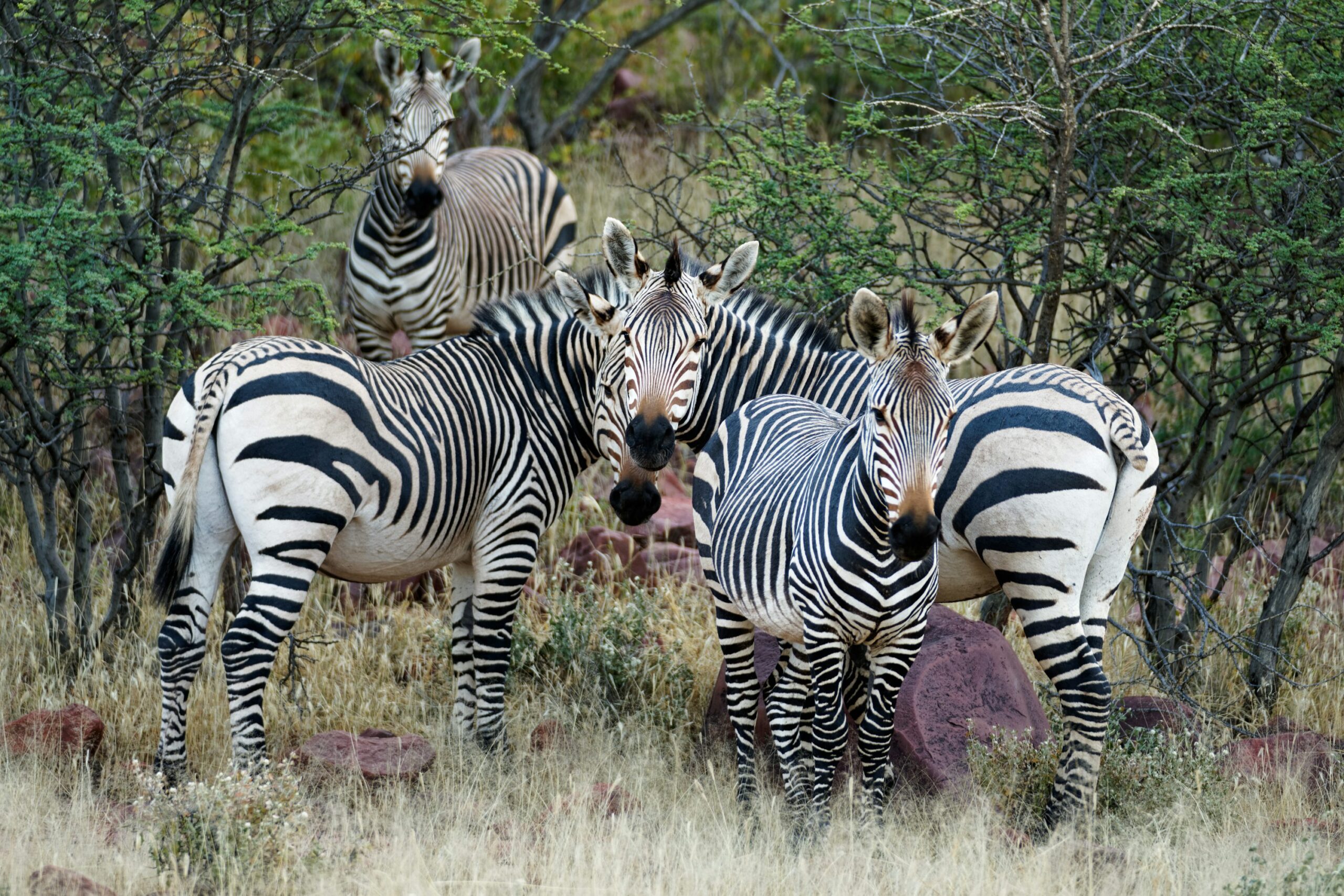
- Mountain Zebra (Equus zebra): Adapted to rugged terrain. They live in rocky hills, mountains, and semi-arid uplands up to 2,000 meters. Key areas: Namibia (Hartmann’s subspecies) and South Africa (Cape subspecies), with some in Angola. They prefer slopes and plateaus with diverse grasses and move to lower elevations in winter.
- Grevy’s Zebra (Equus grevyi): The largest and most endangered, with narrower stripes. They inhabit semi-arid regions, dry grasslands, and shrublands with permanent water access. Found mainly in northern Kenya and southern Ethiopia. Unlike plains zebras, Grevy’s are more solitary or in loose groups and tolerate drier conditions but still need water sources.
These species differences explain variations in where zebras are found across Africa.
Water & Migration: Unique Aspects of Zebra Life
Water is critical—zebras must drink almost daily, driving their movements. In dry seasons, they seek permanent sources like rivers or pans.
Migration Patterns: Many plains zebras join the famous Great Migration in the Serengeti-Mara ecosystem. Around 200,000–300,000 zebras migrate with over a million wildebeest in a circular route following rains and fresh grass. They move from southern Serengeti short-grass plains (wet season) northward to Maasai Mara (dry season), facing river crossings with crocodiles and predators.
Other migrations occur, such as in Botswana, where zebras travel long distances between the Okavango Delta/Chobe and Makgadikgadi Pans.
Migration helps exploit seasonal grass flushes and reduces overgrazing in one area. Do zebras migrate? Yes, especially plains zebras in response to rainfall.
Why Zebras Live in Herds
Zebras form family groups (harems: one stallion, mares, and foals) and larger herds for safety and efficiency. Herds provide:
- Protection from predators: Many eyes and ears detect threats; stripes create visual confusion (motion dazzle) when running together.
- Easier food finding: Collective movement locates fresh grazing patches.
- Social benefits: Mutual grooming strengthens bonds; stallions defend the group.
Plains and mountain zebras have stable harems, while Grevy’s are more flexible. Herd living is a key survival strategy in open habitats where hiding is difficult.
Predators & Survival in Zebra Habitat
Main predators include lions (primary threat to adults), hyenas, leopards, cheetahs, wild dogs, and crocodiles during river crossings. Zebras rely on speed (up to 65 km/h), powerful kicks/bites, and group defense.
Habitat aids survival: open savannas allow early detection, while stripes may deter biting flies or camouflage in dappled light.
Young foals and isolated individuals are most vulnerable. In migration, sheer numbers create a “predator satiation” effect, though losses still occur.
Habitat vs. Diet Connection
Zebras are herbivores, primarily grazing on grasses but also eating leaves, bark, and shrubs when needed. They act as “pioneer grazers,” consuming coarser vegetation and preparing plains for more selective eaters like wildebeest.
Seasonal movements link directly to grass availability—wet season brings nutritious short grasses; dry periods force shifts to taller or browse options.
This connection drives migration and explains why zebra habitat focuses on productive grasslands rather than barren areas. Diet flexibility helps them thrive where other grazers might struggle.
Best Places to See Zebras on Safari
For travelers asking “where do zebras live in Africa” with a desire to witness them, these high-SEO safari spots offer excellent viewing:
- Serengeti National Park, Tanzania: Epic plains zebra herds, especially during the Great Migration. Vast savannas make sightings reliable year-round.
- Maasai Mara National Reserve, Kenya: Northern extension of the Serengeti; dramatic river crossings and dense concentrations.
- Queen Elizabeth National Park, Uganda: While not a zebra hotspot (no resident populations noted in some sources), nearby or combined itineraries often link to other parks. For Uganda-specific zebra viewing, head to Lake Mburo National Park (largest herds, accessible game drives, walks, or horseback) or Kidepo Valley National Park (remote savanna plains with good sightings).
Other strong options: Etosha (Namibia) for mountain zebras, Kruger (South Africa), and northern Kenya conservancies for Grevy’s.
Where to See Zebras on Safari
Travelers can see zebras in some of Africa’s most famous parks, offering unforgettable wildlife experiences. From the thunder of migrating herds in the Serengeti to peaceful grazing in Ugandan savannas, these encounters highlight African biodiversity.
All Uganda Safari Tours specializes in tailored Uganda safari tours and broader East/Southern Africa packages that maximize zebra sightings alongside other iconic species.
Explore our safari packages or African wildlife guides for personalized journeys—whether combining zebras with gorillas in Uganda or the Great Migration.
FAQs about Where do zebras live
- Do zebras live in forests? No—zebras avoid dense rainforests, preferring open areas for grazing and visibility.
- Are zebras only found in Africa? Yes, in the wild. They are endemic to eastern and southern Africa.
- Where do zebras sleep? Standing or lying down in short rests within the safety of the herd; they don’t have fixed “beds” but stay alert in open habitats.
- Do zebras migrate? Yes, particularly plains zebras in seasonal patterns like the Great Migration, driven by grass and water.
Conclusion
Zebras are widely distributed across Africa, thriving in open grasslands and savannas where food and water are available. Their habitats support diverse behaviors—from daily grazing to epic migrations—and underscore the importance of conservation amid habitat pressures.
Seeing zebras in the wild is one of the highlights of any African safari, especially in East Africa’s iconic parks. Experience it firsthand with us at Uganda safari tours and beyond—contact us to plan your adventure among these striped wonders.