Gorilla Trekking Difficulty Level — Complete Honest Guide for Every Fitness Level
Gorilla trekking difficulty level: Gorilla trekking is rated moderate to strenuous — not extreme, but physically demanding enough that preparation matters.
The trek involves hiking on steep, muddy, uneven forest terrain at altitudes of 1,500–3,500m for 30 minutes to 8 hours depending on where the gorilla family has moved overnight.
You do not need to be an athlete. But you do need to be able to walk uphill for several hours without stopping every few minutes. People in their 60s, 70s, and 80s complete gorilla treks successfully every day. People in their 30s who haven’t exercised in months struggle. Fitness matters more than age.
Porters are available ($15–20) and make a meaningful difference. For Uganda gorilla trekking packages including fitness-matched family assignments, visit allugandasafaritours.com.
“How hard is gorilla trekking?” — it is one of the most-searched questions among people planning a gorilla safari, and the most honestly important question to answer before you spend $700 on a Uganda gorilla permit or $1,500 on a Rwanda gorilla permit.
The honest answer is: harder than most people expect, and more achievable than most people fear. The gorilla trekking difficulty level is not fixed — it varies by the day, the park, the gorilla family assigned to your group, the season, and your own fitness level. Understanding all the variables puts you in control of the experience rather than at the mercy of conditions you didn’t anticipate.
This guide covers everything about gorilla trekking difficulty — what determines how hard a trek actually is, how the difficulty level compares between Uganda and Rwanda, which gorilla families are easier or harder to reach, how age and fitness affect the experience, what porters actually do, how to prepare physically, and which trekkers are genuinely unsuitable for gorilla trekking.
All Uganda Safari Tours has guided hundreds of trekkers through Bwindi — visitors of every age and fitness level — and this guide reflects that real-world experience.
What Makes Gorilla Trekking Difficult — The Four Variables
The gorilla trekking difficulty level is never a fixed rating. It is the product of four independent variables that combine differently on every single trek:
Variable 1 — How Far the Gorillas Have Moved Overnight
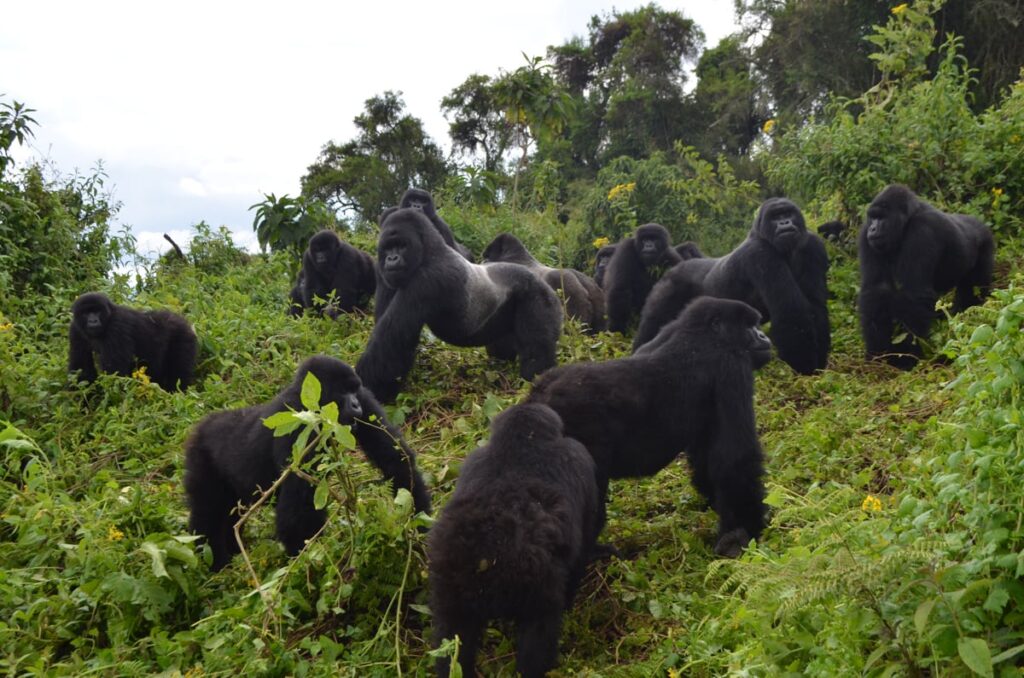
This is the single biggest determinant of how difficult your gorilla trek will be on any given day. Gorilla families move through the forest overnight — sometimes only a few hundred metres from where they nested the previous evening, sometimes 3–5 kilometres. No one knows in advance where the gorillas will be on your trek morning — trackers set out at first light to locate the family and radio back to the guide before your group departs. A gorilla family that nested close to the trailhead means a 30-minute easy walk.
A family that moved to a higher elevation overnight means a 4–6 hour demanding climb through steep, dense forest. The average gorilla trek in Uganda’s Bwindi Impenetrable Forest takes 2–4 hours of active walking each way — but the range is genuinely 30 minutes to 8 hours, and you will not know which end of that range you are on until you are in the forest.
Variable 2 — The Terrain and Altitude
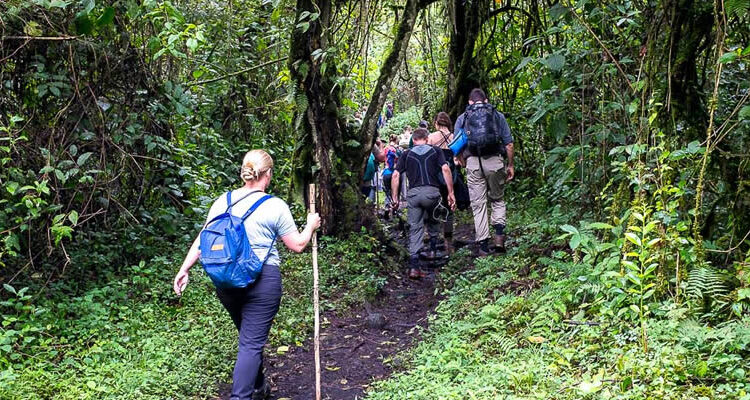
Gorilla trekking takes place in dense forest on volcanic slopes — this is not a walking trail in a Dutch park or a well-maintained hiking route in the Alps. The terrain is steep, uneven, often muddy, and frequently requires grasping vegetation to pull yourself up or steady yourself going down.
Bwindi Impenetrable Forest in Uganda sits at elevations of 1,160–2,607 metres above sea level — trekking zones are typically between 1,500m and 2,500m. Rwanda’s Volcanoes National Park treks take place at slightly higher elevations (2,400–3,500m in some sectors).
The altitude is not extreme enough to cause acute mountain sickness in most people, but it does mean exertion feels harder than at sea level — your heart and lungs work more to deliver oxygen, and uphill sections that would feel moderate at sea level feel noticeably more demanding at 2,000m.
Variable 3 — Season and Trail Conditions
The season significantly affects gorilla trekking difficulty level. In the dry season (June–September and December–February), trails are firmer, there is less mud, and trekkers can move more efficiently through the forest.
In the rainy season (March–May and October–November), the same trails become muddy, slippery, and considerably more physically demanding — what takes 2 hours in dry season can take 3.5–4 hours in wet conditions as trekkers navigate slick clay slopes.
This does not make wet-season gorilla trekking impossible or even bad — many trekkers find the lush green forest and dramatic light in the rains more photogenic — but it does meaningfully increase the physical demand.
Variable 4 — The Gorilla Family Assigned to Your Group
Not all gorilla families range at the same elevation or terrain difficulty. Different gorilla family assignments create significantly different trek difficulty levels within the same national park. S
ome habituated families in Bwindi stay at lower elevations and relatively accessible terrain; others range to the highest, steepest parts of the park. Your gorilla family is assigned on trek morning by the Uganda Wildlife Authority (UWA) based on permit allocation and ranger tracking reports — you cannot choose your family yourself, but you can communicate your fitness level to your guide and we can advocate with UWA for an appropriate assignment. All Uganda Safari Tours does this routinely for clients who flag fitness concerns at booking.
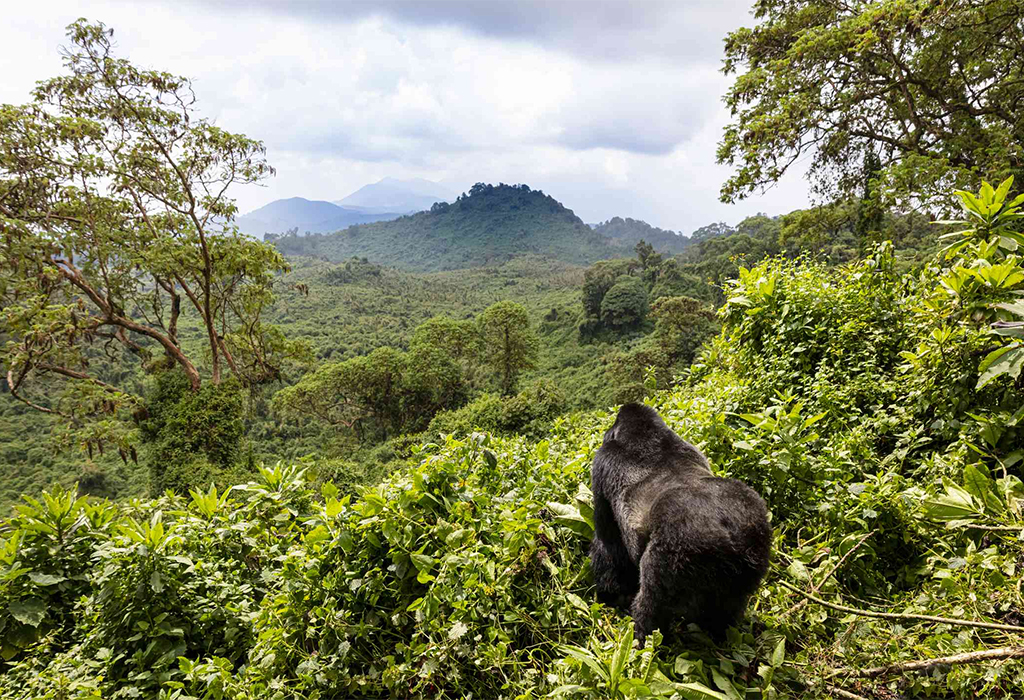
Gorilla Trekking Difficulty Scale — Honest Ratings for Bwindi and Volcanoes National Park
Here is an honest difficulty rating for gorilla trekking difficulty level in Uganda and Rwanda — calibrated against real trekking experience rather than optimistic marketing copy:
| Difficulty Level | What It Looks Like | Who Can Do It | Where You’ll Likely Find It |
| Easy (1–2/5) | 30–90 min walk on relatively flat or gently sloping trail; firm ground; minimal altitude gain | Almost anyone including older travellers, light mobility issues with porter; people who walk 30+ min daily | Closest gorilla family to trailhead on any given day; Bwindi Buhoma sector lower families; Rwanda Amahoro/Sabyinyo families |
| Moderate (3/5) | 2–3 hour walk; some steep sections; possible mud; meaningful uphill; altitude 1,500–2,200m | Reasonably fit adults; occasional walkers; most healthy people 50–70+; those who hire a porter | The most common gorilla trek experience in Bwindi; Rwanda most families in dry season |
| Moderate-Strenuous (3.5/5) | 3–5 hour walk; significant steep sections; substantial altitude gain; possible vegetation scrambling | Regularly active adults; hikers; trekkers with some hill experience; those under 70 with reasonable fitness | Upper Bwindi sectors; Bwindi Ruhija sector; Rwanda Susa family trek; wet-season treks generally |
| Strenuous (4/5) | 5–8 hour walk; very steep terrain; significant mud; dense vegetation to push through; high altitude gain | Fit and experienced hikers only; regular exercise essential; consider this before booking if not a regular walker | Bwindi on days gorilla family has moved far; Ruhija sector high families; wet season maximum difficulty |
| Very Strenuous (5/5) | Full day or near-full day; extreme terrain; very high altitude; full-body physical effort | Experienced mountain hikers only; rare — mainly applies to Susa family Rwanda on certain days or Bwindi long-trek families | Rare — applies primarily to Susa group Rwanda very high altitude days; exceptional bad-weather long-trek days |
📊 Most common experience: The vast majority of gorilla trekkers in Bwindi experience a moderate (3/5) trek of 2–3 hours walking. The rare 6–8 hour strenuous trek makes headlines precisely because it is unusual — not because it is typical. Most people who told us they were worried about gorilla trekking difficulty came back reporting it was “hard but completely doable” once they had done it.
Uganda vs Rwanda — How Gorilla Trekking Difficulty Compares Between the Two Countries
Both Uganda’s Bwindi Impenetrable Forest and Rwanda’s Volcanoes National Park offer mountain gorilla trekking, but the typical gorilla trekking difficulty level differs meaningfully between the two destinations:
- Bwindi Impenetrable Forest (Uganda) — typically harder: Bwindi’s forest is denser, the terrain more varied and often steeper, and the range of possible trek durations wider (30 minutes to 8 hours). Bwindi has more gorilla families (19+ habituated) spread across four sectors at varying elevations — which means the gorilla that moves to the highest family on a given day means a very demanding trek
- Volcanoes National Park (Rwanda) — typically shorter but higher altitude: Rwanda’s Volcanoes National Park treks are generally shorter in duration (most families located within 2–4 hours of the trailhead)but operate at slightly higher altitude (2,400–3,500m) than most Bwindi treks. The shorter trek duration makes Rwanda’s gorilla trekking somewhat more accessible for less fit trekkers, while the higher altitude adds its own challenge. Rwanda is generally considered the easier gorilla trekking destination for first-time or less physically confident visitors
- Bottom line for Uganda: If you are fit and want the full wilderness immersion, Bwindi is extraordinary. If you are less fit or want a more predictable trek duration, Rwanda’s Volcanoes National Park offers a slightly more controlled experience. All Uganda Safari Tours runs both — contact us to discuss which is right for your fitness level and travel preferences
Gorilla Trekking Difficulty by Specific Family — Uganda’s Bwindi Sectors
In Bwindi Impenetrable Forest, the four trekking sectors have distinctly different typical gorilla trek difficulty levels based on terrain and the elevation ranges the resident gorilla families tend to occupy:
| Bwindi Sector | Typical Trek Difficulty | Terrain Notes | Notable Families |
| Buhoma (northern Bwindi) | Easy to Moderate (2–3/5) | Most accessible sector; forest trails relatively well-established; gorilla families tend to stay at lower elevations | Mubare family (first habituated family in Bwindi); Habinyanja family; Rushegura family — all relatively accessible |
| Rushaga (southern Bwindi) | Moderate to Moderate-Strenuous (3–3.5/5) | Larger sector with more families; terrain varied; some families at higher elevation than Buhoma | Nkuringo family; Mishaya family; Kahungye family; also home to Gorilla Habituation Experience families |
| Nkuringo (south-western Bwindi) | Moderate-Strenuous to Strenuous (3.5–4/5) | Steep descents and climbs; gorillas tend to range at higher elevation; physically most demanding sector | Nkuringo family — one of Bwindi’s most spectacular but most physically demanding gorilla treks |
| Ruhija (eastern Bwindi) | Moderate to Strenuous (3–4/5) | High altitude sector (2,300–2,600m); cold mornings; dense forest; some families range at significant elevation | Bitukura family; Oruzogo family; Kyaguliro family (research family occasionally open) |
All Uganda Safari Tours can request specific sector assignments on your behalf when booking your Uganda gorilla trekking permit. We always ask clients about their fitness level and tailor our permit request to the most appropriate sector for their capability. See our gorilla trekking packages — from our 3-day Bwindi gorilla safari to our 4-day double gorilla trekking Uganda.
Age and Gorilla Trekking Difficulty — What Older Travellers Need to Know
The minimum age for gorilla trekking is 15 years. There is no maximum age — the oldest gorilla trekker All Uganda Safari Tours has guided was 84 years old. What matters is not your age but your current fitness and mobility relative to the trek difficulty level on that day. Here is our honest guidance by age bracket:
- Under 45: If you are under 45 and in reasonable health, gorilla trekking difficulty is unlikely to be a limiting factor. Even moderate fitness at this age group will get you through most Bwindi treks. Focus your preparation on appropriate footwear and hydration rather than intensive fitness training
- 45–60: This age group represents a huge proportion of gorilla trekkers and the overwhelming majority complete their treks successfully. Regular walking (30–45 minutes daily) in the weeks before your trek and a good pair of waterproof hiking boots are the most important preparation
- 60–75: Entirely achievable with preparation and with the right support. We strongly recommend hiring a porter for this age group (see below) — the porter will carry your bag and assist physically on difficult sections. Fitness at 65 that allows 2 hours of brisk walking with some uphill is more than sufficient for most gorilla treks. We also advocate with UWA for a less demanding family assignment
- 75+: Gorilla trekking at 75+ is possible — we have guided trekkers in their late 70s and early 80s. It requires honest self-assessment, a porter, a Buhoma sector permit where possible (lower elevation families), medical clearance from your GP, and very good waterproof footwear. Most trekkers in this age group find the experience profoundly worth the physical effort
⚠️ Honest fitness threshold: If you cannot currently walk uphill for 45 minutes without needing to stop and rest repeatedly, gorilla trekking will be physically distressing rather than enjoyable. This is not about age — it is about current cardiovascular fitness. The forest does not offer a place to stop and rest conveniently, and the rest of your group cannot wait indefinitely. Be honest with yourself and with us at booking. If you are borderline, we can advise on the most achievable options.
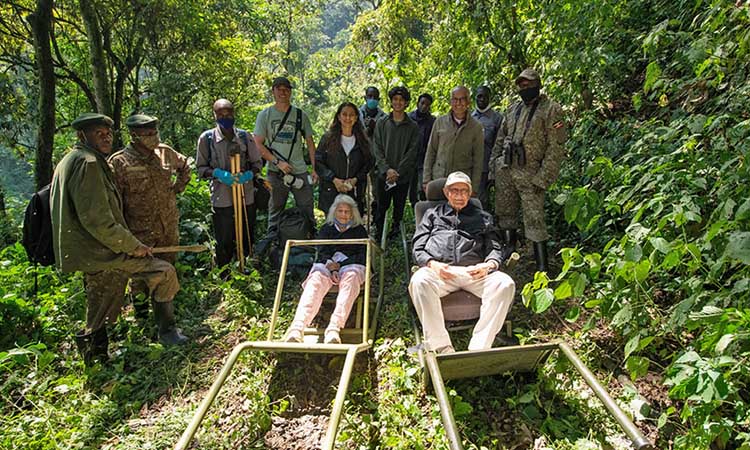
Porters — How They Reduce Gorilla Trekking Difficulty
Hiring a gorilla trekking porter is one of the best decisions any trekker can make — regardless of fitness level. Here is exactly what a porter does and why they are worth every cent:
What a Porter Does on a Gorilla Trek
- Carries your day pack: Even a 4–5kg day pack becomes a meaningful weight on a long, steep uphill. Removing that weight from your back is immediately noticeable in your energy and pace
- Physically supports you on difficult sections: On steep ascents and particularly on slippery descents, a porter will offer their hand or a stick for physical support. This is the single most important safety and comfort benefit of a porter — steep muddy descents are where most trekking injuries occur, and a stable human hand is far more effective than a walking pole alone
- Provides moral encouragement: Good porters have seen hundreds of trekkers and know exactly the right mix of gentle encouragement and practical pace management. Your porter wants you to find the gorillas — this is their livelihood, their forest, and their source of pride
- Direct community benefit: Porter hire is USD $15–20 per trek, paid directly to the porter from the community adjacent to the park. This is among the most direct conservation and community impact payments available to any tourist activity in East Africa. We recommend hiring a porter on every gorilla trek — both for the practical benefit and the community impact
Should I Hire a Porter?
Our answer at All Uganda Safari Tours is always yes — for any trekker over 55, for anyone with knee or back issues, for anyone who carries a camera with a heavy lens, and for anyone trekking in the rainy season when descents are slippery. Even young, fit trekkers report that having a porter makes the trek more enjoyable — you can move at a more comfortable pace, photograph more freely, and arrive at the gorillas with energy to observe rather than just recover.
Physical Preparation for Gorilla Trekking — What to Do in the Weeks Before
The single most important thing you can do to reduce gorilla trekking difficulty is prepare your body in the weeks before your safari. You do not need a gym membership or a personal trainer — you need to build cardiovascular endurance and leg strength on uneven ground:
- Walk uphill every day for 4–6 weeks before: This is the most specific preparation for gorilla trekking. Find stairs, a hill, or a gentle slope and walk it repeatedly. The gorilla forest is relentlessly uphill on the way in and relentlessly downhill on the way back. Your quads, calves, and cardiovascular system need practice on gradient
- Build to 90-minute continuous walks: Even a moderate gorilla trek involves 2–4 hours of active walking. Build your base to where 90 minutes of continuous walking at a moderate pace is genuinely comfortable rather than an achievement
- Break in your hiking boots before arrival: Wearing new boots for the first time on a gorilla trek — on steep, wet, uneven terrain — is one of the most reliable ways to end the day with blisters and misery. Wear your boots on as many pre-trip walks as possible
- Stay hydrated in the days before and on trek day: Altitude and physical exertion both increase dehydration risk. Arrive in East Africa well-hydrated, drink 2 litres minimum on trek day, and do not underestimate how much fluid you will lose
- If you have knee issues, address them before: Gorilla trekking descents are the most knee-stressful part of the experience. If you have existing knee problems, consult a physiotherapist before your trip, consider a knee brace or trekking poles, and hire a porter without question
👟 Most important single piece of advice: Buy proper waterproof hiking boots with ankle support and break them in before you travel. More gorilla trekking difficulties, blisters, twisted ankles, and slipped descents are caused by inadequate footwear than by any other factor. Trainers, trail runners, and “outdoor shoes” are not adequate for the gorilla forest. Waterproof, ankle-supporting hiking boots are the single most important equipment investment for this experience.
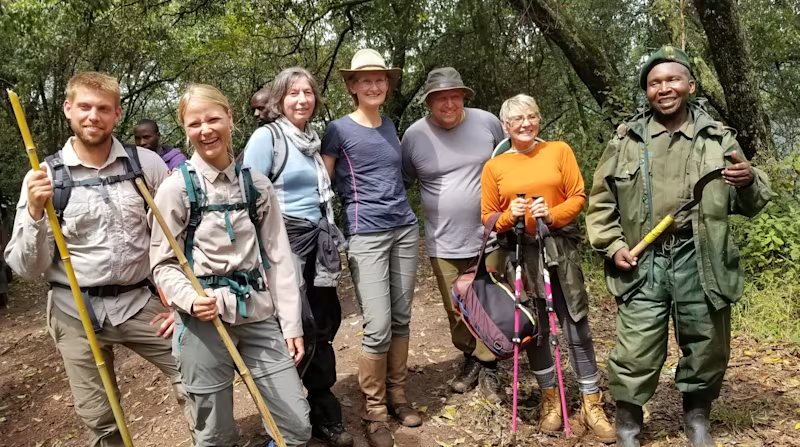
What to Wear and Carry on Trek Day — Reducing Difficulty Through Preparation
- Waterproof hiking boots with ankle support (essential): See above — the most important item on this list
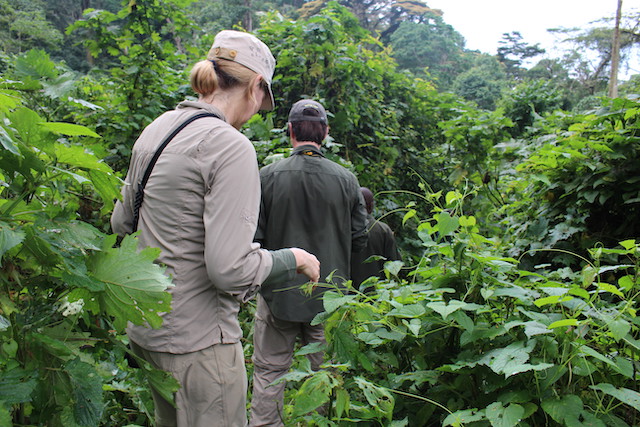
- Long-sleeved shirts and long trousers (mandatory): Bare skin is not permitted in gorilla habitat. Light moisture-wicking fabrics; avoid cotton which dries too slowly. Neutral colours (khaki, olive, dark green)
- Lightweight waterproof jacket: The forest can rain at any time. A compact packable jacket takes minimal space and is essential insurance
- Gardening gloves: For grasping vegetation on steep sections and reducing stinging nettle contact — Bwindi has extensive nettle growth along some trails
- Gaiters (ankle-to-knee): Prevent mud and safari ants from entering your boots on wet-season treks. Available to hire in most Bwindi gateway towns if not packed
- 2–3 litres of water: Carry more than you think you need. Many trekkers underestimate fluid loss on the climb
- High-energy snacks: Trail mix, energy bars, dried fruit — your guide will signal when there is a natural rest point to eat
- Trekking poles (optional but strongly recommended): Particularly for descent sections. One pole used as a walking stick is what most guides recommend over a full two-pole system
Who Should NOT Go Gorilla Trekking — Honest Assessment
We want every client to find the gorillas and return safely. This sometimes means having an honest conversation about whether gorilla trekking is the right choice given current physical condition:
- Anyone currently unable to walk 30 minutes on flat ground continuously: The gorilla forest does not offer a meaningful “easy” path option. If walking 30 minutes on flat ground is currently challenging, the gorilla forest will be extremely distressing
- Anyone with active, significant cardiac conditions: The combination of altitude and sustained physical exertion creates real cardiac stress. Obtain explicit medical clearance from a cardiologist before booking a gorilla trek if you have a cardiac condition
- Respiratory conditions at altitude: Gorilla trekking altitude (1,500–3,500m) can exacerbate asthma and other respiratory conditions. Carry your inhaler; discuss with your GP
- Anyone with acute illness on trek morning: Beyond the personal discomfort, anyone with cold, flu, cough, or gastrointestinal symptoms will be asked to stand down on trek day — gorillas share 98.7% of human DNA and are highly susceptible to human respiratory illness. Do not attempt to hide illness to avoid missing your trek
All Uganda Safari Tours can discuss alternative Uganda wildlife experiences for clients who cannot gorilla trek — chimp trekking in Kibale, boat safaris on the Nile at Murchison Falls, and Big Five game drives in Queen Elizabeth National Park are all magnificent wildlife experiences that do not involve significant physical exertion on steep terrain. See our 3-day Queen Elizabeth Wildlife Safari and 4-day Murchison Falls Safari for alternatives.
Gorilla Habituation Experience — Different Difficulty, Same Forest
Beyond standard gorilla trekking, Uganda offers the Gorilla Habituation Experience (GHE) — a full-day (6am–6pm) experience with a gorilla family still in the process of being habituated to human presence. The gorilla habituation experience difficulty level is generally higher than standard trekking because:
- The full day duration means 8–10 hours in the forest: Standard gorilla trekking is 2–6 hours total. The habituation experience is a full day — you follow the gorilla family through the forest from morning until they nest in the evening
- The family may not yet be fully relaxed: Habituating gorilla families move more unpredictably than fully habituated ones, meaning more dynamic terrain-following
- Physical stamina requirement is higher: Only trekkers in good physical condition are suitable for the habituation experience. All Uganda Safari Tours advises honestly on this before booking our 3-day gorilla habituation experience safari
Book Your Uganda Gorilla Trek — We Match Difficulty to Your Fitness
At All Uganda Safari Tours we take gorilla trekking difficulty seriously — because a well-matched trek makes the experience extraordinary, and a mismatched one makes it gruelling. We ask every client about their fitness level at booking, we request family assignments appropriate to their capability with Uganda Wildlife Authority, and we are honest with you if we think a different experience might suit you better than the gorilla trek you had in mind.
Browse our gorilla trekking safaris: 3-day Bwindi gorilla safari · 2-day gorilla trekking Uganda · 1-day gorilla trekking Uganda · 3-day gorilla habituation experience · Browse all short Uganda safaris
Related Pages — All Uganda Safari Tours
- All Uganda Safari Tours — Home Page
- Short Uganda Safaris — Browse All Tours
- 1-Day Gorilla Trekking Uganda
- 2-Days Gorilla Trekking Uganda
- 3-Days Gorilla Trekking Bwindi Tour
- 4-Days Gorilla Trekking Bwindi Tour
- 3-Days Gorilla Habituation Experience Safari
- 1-Day Ngamba Island Chimpanzee Tour
- 3-Days Kibale Forest Chimpanzee Trekking
- 4-Days Queen Elizabeth National Park Safari
- 3-Days Queen Elizabeth Wildlife Safari
- 4-Days Murchison Falls Wildlife Safari
- 3-Days Murchison Falls Safari
- 4-Days Kidepo Wildlife Tour
- 2-Days Rhino Tracking Tour
- 3-Days Birding Safari Uganda
- 2-Days Lake Mburo Tour
- 1-Day Kampala City Tour
- 1-Day Jinja Tour