What Do Mountain Lions Eat? Diet, Hunting Habits,& prey list
What do mountain lions eat: Primary Prey, Deer and Large Ungulates.
Deer dominate the mountain lion diet—making up 50–80% of kills across most ranges. Mule deer and white-tailed deer are favorites, followed by elk (especially calves), bighorn sheep, and occasionally moose or pronghorn.
Full Mountain Lion Prey List (ranked by frequency):
- Primary: Mule deer, white-tailed deer, elk
- Secondary: Bighorn sheep, feral hogs, javelina, moose
- Smaller mammals: Rabbits, hares, raccoons, porcupines, beavers, squirrels, mice
- Birds and others: Turkeys, ground squirrels, occasional insects or reptiles in lean times
This “mountain lion prey list” explains why deer are preferred: they provide high-calorie meals with minimal risk compared to larger herd animals.
Secondary and Opportunistic Prey
When deer are scarce, mountain lions turn to rabbits, raccoons, porcupines, and birds. In Texas and the Southwest, javelina and feral hogs become important.
Pets and livestock appear rarely but fuel searches like “do mountain lions eat dogs” or “do cougars eat pets.” Depredation on cattle or sheep is opportunistic and usually limited to young or unprotected animals.
How Do Mountain Lions Hunt?
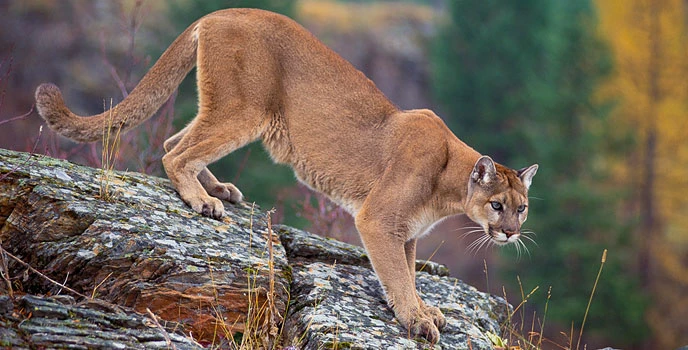
Mountain lions are classic ambush predators. They stalk silently using cover—rocks, trees, or tall grass—then explode with a powerful leap (up to 40 feet horizontally) to land on the prey’s back. A quick bite to the neck severs the spine or crushes the windpipe for a swift kill.
Hunts occur mostly at night or dusk-to-dawn when prey is active and visibility favors the cat’s superior night vision. They rarely chase for long distances, preferring short, explosive attacks.
How Much Do Mountain Lions Eat?
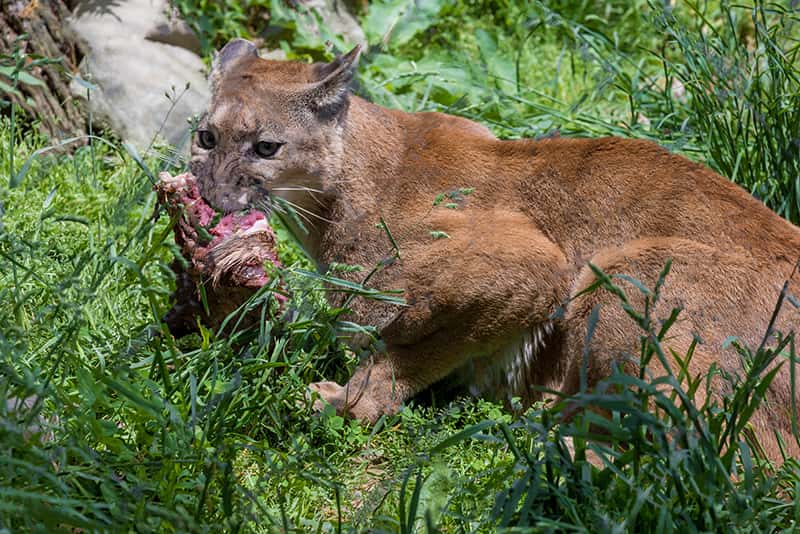
A single adult can eat 20–30 pounds in one sitting after a big kill but averages 8–10 pounds of meat per day. One deer-sized animal feeds a lion for 6–12 days. They cache leftovers by dragging the carcass to a hidden spot and covering it with leaves, grass, or dirt to hide it from scavengers and keep it fresh. They return repeatedly over several days.
Females with kittens eat more to support growing cubs and may target larger prey like elk calves. This caching behavior answers the long-tail question “how often does a mountain lion eat?”—roughly once a week for a large meal, with snacks in between.
Do Mountain Lions Eat Humans?
No—humans are not typical prey. Mountain lion attacks on people are extremely rare. Since 1868, North America has recorded only about 29–32 confirmed fatal attacks, averaging fewer than one every few years.
Most incidents involve children or people moving erratically (running, biking). Healthy adult mountain lions almost never view humans as food. They prefer deer and avoid confrontation.
“Do mountain lions prey on people?” or “are cougars dangerous to humans?” searches spike after rare news stories, but statistics show you’re far more likely to die from lightning, bees, or car accidents.
Diet by Habitat (Including the Desert)
Mountain lion diets shift with location:
- Forests and mountains: Heavy on deer and elk.
- Desert regions (Arizona, Utah, Nevada): Mule deer still dominate when available, but lions also target bighorn sheep, javelina, jackrabbits, and small mammals. In arid zones, they follow prey to water sources and use rocky cliffs for ambush cover.
- Near towns or ranches: More livestock or pets if natural prey is low.
This adaptability is why “mountain lion diet by region” and “what do mountain lions eat in the desert” are popular queries.
Do Mountain Lions Eat Other Predators?
Yes—opportunistically. Coyotes appear regularly in diets (up to 4–9% in some studies), often when they scavenge a lion’s kill. Mountain lions also take bobcats, foxes, badgers, and even skunks. One tracked lion killed 24 badgers in 15 months! This “intraguild predation” helps control mesopredator numbers.
Mountain Lion vs Leopard Diet & Mountain Lion vs Lion Diet
|
Aspect |
Mountain Lion (Cougar) |
Leopard |
African Lion |
|
Primary Prey |
Deer, elk (mid-sized ungulates) |
Impala, smaller antelope, monkeys |
Zebra, wildebeest, buffalo (large herds) |
|
Hunting Style |
Solitary ambush, night |
Solitary ambush, versatile |
Social group hunts, day & night |
|
Prey Size |
50–300 lbs typical |
20–150 lbs |
200–1,000+ lbs |
|
Diet Breadth |
Opportunistic, includes coyotes |
Very broad (includes primates) |
Focus on large game, scavenges |
Mountain lions and leopards share ambush tactics but occupy different continents. Lions hunt cooperatively and target bigger prey. Cougars are more specialized deer hunters.
Feeding Habits & Behavior
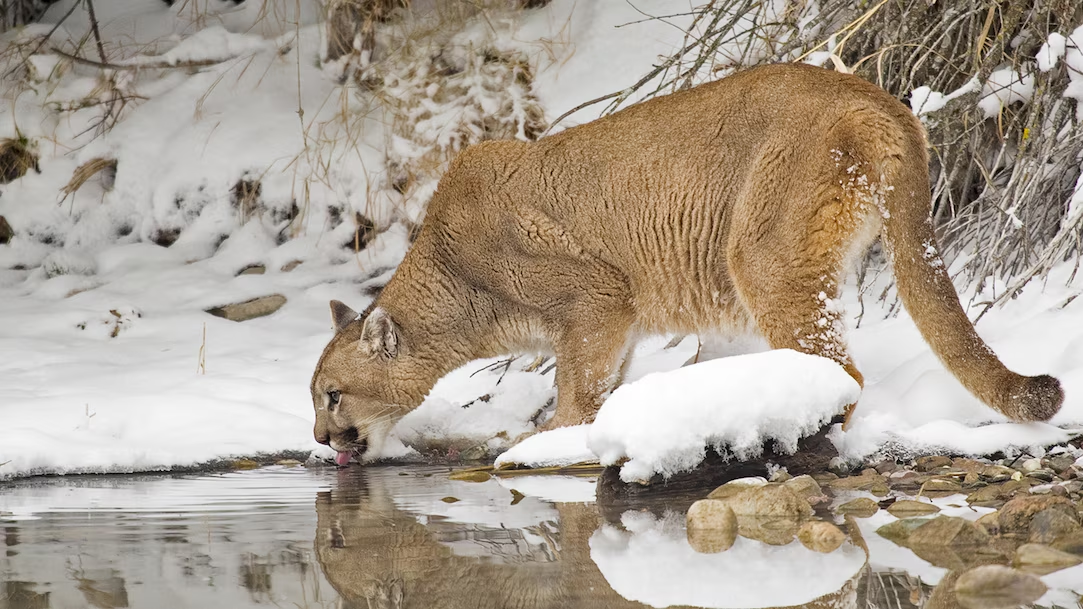
Mountain lions are solitary except for mothers with kittens. After a kill, they drag the carcass (sometimes uphill or over 100 yards) to a secluded cache. They pluck hair from the hide before eating, starting with nutrient-rich organs. They rarely scavenge and prefer fresh meat.
Interesting Diet Facts
- One powerful leap can cover 40+ feet to surprise prey.
- Caches stay hidden for days, protected from flies and other scavengers.
- In lean times, they’ll eat porcupines—quills and all—though it’s risky.
- They co-evolved with deer, shaping both species’ behavior over millennia.
More about Mountain lions
Mountain lions, also known as cougars or pumas, are strict carnivores and apex ambush predators across North and South America. Their diet centers on deer as the primary food source, but they opportunistically hunt a wide range of prey depending on habitat and availability. Adults typically kill one large animal every 7–12 days and can consume 8–20 pounds of meat in a single meal.
These solitary cats have co-evolved with deer and elk as their ideal prey—abundant, nutritious, and the right size for a 100–200-pound predator. Yet their menu is far more varied than many realize.
From rabbits in the desert to the occasional coyote or livestock near human areas, mountain lions adapt their hunting to survive in forests, mountains, deserts, and even urban edges.
What Mountain Lions Look Like
Mountain lions are sleek, powerful felines with a tawny or gray-brown coat, black-tipped tails, and muscular builds. Adults stand 2–3 feet at the shoulder and stretch 5–9 feet long including the tail. Their long whiskers and excellent night vision help them stalk prey silently. Kittens have spots that fade by 18 months.
FAQs about What do mountain lions eat
What is a mountain lion’s favorite food?
Deer—especially mule or white-tailed deer. It’s their most efficient, preferred prey.
Do mountain lions eat dogs?
Rarely, but possible if a dog is loose near deer habitat. Pets are not primary prey.
How often does a mountain lion eat?
Every 6–12 days for a large kill; they average 8–10 pounds daily from cached meat.
Do cougars hunt during the day?
Mostly nocturnal or crepuscular, but they can hunt anytime if hungry or protecting kittens.
What do mountain lions eat in the desert?
Mule deer, bighorn sheep, javelina, rabbits, and rodents—whatever is abundant near water sources.
Conclusion
Mountain lions are perfectly adapted carnivores whose diet revolves around deer but flexes to include everything from rabbits to the occasional coyote.
Their stealthy hunting, caching behavior, and habitat-specific choices make them one of North America’s most successful predators.
Understanding their diet helps us coexist safely—keep pets supervised, secure livestock, and never feed deer or other wildlife that attracts lions