
Elephant Facts: 25+ Amazing Facts You Need to Know
Elephant Facts: Elephants are the largest land animals and among the most intelligent creatures on Earth. These gentle giants captivate us with their size, social bonds, and remarkable abilities.
From the vast savannas of Africa to the forests of Asia, elephants play a vital role in their ecosystems as “ecosystem engineers,” shaping landscapes and supporting biodiversity.
There are three recognized species today: the African bush (savanna) elephant (Loxodonta africana), the smaller African forest elephant (Loxodonta cyclotis), and the Asian elephant (Elephas maximus). African bush elephants are the biggest, while Asian elephants are slightly smaller but equally impressive.
Here are the most fascinating elephant facts that will surprise you — from their incredible intelligence and behavior to physical traits, habitats, diet, social lives, and conservation challenges.
Whether you’re planning a safari or simply love wildlife, these insights reveal why elephants deserve our awe and protection.
Intelligence & Behavior Elephant Facts
Elephants rank among the smartest animals, with brains weighing 4–6 kg (9–13 lbs) — larger than any other land animal. Their neocortex, involved in complex thought, shows similarities to humans and great apes, suggesting convergent evolution in intelligence.
One of the most famous elephant facts is their strong memory. Elephants remember water sources, migration routes, and individual faces — even humans or other elephants — for decades. In droughts, older matriarchs recall locations from their youth, guiding herds to survival.
Studies show they recognize companions after 20+ years. This “elephant never forgets” reputation stems from a highly developed hippocampus and temporal lobe.
Problem-solving skills shine through. Elephants use tools, such as branches to swat flies or modify them for better reach. They cooperate in tasks, like pulling ropes together to access food, and show self-awareness in mirror tests — a rare trait shared with few species.
Emotional intelligence is profound. Elephants display empathy, comforting distressed herd members with touches or sounds. They exhibit joy in play, grief in mourning, and strong family loyalty.
These behaviors highlight their complex inner lives, making elephant behavior facts among the most shareable and heartwarming.
Physical Elephant Facts About Elephants
Elephants’ sheer size commands respect. Adult African bush elephant males stand up to 4 meters (13 feet) at the shoulder and weigh up to 6,000–7,000 kg (13,000–15,400 lbs), with the largest recorded exceeding 10,000 kg. Females are smaller, typically 2.5–3.5 tons. Asian elephants reach about 3.5 meters (11.5 feet) tall and weigh 3,000–6,000 kg on average.
For scale: An adult elephant weighs as much as 5–7 cars or a small truck. Their height equals a two-story building. Despite this, they move gracefully on tiptoes, cushioned by fat pads in their feet.
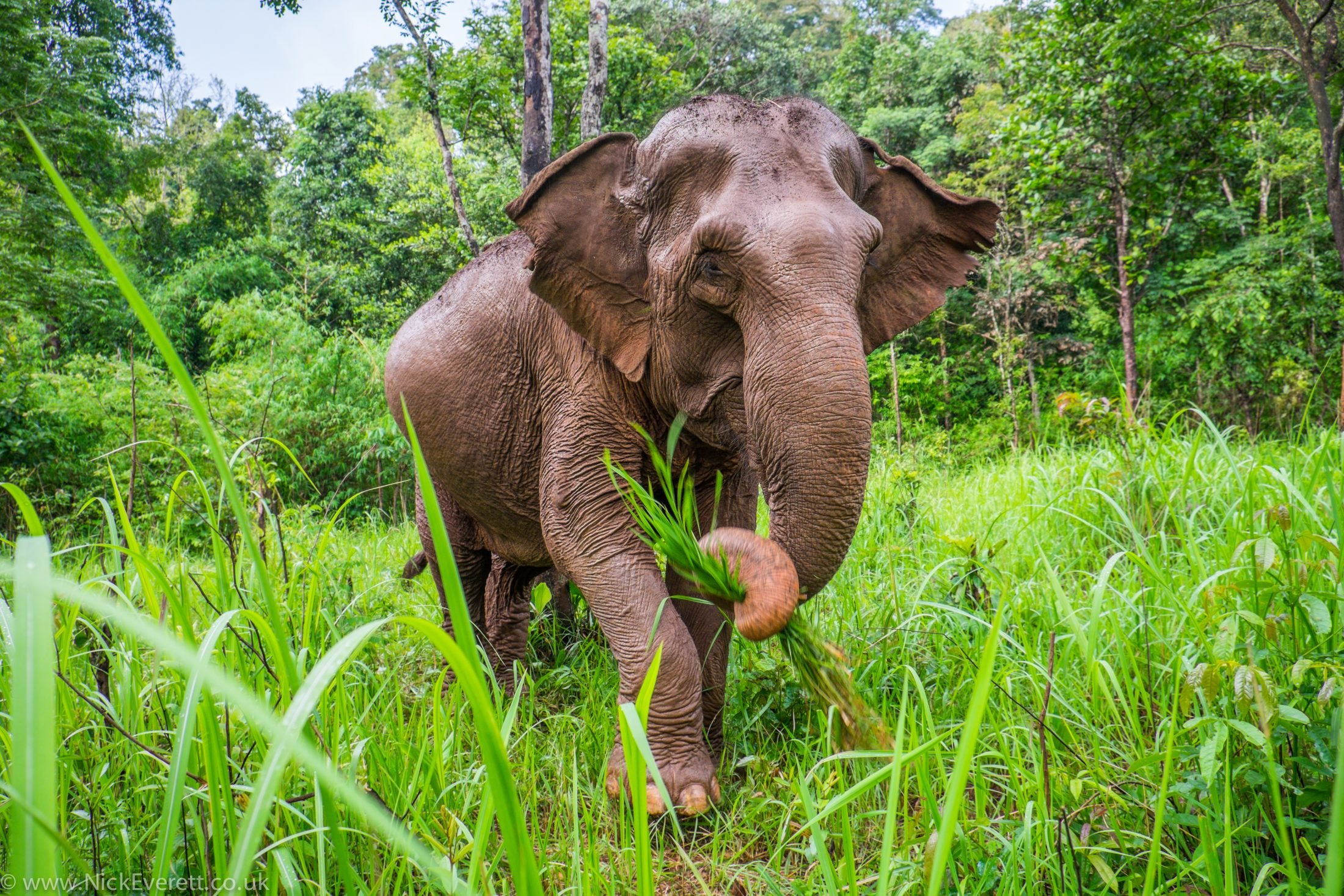
The trunk is a marvel — a fusion of nose and upper lip with over 40,000 (some sources say up to 150,000) muscle units and no bones. It provides precision and power: sucking up to 8–10 liters (2+ gallons) of water at once, grasping tiny objects, or uprooting trees.
Elephants use it for breathing, smelling (their sense of smell is exceptional), drinking, eating, social touching, and even snorkeling while swimming.
Other standout features include large ears for thermoregulation (flapping cools blood), ivory tusks (used for digging, defense, and stripping bark — though not all individuals have them), and thick, sensitive skin that they protect with mud or dust baths.
Elephant size and weight facts underscore their dominance: A newborn calf already weighs 90–120 kg (200–265 lbs) and stands about 90 cm (3 feet) tall — heavier than most adult humans.
Habitat & Distribution Facts
Elephants thrive in diverse environments. African bush elephants inhabit savannas, grasslands, and woodlands across sub-Saharan Africa, with strong populations in Serengeti National Park (Tanzania) and Kruger National Park (South Africa), home to thousands of individuals.
African forest elephants prefer dense rainforests in Central and West Africa. Asian elephants range across 13 countries in Southeast Asia, including India (hosting over half the population), Sri Lanka, and Thailand, in forests, grasslands, and hills up to high altitudes.
These habitats provide essential water, food, and space. Elephants act as keystone species, creating paths through vegetation, dispersing seeds via dung, and digging waterholes that benefit other animals.
Diet & Feeding Facts
Elephants are strict herbivores. They spend 12–18 hours daily eating 100–300 kg (220–660 lbs) of vegetation — grasses, leaves, twigs, fruits, bark, and roots.
They drink up to 50 gallons (189 liters) of water per day. Digestion efficiency is low (around 44%), so they consume vast quantities to meet energy needs.
Their diet varies by species and season. Savanna elephants graze more on grasses, while forest and Asian elephants browse leaves and fruits. This feeding shapes habitats: elephants can topple trees to access higher foliage, promoting new growth.
For more on their menu, explore related topics like “what do elephants eat” in wildlife guides.
Social Structure Facts
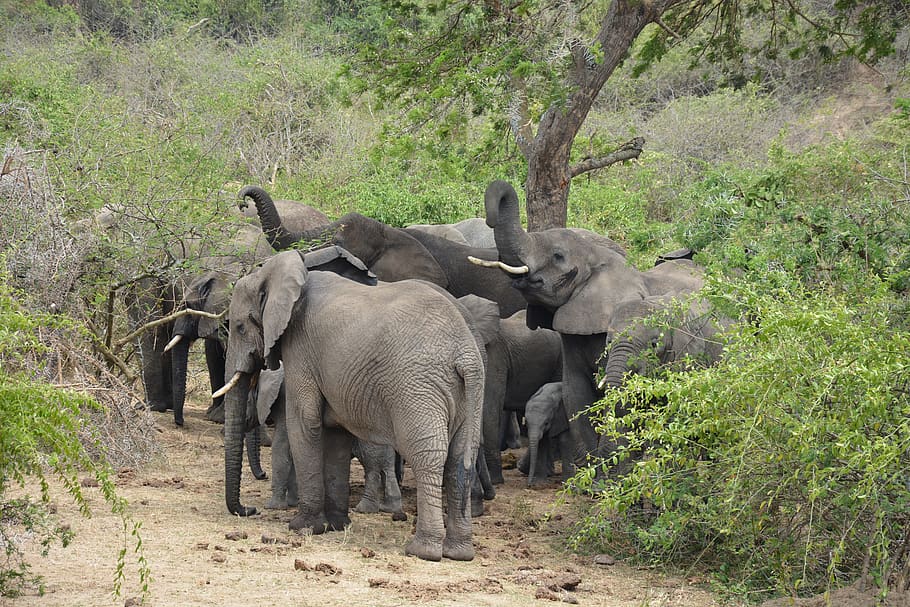
Elephants are highly social, living in complex groups. Herds are typically matriarch-led — led by the oldest, wisest female who makes decisions on movement, water, and safety. Family units include related females and calves, often 10–20 individuals, merging into larger clans.
Strong family bonds define elephant life. Mothers, aunts, and sisters cooperate in raising young. Males leave natal herds at maturity (around 10–15 years), forming loose bachelor groups or living solitarily, rejoining females during musth (a periodic state of heightened aggression and mating drive).
Communication is multifaceted: low-frequency infrasound travels kilometers through ground and air for long-distance contact; rumbling calls convey emotions or alerts; body language, trunk touches, and even seismic vibrations add layers. This sophisticated system maintains cohesion in vast landscapes.
Baby Elephant Facts
Baby elephants, called calves, are born after the longest gestation of any land mammal: about 22 months (18–22 for Asian). This extended pregnancy produces well-developed newborns ready to walk soon after birth.
A calf weighs 90–120 kg (200–265 lbs) at birth and stands roughly 90 cm tall. It can stand within 20 minutes and walk shortly after, staying close to its mother.
Calves nurse for 2–4 years but begin sampling plants at 4–6 months. Mothers and the herd protect them fiercely; “allomothers” (aunts) help care for and teach the young.
Calves suck their trunks for comfort, much like human babies with thumbs. Twins are rare, and births occur every 4–5 years on average.
Communication Facts
Beyond infrasound (frequencies below human hearing, detectable up to 4–10 km away), elephants use a rich repertoire. Trumpeting signals alarm or excitement.
Touch — trunk intertwining or placing trunks in mouths — greets and reassures. Smell plays a huge role in identifying individuals via secretions and dung.
Visual cues like ear flapping or body posture convey mood. These elephant behavior facts reveal a society as nuanced as any primate group.
Conservation Facts
Elephants face serious threats and are classified as endangered or critically endangered. African savanna elephants are Endangered, forest elephants Critically Endangered, and Asian elephants Endangered.
Global populations: roughly 350,000–415,000 African elephants total (with variations by subspecies) and 30,000–50,000 Asian.
Key threats include poaching for ivory (despite bans, illegal trade persists) and habitat loss from agriculture, logging, mining, and human expansion. Human-elephant conflict arises when elephants raid crops, leading to retaliation.
Organizations like the World Wildlife Fund (WWF) lead efforts in anti-poaching, habitat protection, corridors for safe migration, and community education. Tourism revenue from responsible safaris supports conservation, but challenges remain in 2026 amid ongoing pressures.
Fun & Surprising Elephant Facts
Here’s a numbered list of engaging interesting facts about elephants:
- Elephants can swim long distances using their trunks as snorkels.
- They mourn their dead, touching and covering bones with vegetation.
- Elephants use tools — branches as fly swatters or scratching posts.
- They can’t jump but can reach speeds of 25 km/h (15 mph) in a fast walk.
- An elephant’s trunk holds 8–10 liters of water.
- They produce low rumbles that create seismic vibrations felt kilometers away.
- Elephants recognize themselves in mirrors, indicating self-awareness.
- Baby elephants are born with more hair, especially Asian calves.
- They sleep only 2–4 hours per night, often standing.
- Elephants have toenails (4–5 per foot) and sensitive feet.
- They throw dirt or mud on themselves for sun protection and parasite control.
- Musth in males involves temporal gland secretions and increased testosterone.
- Elephants have the longest pregnancy of any mammal.
- They assimilate only about 44% of their food.
- Herds can number over 1,000 in temporary aggregations.
- Elephants distinguish elephant skulls from other species’ remains.
- They play, splashing and rolling in water for fun.
- Some elephants lack tusks due to genetic traits or poaching pressure.
- Asian elephants have smaller, rounded ears vs. African’s large, fan-shaped ones.
- Elephants can live 60–70 years in the wild.
- They help disperse seeds, planting thousands of trees via dung.
- Infrasound communication was only discovered in recent decades.
- Calves learn trunk control over months — it’s initially floppy.
- Elephants show altruism, helping injured or stuck herd members.
- Their large ears help regulate body temperature in hot climates.
- Some populations migrate seasonally over hundreds of kilometers.
These fun facts about elephants boost engagement and highlight their uniqueness.
African vs Asian Elephants Comparison
Understanding differences enhances appreciation:
- Size: African bush elephants are larger (up to 4m tall, 7 tons) than Asian (up to 3.5m, 6 tons).
- Ears: African — large, Africa-shaped for cooling; Asian — smaller, rounded.
- Tusks: Both sexes in African often have them (outward-curving); only some male Asian have smaller, straighter tusks. Many Asian females are tuskless.
- Head: African — rounded/single dome; Asian — twin-domed with a forehead dip.
- Trunk Tip: African — two finger-like projections; Asian — one.
- Habitat & Social: African often in open savannas with rigid matriarchal herds; Asian in denser forests with more flexible “fission-fusion” groups.
- Other: African have more wrinkled skin; Asian sometimes show more hair.
These contrasts affect conservation approaches in Africa versus Asia.
FAQs- Elephant Facts
What is the most interesting fact about elephants?
Their emotional depth and mourning rituals — returning to touch bones of deceased companions — reveal profound intelligence and empathy.
How intelligent are elephants?
Extremely — comparable to dolphins and great apes. They solve problems, use tools, show self-awareness, and have exceptional long-term memory.
How long do elephants live?
Up to 60–70 years in the wild, similar to humans, though shorter in captivity due to stress and health issues.
Are elephants endangered?
Yes. All species face threats from poaching and habitat loss. African forest elephants are Critically Endangered; others are Endangered. Support WWF and ethical tourism to help.
Why Elephants Matter in 2026
These 25+ elephant facts barely scratch the surface of these magnificent animals. From elephant size and weight facts to intricate elephant behavior facts, they remind us of nature’s wonders. On safari in Serengeti or Kruger, witnessing a herd — calves playing, matriarch leading — is unforgettable.
Protecting elephants preserves entire ecosystems. Visit responsibly, support anti-poaching, and share these facts to raise awareness.