Gorilla Trekking Rules: The Complete Guide to Uganda & Rwanda’s Gorilla Trekking Regulations
Learn the essential gorilla trekking rules, including safety guidelines, distance requirements, health protocols, and responsible wildlife viewing practices.
Understanding the gorilla trekking rules before you book is essential — these aren’t arbitrary restrictions, but carefully designed safeguards that protect both visitors and one of the world’s most endangered great apes.
Because mountain gorillas share roughly 98% of human DNA, they’re highly susceptible to human diseases, and the strict rules for gorilla trekking in Uganda and Rwanda exist specifically to keep transmission risk as close to zero as possible while still allowing this extraordinary encounter to happen.
This guide covers every major gorilla trekking rule enforced by the Uganda Wildlife Authority (UWA) and the Rwanda Development Board (RDB) — from the minimum age requirement to the exact distance you must maintain from a wild silverback — so you know precisely what’s expected before you set foot in the forest.
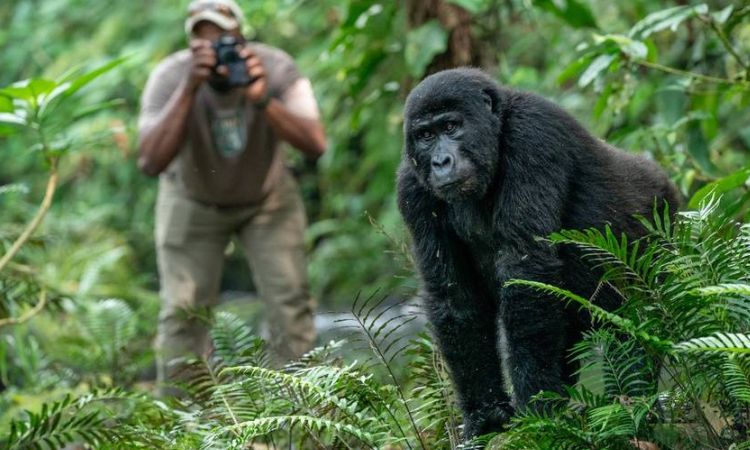
Below are the Gorilla Trekking Rules;
The Gorilla Trekking Age Limit Rule
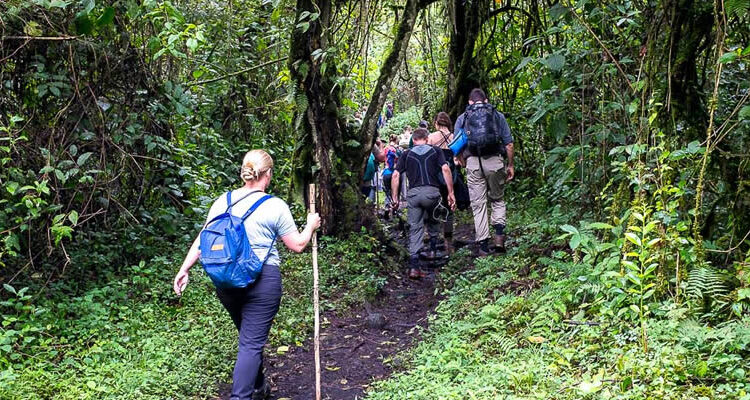
One of the strictest gorilla trekking rules is the minimum age requirement: visitors must be 15 years or older to trek gorillas in both Uganda and Rwanda. This age limit isn’t arbitrary — it reflects genuine concerns about younger children’s ability to stay quiet, follow instructions instantly, and manage several hours of strenuous forest hiking safely.
There are no exceptions to this rule regardless of a child’s maturity or fitness level, so families traveling with younger children should plan alternative activities during the trekking day.
The Group Size Rule: Maximum 8 Visitors Per Gorilla Family
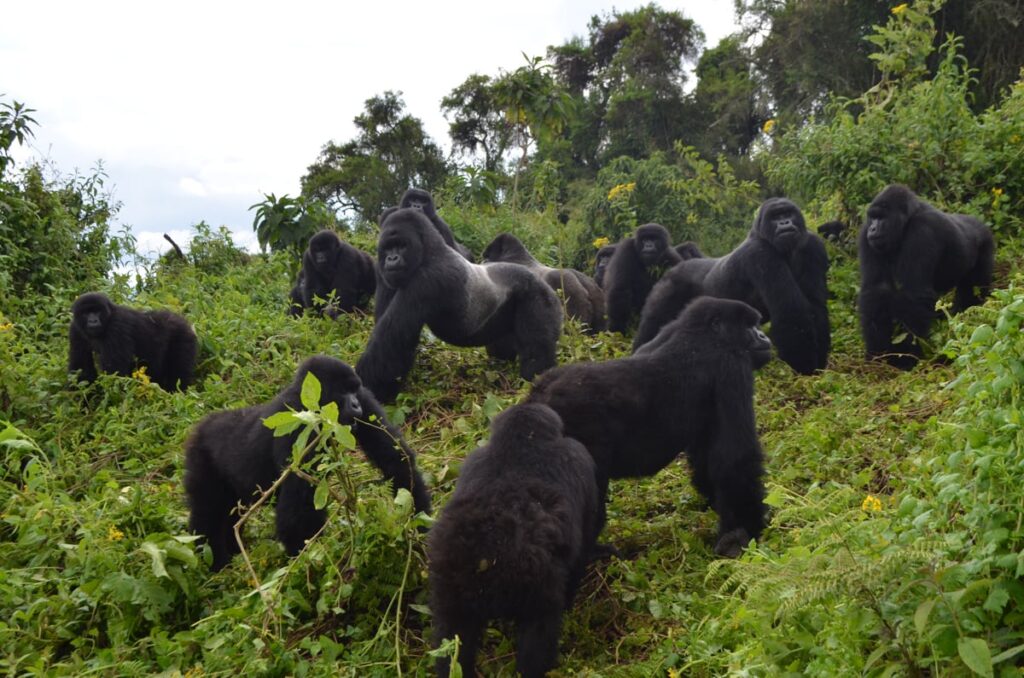
To minimize stress on habituated gorilla families, gorilla trekking group size is capped at a strict maximum of 8 visitors per gorilla family per day.
This rule directly limits the total number of permits issued daily across Bwindi Impenetrable National Park, Mgahinga Gorilla National Park, and Volcanoes National Park, which is exactly why gorilla permits sell out well in advance during peak season and why booking months ahead matters so much.
The 7-Meter Distance Rule
Once you reach a gorilla family, one of the most important gorilla trekking rules governs physical distance: visitors must remain at least 7 meters (roughly 23 feet) from the gorillas at all times.
This distance rule exists primarily to reduce the risk of disease transmission between humans and gorillas, given how genetically similar the two species are — a common human cold can be genuinely dangerous to a wild gorilla population with no prior exposure or immunity.
If a gorilla chooses to approach you rather than the reverse, guides will instruct you to stay calm and still rather than back away suddenly, since sudden movement can be misread as a threat.
The One-Hour Time Limit Rule
Regardless of how far you hiked to reach them, standard gorilla trekking rules cap your time with the family at exactly one hour. This strict time limit protects the gorillas from prolonged stress and repeated daily disruption to their natural feeding and resting patterns.
Travelers wanting significantly more time with a gorilla family — up to four hours rather than one — can instead book a dedicated gorilla habituation experience, offered through our 3 Days Uganda Gorilla Habituation Safari, which trades the standard one-hour visit for an extended encounter with a family still being acclimated to human presence.
The Health and Sickness Rule
Perhaps the single most important gorilla trekking rule, and the one most frequently overlooked by travelers: anyone showing symptoms of a cold, flu, cough, or other communicable illness will be denied entry to trek that day, no exceptions.
Because mountain gorillas have no natural immunity to many common human illnesses, a single sick visitor could seriously endanger an entire family group. Rangers conduct visual health checks during the morning briefing, and if you’re unwell, being honest about it protects the gorillas far more than it costs you — most permits allow rescheduling in genuine illness cases, covered in detail in our gorilla and chimpanzee permit cancellation and rescheduling policy.
The No Flash Photography Rule
Cameras are welcome on every trek, but flash photography is strictly prohibited under gorilla trekking rules across every park. A sudden flash can startle a gorilla, potentially triggering a defensive reaction from a protective silverback or an anxious mother.
Standard camera settings, adjusted for the forest’s low light, work perfectly well for capturing the encounter without any flash at all.
The Quiet Voices and Slow Movement Rule
Gorillas respond strongly to noise and sudden movement, so gorilla trekking etiquette requires visitors to keep their voices low at all times and move slowly and predictably around the family.
Loud talking, sudden gestures, or quick movements can all be misread as threatening behavior, particularly by a protective silverback.
Guides will actively remind the group of this rule throughout the encounter, especially if excitement understandably starts to build.
The No Eating, Drinking, or Smoking Rule
Visitors are not permitted to eat, drink, or smoke while in the presence of the gorillas — another gorilla trekking rule rooted in disease-prevention logic, since food or drink residue could theoretically transfer pathogens, and smoke can irritate both gorillas and fellow trekkers in close, forested conditions. Any snacks or water should be left with your porter before the final approach to the family.
The Waste and Toilet Rule
If you need the toilet during the trek, gorilla trekking rules require you to bury any waste at least 30cm deep, well away from trails, to prevent contamination of the forest ecosystem the gorillas depend on. Your guide will direct you to an appropriate spot if this need arises during the hike.
The Follow-Your-Guide Rule
Every gorilla trekking rule ultimately depends on one overarching principle: follow your guide and ranger’s instructions immediately and without hesitation.
Your guide reads gorilla behavior in real time and will adjust positioning, timing, or distance based on subtle cues most visitors wouldn’t notice — including recognizing a chest-beating display as a bluff warning rather than a genuine charge, something worth understanding before your trek by reading about silverback gorilla behavior and communication patterns in advance.
Permit and Documentation Rules
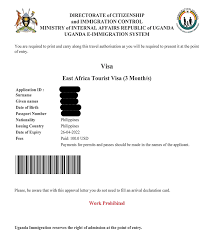
Every gorilla trekker must carry a valid, original passport and the confirmed gorilla trekking permit issued by UWA or RDB — copies are not accepted at park checkpoints.
As of 2026, a gorilla permit in Uganda costs $800 for foreign non-residents, while a Rwanda gorilla permit costs $1,500, with both requiring booking well in advance given the strict daily group-size rule limiting overall permit availability.
Our 3 Days Uganda Gorilla Safari and 3 Days Rwanda Gorilla Safari packages both include full permit booking as part of the arrangement, so this documentation rule is handled entirely on your behalf.
Why These Gorilla Trekking Rules Matter for Conservation
These gorilla trekking regulations are a direct contributor to one of conservation’s genuine success stories. Mountain gorillas are the only great ape species with a growing wild population — now estimated at roughly 1,063 individuals globally — a recovery that responsible, rules-based tourism has directly helped fund and protect.
Every permit fee paid under these rules supports anti-poaching patrols, habitat protection, and the local communities living alongside gorilla territory, a connection covered in more depth in our guide on how many mountain gorillas are left today.
Choosing the Right Gorilla Trekking Package Within These Rules
The rules themselves don’t change based on your budget — the 7-meter distance, one-hour limit, and health requirements apply identically whether you’re on a budget trek or a luxury itinerary.
What does change is everything around the trek itself. Our mid-range Bwindi gorilla trekking packages strike a comfortable balance for most travelers, while a 1-day Uganda gorilla safari suits those with tighter schedules who still want the same rules-compliant, fully guided encounter.
For the full picture of where gorilla trekking rules apply across Uganda’s park network, see our Uganda National Parks guide.
FAQ: Gorilla Trekking Rules
What is the minimum age for gorilla trekking? 15 years old, with no exceptions, in both Uganda and Rwanda.
How close can you get to a gorilla during trekking? Visitors must stay at least 7 meters (about 23 feet) away at all times.
How long can you spend with the gorillas? Exactly one hour under standard trekking rules, or up to four hours with a dedicated gorilla habituation permit.
Can I go trekking if I have a cold? No — anyone showing symptoms of illness will be denied entry that day to protect the gorillas from disease transmission.
Is flash photography allowed during gorilla trekking? No, flash photography is strictly prohibited across all gorilla trekking parks.
How many people can trek one gorilla family per day? A maximum of 8 visitors per family per day, a rule that directly limits daily permit availability.
Related Gorilla Trekking & Uganda Safari Guides
- 1 Day Uganda Gorilla Safari
- 3 Days Uganda Gorilla Safari
- 3 Days Rwanda Gorilla Safari
- 3 Days Uganda Gorilla Habituation Safari
- Mid-Range Bwindi Gorilla Trekking Packages
- Gorilla and Chimpanzee Permit Cancellations & Rescheduling Policy
- Silverback Gorilla: The Powerful Leader of Gorilla Families
- How Many Mountain Gorillas Are Left?
- Uganda National Parks Guide
- Contact Us to Book Your Gorilla Trek