Silverback Gorilla: The Powerful Leader of Gorilla Families
The silverback gorilla stands as the undisputed king of the primate world. This magnificent male gorilla leader commands respect through sheer size, intelligence, and protective instincts.
Whether you dream of witnessing a silverback gorilla in its natural habitat or learning every detail about silverback gorilla weight and silverback gorilla strength, this guide covers it all.
Mountain gorillas, one of the most iconic subspecies, roam the misty highlands of Central Africa, captivating travelers and scientists alike. These gentle giants symbolize raw power and family loyalty, making them a must-see for any wildlife enthusiast.
What Is a Silverback Gorilla?
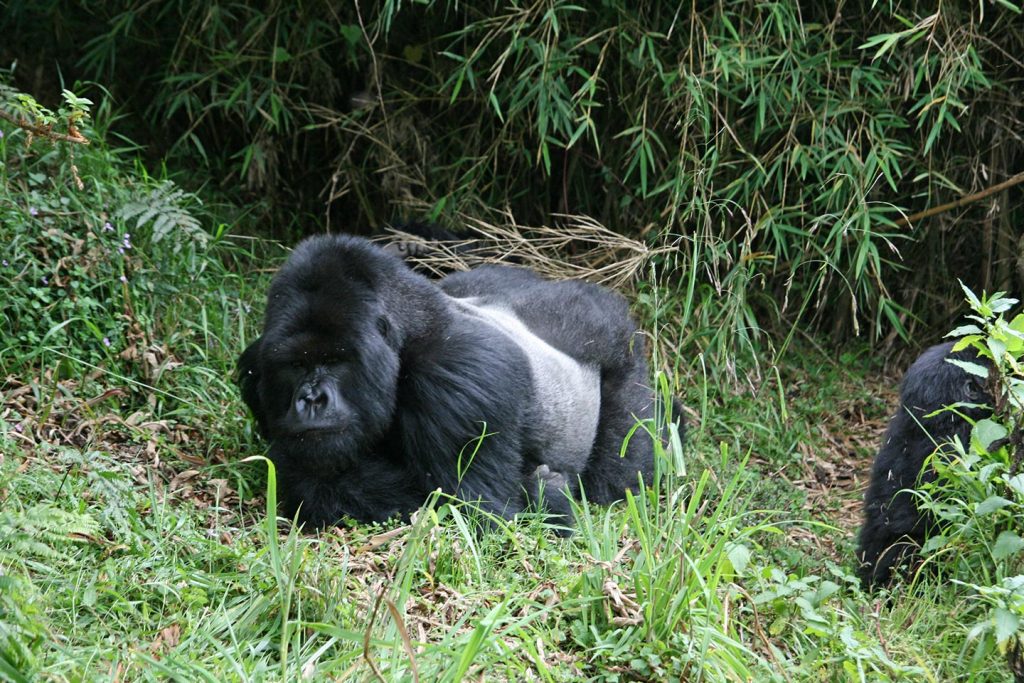
A silverback gorilla is not a separate species but the adult male leader of a gorilla family. The name comes from the distinctive silver-gray patch of hair that develops across the back and hips once the male reaches full maturity. This silver patch signals dominance and maturity to the rest of the group.
Silverbacks belong primarily to the Eastern Gorilla species (Gorilla beringei), which includes the critically endangered Mountain Gorilla and the Eastern Lowland Gorilla.
In Western Lowland Gorilla groups, silverbacks play the same vital role. These males typically take charge of a troop after challenging or succeeding older leaders, becoming the central figure in gorilla social structure.
The silverback gorilla’s role as male gorilla leader is earned through years of growth and displays of strength. Once he assumes leadership, the entire family relies on him for survival, guidance, and protection.
Physical Characteristics of the Silverback Gorilla
Silverback gorillas are the largest living primates on Earth. Their impressive build sets them apart from all other apes.
Silverback Gorilla Weight: Adult silverbacks typically weigh between 135–220 kg (300–485 lbs), with mountain gorillas often reaching the upper end. Some recorded wild silverbacks have weighed up to 267 kg. This massive silverback gorilla weight comes from dense muscle rather than fat—making them formidable yet surprisingly agile in the forest.
Height and Build: When standing upright, a silverback reaches 1.7–1.8 meters (5’6″–6 feet) tall. On all fours—their natural knuckle-walking posture—they stand about 1.4–1.6 meters at the shoulder. Their arm span stretches an incredible 2.3–2.7 meters, allowing them to grasp branches and intimidate rivals easily.
Strength and Jaws: Silverback gorilla strength is legendary. Their massive jaws and long canine teeth deliver a bite force of around 1,300 PSI—twice that of a lion. Combined with thick neck muscles and a prominent sagittal crest on the skull, these features support powerful chewing of tough vegetation.
These physical traits make the silverback gorilla perfectly adapted to life in dense African forests, where power and presence command respect.
Silverback Gorilla Strength: How Powerful Is the Male Gorilla Leader?
People search “silverback gorilla strength” more than almost any other gorilla fact—and for good reason. A fully grown silverback is estimated to be 4–10 times stronger than an average adult human male. Some experts say the equivalent of 9–20 strong men combined.
This silverback gorilla strength allows them to:
• Uproot thick bamboo stalks with ease
• Bend iron bars in captivity (as documented in zoos)
• Lift or throw objects weighing over 800 kg
• Defend their family against leopards, poachers, or rival silverbacks
Despite this immense power, silverbacks are not naturally aggressive toward humans. They prefer displays of dominance—such as chest beating or bluff charges—before resorting to physical confrontation. Their strength serves primarily to protect the group, not to attack unprovoked.
The silverback gorilla strength stems from a higher muscle-to-body-mass ratio and powerful skeletal structure, making them one of nature’s most impressive powerhouses.
Role of the Silverback in the Gorilla Family
As the male gorilla leader, the silverback holds absolute authority over the troop. Western Lowland Gorilla families and Mountain Gorilla groups alike depend on him for survival.
His daily responsibilities include:
• Protection: The silverback guards against predators and rival males, often risking his life to defend infants and females.
• Leadership: He decides when the group feeds, travels, and rests, guiding them through the forest.
• Mating: The dominant silverback mates with all adult females, ensuring the next generation carries his strong genes.
• Conflict Resolution: He mediates disputes within the group using vocalizations and gentle gestures rather than violence.
In larger troops (up to 30+ members), subordinate blackbacks (younger males) may assist with protection, but the silverback remains the undisputed head. His calm, charismatic leadership keeps the family cohesive and safe.
Where Silverback Gorillas Live
Silverback gorillas inhabit the tropical and montane forests of Central Africa. Mountain gorillas—the subspecies most famous for trekking—live exclusively in the Virunga Mountains and Bwindi Impenetrable National Park.
Key habitats include:
• Bwindi Impenetrable National Park, Uganda – Home to over 400 mountain gorillas across 37 families.
• Volcanoes National Park, Rwanda – Part of the Virunga range, famous for habituated groups.
• Virunga National Park – Straddling Uganda, Rwanda, and the Democratic Republic of Congo.
These misty, high-altitude forests (2,200–4,300 meters) provide the perfect environment for silverback gorillas to thrive on abundant vegetation.
Silverback Gorilla Behavior
Silverback gorillas communicate through a rich repertoire of sounds, gestures, and displays.
The most iconic behavior is chest beating—a rapid drumming on the chest that produces a sound audible over a kilometer away. Research shows this honest signal advertises the silverback’s exact body size to rivals and females. Other vocalizations include grunts, roars, and belches to express contentment or warning.
Silverbacks are territorial but not strictly aggressive. They use bluff charges and tree-slapping to deter intruders. Within the family, they show surprising gentleness—grooming infants and sharing food.
Their knuckle-walking locomotion and daily routine of feeding (14 hours) and resting (10 hours) reveal a peaceful, plant-based lifestyle despite their fearsome reputation.
Diet of Silverback Gorillas
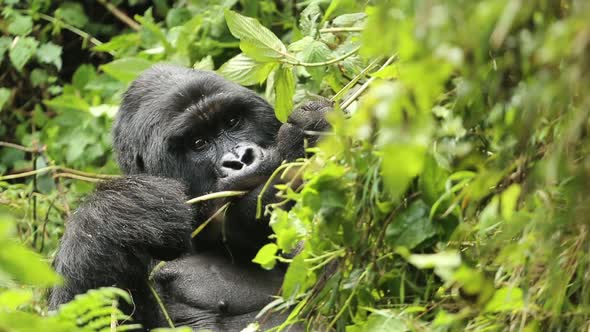
Silverback gorillas are strict herbivores. An adult male consumes up to 60 pounds (27 kg) of vegetation daily.
Their diet consists mainly of:
• Leaves and shoots
• Wild fruits (when in season)
• Bamboo stems
• Tree bark and pith
• Herbs and vines
In Bwindi and Volcanoes National Parks, mountain gorillas favor nettles, thistles, and bamboo—foods rich in fiber and moisture. They rarely drink water because their leafy diet provides enough hydration. This selective feeding supports their massive silverback gorilla weight and incredible strength.
Life Cycle of a Silverback Gorilla
Male gorillas follow a clear developmental path:
• Infancy (0–3 years): Dependent on mother.
• Juvenile (3–8 years): Playful and learning.
• Blackback (8–12/15 years): Adolescent males without silver hair; may leave the group.
• Silverback (12–15+ years): Full maturity brings the silver patch and leadership potential.
Silverbacks reach peak strength around 15–18 years and can lead a group for 10–20 years. Lifespan in the wild averages 35–40 years, though some reach 50+ in protected areas.
Silverback Gorilla vs Other Gorillas
Silverback vs Blackback: Blackbacks are younger males (8–12 years) lacking the silver patch. They assist the dominant silverback but do not lead.
Male vs Female Gorillas: Silverbacks are roughly twice the weight and size of females (females average 70–100 kg). Females focus on raising young while males protect.
Mountain vs Lowland Gorillas: Mountain gorillas (Eastern subspecies) have longer, thicker fur for cold highlands and slightly larger bodies than Western Lowland Gorillas. Lowland gorillas inhabit denser, fruit-rich forests at lower altitudes.
Gorilla Trekking Experience with Silverback Gorillas
Nothing compares to standing just meters from a wild silverback gorilla. In Uganda’s Bwindi Impenetrable National Park and Mgahinga Gorilla National Park, tourists trek through lush forests to spend one magical hour with habituated groups.
Rwanda’s Volcanoes National Park offers similar unforgettable encounters. Permits are issued by the Uganda Wildlife Authority (UWA) for Bwindi and Mgahinga (US$800 for international visitors) and by Rwanda Development Board for Volcanoes NP.
Guided by expert rangers, visitors learn gorilla behavior while contributing directly to conservation. The experience leaves lifelong memories of the silverback’s calm gaze and protective presence.
Conservation of Silverback Gorillas
Silverback gorillas face serious threats: habitat loss from agriculture, poaching for bushmeat or snares, and diseases transmitted from humans (including Ebola and respiratory infections). Civil unrest in border regions adds further risk.
Thankfully, dedicated efforts by organizations, governments, and communities have reversed the decline. Mountain gorilla numbers have risen from around 250 in the 1980s to over 1,000 today. Strict anti-poaching patrols, community education, and eco-tourism funding continue to protect these gentle giants.
Best Time to See Silverback Gorillas
The ideal seasons for gorilla trekking in Uganda and Rwanda are the dry months:
• June to September
• December to February
Trails are drier, vegetation thinner, and visibility better. Rainy seasons (March–May, October–November) still allow trekking but can be muddier. Permits book up fast—reserve months in advance!
Top 15 Amazing Silverback Gorilla Facts
- Silverback gorillas are the largest living primates.
- Silverback gorilla weight reaches up to 485 pounds (220 kg).
- They possess silverback gorilla strength equal to 9–10 strong adult men.
- A silverback’s bite force measures 1,300 PSI—double a lion’s.
- They lead groups of up to 30+ gorillas.
- Chest beating honestly signals their exact body size.
- Silverbacks become leaders around 12–15 years old.
- They eat up to 60 pounds of vegetation daily.
- Mountain gorillas live only in Uganda, Rwanda, and DRC.
- They can live 35–40 years in the wild.
- Silverbacks rarely drink water—their diet provides enough moisture.
- They are the only great ape whose wild population is increasing.
- Arm span reaches 2.7 meters—longer than their height.
- Silverback gorillas are peaceful vegetarians despite their power.
- One hour with a habituated silverback changes your life forever.
FAQs about Silverback Gorillas
How strong is a silverback gorilla?
Silverback gorilla strength equals 4–10 times that of an average human, with the ability to lift over 800 kg and deliver a 1,300 PSI bite.
How much does a silverback gorilla weigh?
Silverback gorilla weight ranges from 135–220 kg (300–485 lbs), with some individuals heavier.
Why are they called silverbacks?
The silver-gray hair patch on their back and hips develops at maturity, signaling dominance.
Where can you see silverback gorillas in Africa?
Primarily in Bwindi Impenetrable National Park and Mgahinga Gorilla National Park (Uganda) and Volcanoes National Park (Rwanda).
Are silverback gorillas dangerous?
Not to respectful visitors. They are gentle giants unless threatened. Rangers ensure safe distances during trekking.
Ready to meet these incredible silverback gorillas face-to-face? Come see silverback gorillas in Uganda and Rwanda with us at All Uganda Safari Tours.
Our expert guides will take you on unforgettable gorilla trekking adventures in Bwindi and Volcanoes National Park, combining world-class safaris with responsible tourism that directly supports conservation. Book your silverback gorilla experience today and create memories that last a lifetime!