Silverback Gorilla Weight: How Much Does a Silverback Gorilla Weigh?
Silverback Gorilla Weight: On average, an adult male silverback gorilla weighs between 140 and 220 kg (300–485 lbs), with mountain gorillas often tipping the scales toward the higher end due to their fiber-rich diet and rugged habitat. Female gorillas are significantly smaller, and juveniles even more so.
Here is a clear comparison table for different gorilla types:
|
Gorilla Type |
Average Weight |
|
Adult Male Silverback |
140–220 kg (300–485 lbs) |
|
Adult Female Gorilla |
70–110 kg (150–240 lbs) |
|
Juvenile Gorilla |
30–60 kg (66–132 lbs) |
Different subspecies show slight variations in silverback gorilla weight. Mountain gorillas (Gorilla beringei beringei), found in Uganda’s Bwindi and Mgahinga parks, average around 159–195 kg for dominant males.
Eastern lowland gorillas (Gorilla beringei graueri) can reach up to 220 kg, making them among the heaviest. Western lowland gorillas (Gorilla gorilla gorilla), native to Central African forests, average closer to 169 kg but can still exceed 200 kg in exceptional cases.
These weight differences arise from habitat, food availability, and genetics. In the wild, silverbacks rarely exceed 225 kg because constant movement and a high-fiber diet keep them lean yet muscular.
Captive gorillas sometimes reach 310 kg due to less activity and richer feeding regimes. Understanding these averages helps travelers appreciate the sheer presence of a silverback during a trek – his male gorilla weight alone can make the forest floor tremble when he charges in display.
About a silverback gorilla
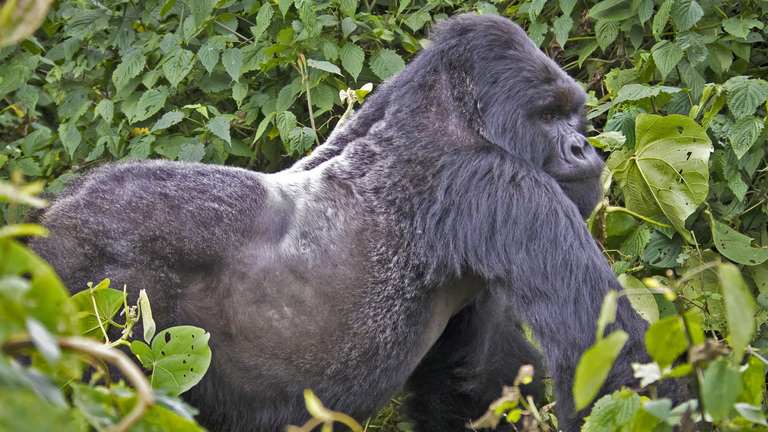
A silverback gorilla is an adult male gorilla, instantly recognizable by the striking silver saddle of hair across his back that develops around age 12. This dominant male protects, guides, and mates with the group, often numbering up to 30 individuals. His sheer size and strength make him a symbol of raw power in the wild.
The silverback gorilla weight fascinates wildlife lovers and travelers alike. These gentle giants can weigh nearly three times as much as an average adult human, yet they move through dense jungle with surprising grace.
Their impressive mass comes from a plant-based diet, powerful muscle development, and evolutionary adaptations for leadership and defense.
Mountain gorillas, in particular, thrive in the high-altitude forests of Uganda, Rwanda, and the Democratic Republic of Congo, where the dominant male’s size ensures group survival.
For visitors to East Africa, understanding silverback gorilla weight adds depth to the unforgettable experience of gorilla trekking. Seeing these majestic creatures up close in places like Bwindi Impenetrable National Park highlights why wildlife tourism is vital.
It funds conservation and supports local communities while offering a once-in-a-lifetime encounter with one of our closest primate relatives. Whether you’re planning a safari or simply curious about nature’s wonders, the silverback gorilla weight reveals why these animals command respect and awe.
Why Silverback Gorillas Are So Heavy
Several biological and environmental factors explain the impressive silverback gorilla weight. First, muscle mass dominates their body composition. Silverbacks develop thick, powerful shoulders, arms, and chests to lead and defend their families. Unlike humans, gorillas have a higher proportion of fast-twitch muscle fibers, built for short bursts of immense power.
Diet plays a huge role. These herbivores consume vast quantities of vegetation daily, which supports steady weight gain and muscle maintenance. Age and dominance also matter – only mature males over 12 years develop the silver back and reach peak weight as they establish leadership.
Genetics within each subspecies further influence size; mountain gorillas in cooler highlands tend to carry more mass for insulation.
The silverback’s role as protector contributes directly to his larger body size. He must intimidate rivals and shield the troop from leopards or poachers.
This evolutionary pressure favors heavier, stronger males. For tourists exploring East Africa, grasping why silverbacks are so heavy deepens the thrill of gorilla trekking.
When you witness a 200 kg leader calmly foraging or chest-beating, you understand his weight is not just size – it’s survival strategy in action.
Silverback Gorilla Weight vs Human Weight
Comparisons with humans always spark curiosity and explain why silverback gorilla weight draws so many searches. An average adult man weighs 70–80 kg (154–176 lbs). A silverback can weigh up to 220 kg – nearly three times heavier. Even a lighter silverback at 140 kg outweighs most humans by double.
Height is similar; both stand around 1.7–1.8 meters when upright. Yet gorillas possess far denser muscle and bone structure. Pound for pound, a silverback’s strength dwarfs ours. While a strong human might deadlift 400 kg, a silverback can handle nearly 1,800 kg (4,000 lbs) – over 10 times his body weight in some estimates.
This disparity fascinates safari-goers. During gorilla trekking in Uganda, trackers often share stories of silverbacks bending thick bamboo or uprooting small trees.
Their silverback gorilla weight translates into raw power that humans can only admire from a safe distance. These comparisons highlight why responsible tourism keeps us at least 7 meters away – respect for a creature three times our weight yet surprisingly peaceful when unthreatened.
Silverback Gorilla Height and Size
Silverback gorilla size extends far beyond weight. When standing upright, adult males reach 1.5–1.8 meters (5–6 feet), with exceptional individuals recorded at 1.95 meters. Their arm span stretches 2.3–2.6 meters, allowing them to navigate vines and branches effortlessly.
Chest girth often exceeds 1.5–2 meters, creating a barrel-shaped torso packed with muscle. Hands and feet are enormous – a silverback’s hand can span 30 cm across. This combination of height, reach, and silverback gorilla weight makes them appear even larger in the forest understory.
In Bwindi Impenetrable National Park, visitors frequently note how silverbacks seem to fill the trail when they stand to display. Their size serves multiple purposes: intimidation, foraging reach, and protection.
For wildlife photographers and trekkers, capturing the full scale of a mountain gorilla’s dimensions creates lasting memories and underscores the importance of preserving these habitats.
Silverback Gorilla Strength
Weight and strength go hand in hand. A silverback gorilla weight in kg fuels extraordinary power. Bite force reaches approximately 1,300 PSI – eight times stronger than a human’s 162 PSI – enough to crush tough stems and defend against threats.
They can lift or drag objects up to 1,800 lbs (816 kg), sprint short distances at 25 mph, and bend thick branches or small trees with ease. One documented silverback reportedly uprooted a 2-meter sapling in seconds. Climbing ability remains impressive despite their bulk; silverbacks scale trees to access fruit or survey territory.
Physical dominance within the troop relies on this strength. Chest-beating displays amplify their size and power, audible over a kilometer. Compared to humans, silverbacks are estimated 6–20 times stronger overall, depending on the activity.
This combination of silverback gorilla weight and muscle explains why they rarely need to fight – their presence alone commands respect. Trekking visitors often hear rangers explain that silverbacks only charge when feeling threatened, turning their strength into a protective rather than aggressive force.
Diet of Silverback Gorillas
A silverback’s massive weight requires an equally massive appetite. These herbivores eat 18–30 kg (40–66 lbs) of vegetation daily – roughly the weight of a large suitcase. Their diet consists mainly of leaves (60%), stems, bamboo shoots, fruits, bark, and pith from over 140 plant species.
Mountain gorillas favor high-fiber foods like wild celery, nettles, bamboo shoots, and Galium vines, which grow abundantly in Uganda’s highlands. Western lowland gorillas enjoy more fruit when available. They occasionally supplement with insects or snails for protein, but plants dominate.
This high-volume, low-calorie diet keeps silverbacks heavy yet healthy. Digestion takes hours, with long intestines processing tough fibers. Daily foraging occupies 6–8 hours, helping maintain their silverback gorilla weight while shaping the forest ecosystem by dispersing seeds and clearing undergrowth.
For tourists on gorilla safaris, watching a silverback methodically strip bamboo reveals how diet directly supports the impressive size they admire.
Where Silverback Gorillas Live
Mountain gorillas – the stars of gorilla trekking – inhabit specific protected areas in East Africa. In Uganda, over half the world’s population lives in Bwindi Impenetrable National Park and Mgahinga Gorilla National Park. Rwanda’s Volcanoes National Park hosts the rest of the Virunga population, shared with the Democratic Republic of Congo.
These misty, high-altitude forests (2,200–4,100 meters) provide the perfect environment for mountain gorilla weight maintenance. Dense vegetation, cool temperatures, and minimal human interference allow silverbacks to thrive.
Bwindi’s ancient rainforest shelters 400+ gorillas across habituated groups. Mgahinga offers dramatic volcanic scenery. Volcanoes National Park features bamboo zones ideal for foraging.
Wildlife tourism centers here because these locations offer safe, guided encounters. Visitors to Uganda or Rwanda quickly understand why these parks are global treasures – they protect the exact habitats that sustain the silverback’s impressive size and strength.
Gorilla Conservation
Mountain gorillas remain endangered, but numbers have risen from around 600 in the 1980s to over 1,000 today thanks to dedicated efforts.
Organizations like the World Wildlife Fund (WWF), Dian Fossey Gorilla Fund, and Uganda Wildlife Authority (UWA) lead anti-poaching patrols, habitat restoration, and community education.
Gorilla trekking tourism provides the economic incentive for protection. Permit fees – $800 in Uganda and $1,500 in Rwanda – fund ranger salaries, veterinary care, and local schools. Every trekker directly supports conservation.
Nature Safaris Africa partners with UWA to ensure responsible visits. By experiencing silverback gorilla weight and behavior firsthand, travelers become ambassadors for the species.
Ongoing monitoring, veterinary programs, and habituation processes keep these gentle giants safe for future generations.
Interesting Facts About Silverback Gorillas
- A single silverback leads groups of up to 30 gorillas, making all major decisions.
- They communicate with over 20 distinct vocalizations, from grunts to roars.
- Silverbacks rarely attack humans unless provoked – most charges are bluff displays.
- They build new nests every night from branches and leaves.
- A silverback’s chest beat can be heard a kilometer away and signals size and strength.
- They live 35–40 years in the wild and up to 50 in captivity.
- Infants ride on their mother’s back until age 3, then learn from the silverback.
These facts make every trek unforgettable and highlight why understanding silverback gorilla weight enriches the experience.
FAQs about silverback gorilla weight
How much does a silverback gorilla weigh?
Adult males average 140–220 kg (300–485 lbs), varying by subspecies and habitat. Mountain gorillas in Uganda often reach 159–195 kg.
What is the heaviest gorilla ever recorded?
The heaviest wild silverback weighed 267 kg (589 lbs), shot in Cameroon in the 20th century. Captive individuals have reached 310 kg.
Are gorillas stronger than humans?
Yes – dramatically so. A silverback can lift up to 1,800 lbs and possesses 6–20 times human strength depending on the task, despite similar height.
How tall is a silverback gorilla?
Standing upright, they measure 1.5–1.8 meters (5–6 feet), with arm spans up to 2.6 meters.
How much can a silverback gorilla lift?
Estimates reach 1,800 lbs (816 kg) – roughly 10 times body weight for an average silverback.
Discover more about these incredible primates through our other guides:
- Gorilla trekking in Uganda – everything you need for your Bwindi adventure.
- Gorilla lifespan and family life – learn how silverbacks lead for decades.
- Gorilla families in Rwanda – compare experiences in Volcanoes National Park.
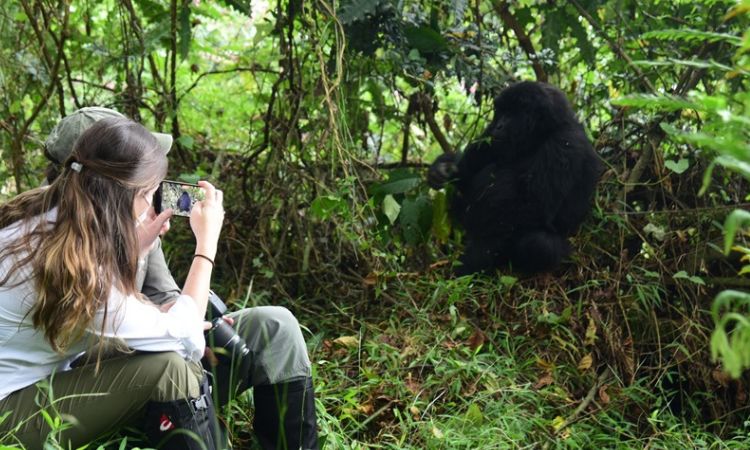
3 Related Tour Packages to See Silverback Gorillas
Ready to experience the majesty of silverback gorillas in their natural habitat? Contact Nature Safaris Africa today to book your adventure and create memories that last a lifetime.
In conclusion, the silverback gorilla weight – typically 140–220 kg of pure muscle and majesty – defines these incredible animals. From their protective role to their contribution to tourism and conservation in Uganda and Rwanda, silverbacks continue to inspire awe.
Whether planning your first trek or deepening your knowledge, understanding how much a silverback gorilla weighs brings you closer to one of Earth’s most remarkable species.
Contact us today to book your Silverback gorilla safari and witness their power firsthand.