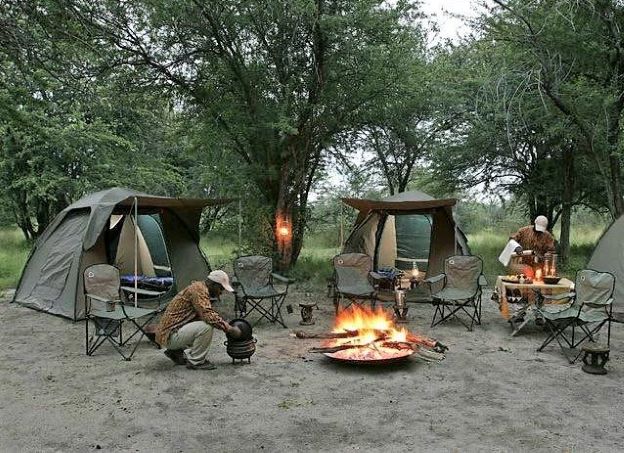
Is camping available in Uganda national parks — Everything You Need to Know
Yes — camping is available in Uganda’s national parks, and it is one of the most affordable, immersive, and rewarding ways to experience Uganda’s extraordinary wildlife.
The Uganda Wildlife Authority (UWA) operates designated public campsites inside most of Uganda’s major national parks, including Murchison Falls, Queen Elizabeth, Bwindi Impenetrable Forest, Kidepo Valley, Lake Mburo, Kibale Forest, and Mgahinga Gorilla National Park.
In addition to basic public camping, Uganda offers an exciting range of tented safari camps — permanent, fully-serviced canvas structures with real beds, en-suite bathrooms, and electricity — that give you the atmosphere of sleeping in the wild without sacrificing a moment’s comfort.
Whether you are a budget backpacker with a sleeping bag or a luxury traveler dreaming of a glamping safari under African stars, Uganda’s national parks have a camping option that fits your style and your budget.
Types of Camping Available in Uganda National Parks
Not all camping in Uganda is the same experience. Before you pack your tent and head to the bush, it helps to understand the three distinct categories of camping available across Uganda’s wildlife areas — because the differences in price, comfort, facilities, and wildlife exposure are significant.
1. Public Campsites (Budget Camping Uganda National Parks)
Public campsites are Uganda Wildlife Authority-managed pitches located inside or on the boundary of national parks. These are the most affordable camping option in Uganda, typically costing between $5 and $30 per person per night depending on the park.
Public campsites offer basic facilities: a cleared, level pitch for your tent, shared pit latrines or flush toilets, basic shower facilities (cold water in most cases, sometimes heated), and a campfire area.
Some public campsites inside Uganda national parks have small bandas — simple en-suite rondavels with a bed, mosquito net, and cold shower — available at a slightly higher rate for campers who want a roof over their head without the price of a lodge.
Public camping in Murchison Falls, Queen Elizabeth, and Kidepo national parks puts you genuinely inside the wilderness — hippos grunt from the riverbank at night, hyenas patrol the camp perimeter, and lions occasionally roar from just beyond the tree line. This is raw, authentic Uganda bush camping at its most memorable.
| ⚠️ Safety Note: Public campsites inside Uganda national parks are patrolled by UWA armed rangers at night. Never leave your tent after dark without a ranger escort — the wildlife is real and very close. |
2. Tented Safari Camps (Mid-Range and Luxury Camping Uganda)
Tented safari camps are permanent or semi-permanent canvas structures erected inside or on the fringes of Uganda’s national parks. These are not basic camping — they are a fully-serviced accommodation experience that happens to be delivered inside a tent.
A quality tented camp in Uganda features a spacious walk-in canvas room on a raised wooden platform, a proper king or twin bed with clean linen, an en-suite bathroom with flush toilet and hot shower, kerosene lanterns or solar lighting, and a dining tent or open veranda where meals are served.
Tented safari camps in Uganda parks like Bwindi Impenetrable Forest, Queen Elizabeth, and Murchison Falls deliver the quintessential ‘sleeping in the African wild’ experience — the canvas walls amplify every night sound from the surrounding bush — while keeping you completely comfortable and safe.
Mid-range tented camps in Uganda typically cost $80–$200 per person per night on a full-board basis, while premium luxury tented camps range from $250 to $500+ per person per night.
3. Fly Camping (Overnight Wilderness Camping Uganda)
Fly camping is the most adventurous and atmospheric form of camping available in Uganda national parks. On a fly camping excursion, a small group of travelers walks deep into the bush with an armed ranger guide, sets up lightweight sleeping shelters at a remote wilderness location, cooks over an open fire, and sleeps under a star canopy with the sounds of the African night all around them.
There are no permanent structures, no electricity, and no fences. Fly camping in Uganda is available in select areas of Murchison Falls National Park and Kidepo Valley National Park, and is best suited to fit, adventurous travelers who want an experience that goes far beyond anything a safari lodge can provide.
If you have ever imagined what it truly feels like to be part of the African wilderness rather than an observer of it, fly camping in a Uganda national park is the answer.
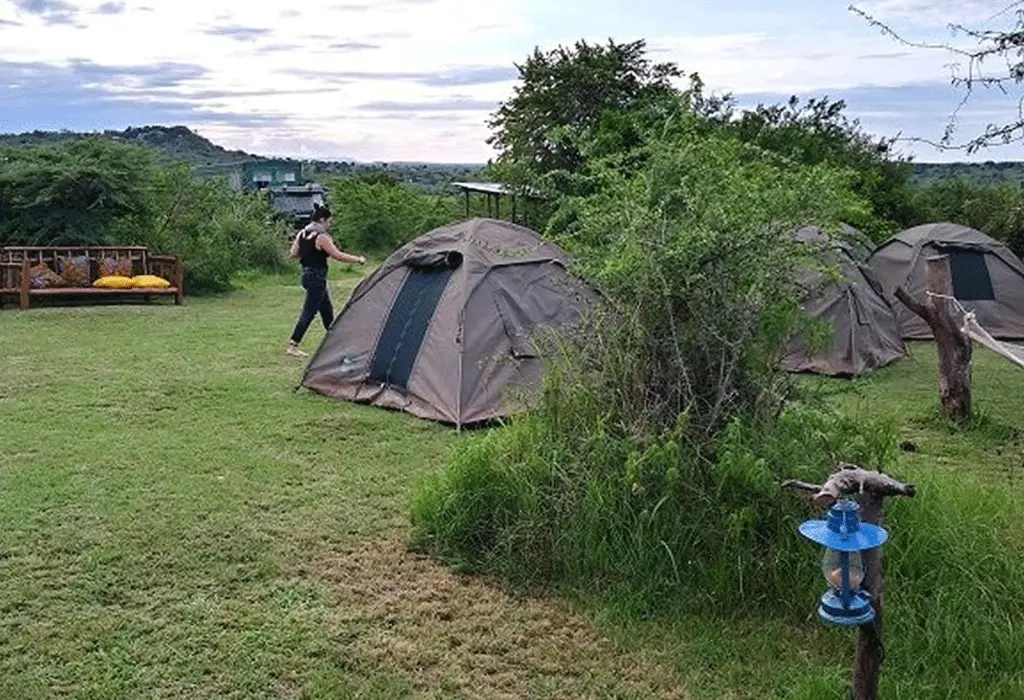
Best Camping Sites in Uganda National Parks — Park by Park Guide
Camping in Murchison Falls National Park
Murchison Falls National Park is Uganda’s largest protected area and offers the widest variety of camping experiences of any Uganda national park.
The Nile-side public campsite at Paraa is one of the most dramatically situated campsites in all of East Africa — you pitch your tent on a grassy bank just metres from the Victoria Nile, where massive hippo pods surface at dusk and Nile crocodiles bask on the opposite shore at dawn.
The sound of hippos grunting through the night is the backdrop to your sleep, and at dawn, fish eagles call overhead as the mist rises off the river.
Murchison Falls also has Red Chilli Rest Camp on the Nile’s north bank — a popular budget traveler base with camping pitches, basic banda accommodation, a bar, and a swimming pool.
For a more immersive bush camping experience, the remote Buligi Circuit campsites on the park’s north bank put you in the middle of classic savannah, close to lion and elephant territory.
Explore the 3-Day Murchison Falls National Park Safari — combinable with a campsite stay on the Nile. →
Camping in Queen Elizabeth National Park
Queen Elizabeth National Park has several well-maintained public campsites spread across its diverse landscape of savannah, wetland, and forest.
The Mweya Peninsula campsite is the most popular, perched on a narrow strip of land between Lake Edward and the Kazinga Channel — with hippos feeding on the lawn at night and elephants wandering past at dawn. Warthogs, monitor lizards, and giant forest hogs are regular uninvited campsite visitors.
Ishasha sector in the south of Queen Elizabeth National Park also has a basic campsite where — if you are lucky — you will hear the tree-climbing lions of Ishasha calling through the darkness.
Camping in Queen Elizabeth National Park is a genuine wild-Africa experience at a fraction of the cost of a lodge stay, and the wildlife viewing from the campsite itself is often extraordinary.
Book the 3-Day Queen Elizabeth National Park Safari with campsite accommodation options. →
Camping in Bwindi Impenetrable Forest National Park
Camping in Bwindi is a unique and atmospheric experience — sleeping inside one of Africa’s oldest rainforests, surrounded by the calls of Albertine Rift birds and the rustle of forest vegetation.
Bwindi has several budget campsites near its main gorilla trekking sectors: Buhoma, Ruhija, Rushaga, and Nkuringo. The campsites at Bwindi sit at elevations of 1,600–2,300 metres, meaning nights are genuinely cold — a warm sleeping bag rated to 5°C is essential for camping in Bwindi.
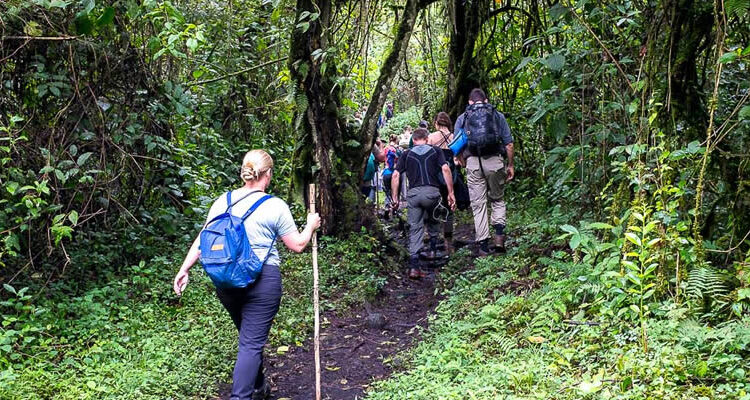
For travelers combining gorilla trekking with a camping Uganda adventure, overnighting at a Bwindi campsite the night before your gorilla trek means you wake up already inside the forest, close to your departure point, and can begin the trek fully rested without a long morning drive.
See gorilla trekking options combined with forest camping in the 3-Day Uganda Gorilla Habituation Safari. →
Camping in Kidepo Valley National Park
Kidepo Valley National Park is arguably the most spectacular setting for camping in any Uganda national park. This remote, semi-arid wilderness in Uganda’s far northeast — often described as the most beautiful national park in Africa — has two public campsites: one near Apoka headquarters and a more remote fly-camping site in the stunning Narus Valley.
Camping in Kidepo means falling asleep to the sound of lions on the valley floor, watching cheetah at sunrise from your tent fly, and being woken by a parade of elephants moving through the dry riverbed below camp.
Because Kidepo is so remote and rarely visited by mass tourism, the camping experience here is utterly pristine — just you, the wilderness, and an almost unreal density of wildlife.
Discover the 4-Day Kidepo Wildlife Tour — the ultimate Uganda camping safari destination. →
Camping in Lake Mburo National Park
Lake Mburo National Park is Uganda’s most accessible national park for camping, sitting just 3 hours from Kampala and offering one of Uganda’s most beginner-friendly bush camping experiences.
The Rwonyo campsite on the shores of Lake Mburo is the most popular, with a backdrop of acacia woodland, zebra and impala grazing at the water’s edge, and hippos visible from the campsite at almost any hour.
Lake Mburo is one of the few Uganda national parks where you can do guided walking safaris and night game drives — meaning campers can explore the park on foot at dawn and track nocturnal wildlife by spotlight after dinner.
For first-time Uganda campers based in Kampala, a weekend camping trip to Lake Mburo is the perfect introduction to Uganda national park camping.
Book the 2-Day Lake Mburo Safari — ideal for a Kampala-based camping weekend. →
Camping in Kibale Forest National Park
Kibale Forest National Park is home to over 1,500 chimpanzees and more primate species than any other forest in East Africa. Camping in Kibale gives you the deeply immersive experience of waking up inside a living primate forest — before sunrise, the calls of chimpanzees, black-and-white colobus monkeys, and red-tailed monkeys build into a symphony that no alarm clock can rival.
The Kanyanchu campsite near Kibale’s main visitor centre is the primary camping base, close to the chimp tracking trails and within reach of the Bigodi Wetland Sanctuary — one of Uganda’s best birding spots.
A night at Kibale campsite before an early chimpanzee tracking start is one of the most exciting ways to experience Uganda’s primate wildlife.
Explore 3-Day Chimpanzee Trekking Uganda — combinable with Kibale Forest campsite accommodation. →
Camping in Mgahinga Gorilla National Park
Mgahinga Gorilla National Park sits at the junction of Uganda, Rwanda, and Congo in the stunning Virunga volcano landscape. Camping in Mgahinga is a high-altitude experience — the park’s campsites sit at approximately 2,227 metres above sea level, which means temperatures drop sharply at night.
The reward for wrapping up warm is waking to the sight of three extinct volcanoes — Muhavura, Gahinga, and Sabinyo — lit golden by sunrise, while golden monkeys call from the bamboo forest below.
Mgahinga is the only Uganda national park where golden monkey tracking, gorilla trekking, and a visit to a Batwa pygmy cultural village can all be combined in a single camping itinerary.
Book the 5-Day Mgahinga Volcano Gorilla Adventure — a remarkable high-altitude camping and gorilla experience. →
Uganda National Park Campsite Comparison 2026
Here is a side-by-side comparison of public camping options across Uganda’s major national parks to help you choose the right camping safari destination for your trip:
| National Park | Campsite Name(s) | Approx. Cost/Person/Night | Key Wildlife at Night | Facilities |
| Murchison Falls NP | Paraa Nile Camp, Red Chilli, Buligi Circuit | $10–30 | Hippos, crocodiles, lions | Toilets, showers, bar, pool (Red Chilli) |
| Queen Elizabeth NP | Mweya Peninsula, Ishasha Campsite | $10–25 | Hippos, elephants, lions (Ishasha) | Flush toilets, cold showers, cooking area |
| Bwindi Impenetrable NP | Buhoma, Rushaga, Nkuringo, Ruhija | $15–30 | Forest birds, chimpanzees | Basic toilets, cold showers, campfire area |
| Kidepo Valley NP | Apoka Campsite, Narus Valley Fly Camp | $10–25 | Lions, elephants, cheetah | Basic pit latrines, campfire, ranger patrol |
| Lake Mburo NP | Rwonyo Campsite | $10–20 | Hippos, zebra, impala | Flush toilets, cold showers, lakeside setting |
| Kibale Forest NP | Kanyanchu Campsite | $10–20 | Chimpanzees, monkeys | Basic toilets, showers, close to chimp trails |
| Mgahinga Gorilla NP | Ntebeko Campsite | $15–30 | Buffalo, golden monkeys | Basic facilities, volcano views, cold nights |
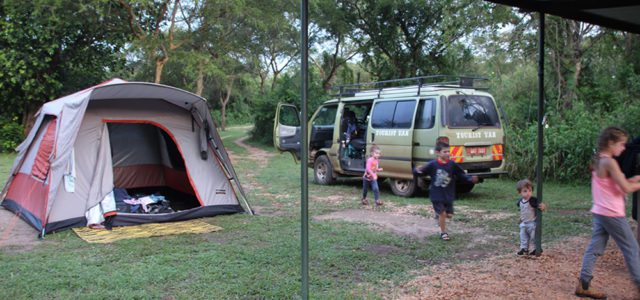
5 Best Uganda Camping Safari Packages for 2026
The most rewarding way to experience camping in Uganda national parks is through a guided camping safari package — where your campsite bookings, park fees, meals, guiding, and game drive vehicle are all arranged for you, and you simply arrive and immerse yourself in the wild. Here are the five best Uganda camping safari packages to consider for 2026.
1. 3-Day Murchison Falls National Park Safari — Best Nile Camping Experience
The 3-day Murchison Falls camping safari is the most popular short camping package in Uganda and the best introduction to bush camping on the Nile.
You drive north from Kampala through the rolling Ugandan countryside, cross the Nile by ferry at Paraa, and set up camp on the riverbank as hippos surface at dusk just metres away.
Over three days you will do morning and afternoon game drives through the big-game savannah north of the Nile — covering lions, elephants, giraffes, buffalo, and Uganda kob — and take the iconic boat cruise upstream to the thundering base of Murchison Falls, where the entire Nile is squeezed through a 7-metre gorge before dropping 45 metres in a roaring white cascade.
Evenings are spent around the campfire as hippos graze nearby and the Southern Cross rotates overhead. This is Uganda national park camping at its very best.
Book the 3-Day Murchison Falls National Park Safari →
2. 4-Day Murchison Falls Wildlife Safari — Best Extended Camping Safari in Northern Uganda
For travelers who want more time in Murchison Falls and a deeper big-game camping experience, the 4-day Murchison Falls wildlife safari extends your stay with an additional full day of game drives on both the north and south banks of the Nile.
The south bank of Murchison Falls National Park is home to different habitat and different species — including forest elephants, chimpanzees in Budongo Forest, and the rare shoebill stork along the Albert Delta.
Camping over four nights on the Nile gives you the full rhythm of the African bush: the pre-dawn lion roars, the morning game drive discoveries, the midday heat resting in the shade of an acacia, and the dramatic afternoon light transforming the Nile into liquid gold. This is one of the best value camping safari packages in Uganda for wildlife enthusiasts.
Book the 4-Day Murchison Falls Wildlife Safari →
3. 3-Day Uganda Gorilla Habituation Safari — Best Camping Safari with Gorilla Trekking
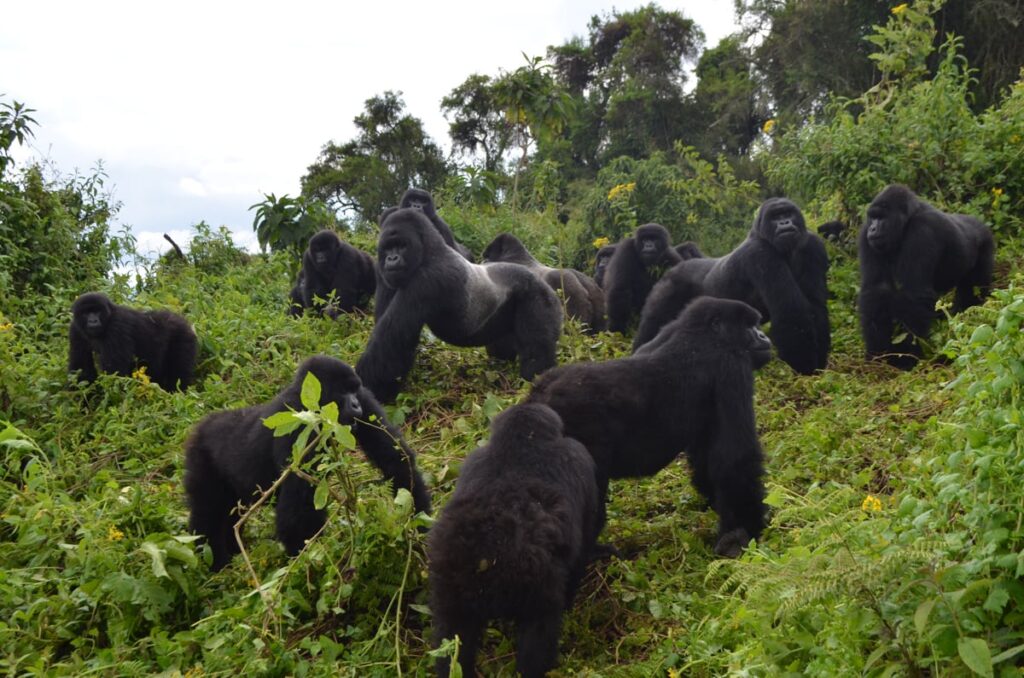
The 3-day Uganda gorilla habituation safari is the most extraordinary camping experience in Bwindi Impenetrable Forest — combining a night under canvas in one of Africa’s most ancient rainforests with the rare privilege of spending four hours (not one) with a semi-habituated gorilla family.
The gorilla habituation experience in Bwindi’s Rushaga sector is a limited-access activity: only four visitors are permitted per gorilla group per day, meaning your forest encounter is intimate, unhurried, and profoundly personal.
You arrive in Bwindi, spend the night at a forest campsite listening to the sounds of the ancient jungle, and set out at dawn with your UWA ranger guide for a half-day immersion with gorillas that no standard one-hour trek can replicate.
For travelers who believe that sleeping inside Africa’s oldest forests — with mountain gorillas just kilometres away — is the ultimate safari camping experience, this package delivers exactly that.
Book the 3-Day Uganda Gorilla Habituation Safari →
4. 4-Day Kidepo Wildlife Tour — Best Remote Wilderness Camping Safari in Uganda
The 4-day Kidepo Valley camping safari is the most adventurous camping package in Uganda — and for many travelers who make the journey to this remote corner of northeastern Uganda, it becomes the greatest African experience of their lives.
Kidepo Valley National Park receives fewer tourists than any other major Uganda national park, meaning your camping safari here is set against a backdrop of true African wilderness: vast open valleys, ancient volcanic mountains, and wildlife densities that haven’t changed in decades.
The 4-day itinerary covers two full days of game drives in the Narus and Narus valleys — where lions, buffalo, elephants, cheetah, caracal, bat-eared foxes, and ostriches are regularly encountered — plus a cultural visit to a Karamojong manyatta village, giving you unmatched insight into one of East Africa’s most celebrated pastoral cultures.
Kidepo is best reached by charter flight from Kampala (around 2 hours), making the journey as dramatic as the destination. Camping under Kidepo’s spectacular night sky, with the Milky Way arching overhead and lions calling from the valley below, is an experience you will never forget.
Book the 4-Day Kidepo Wildlife Tour →
5. 7-Day Uganda Wildlife Safari — Best Multi-Park Camping Safari Uganda
For travelers who want to experience camping across multiple Uganda national parks in a single safari, the 7-day Uganda wildlife safari is the perfect multi-destination camping adventure.
This week-long Uganda camping safari typically combines nights at Murchison Falls (Nile camping), Kibale Forest (primate forest camping), and Queen Elizabeth National Park (savannah and channel camping) — giving you three completely different camping ecosystems, three different wildlife communities, and a remarkable sense of Uganda’s extraordinary biodiversity within a single overarching journey.
Activities across the 7 days include Murchison Falls game drives and boat cruise, chimpanzee tracking in Kibale, a Kazinga Channel boat safari in Queen Elizabeth, and evening campfire meals under the stars at each park. This is the definitive camping safari in Uganda for travelers with a week to spend in the wild.
Book the 7-Day Uganda Wildlife Safari →
Uganda National Park Camping Packing List — What to Bring
Packing correctly for camping in Uganda national parks is essential — both for your comfort and for your safety. Uganda’s camping environments range from hot, humid Nile-side bush at Murchison to cold, misty highland forest at Bwindi and Mgahinga. Here is a comprehensive camping packing list for Uganda:
Sleeping & Shelter
- Quality dome tent with a rain fly and ground sheet — essential in Uganda’s wet season
- Sleeping bag rated to 5°C — even lowland parks get cold at night
- Sleeping mat or inflatable pad — never sleep on bare ground in a Uganda national park
- Headlamp with extra batteries — never walk around a Uganda campsite in total darkness
Clothing
- Long-sleeved shirts and long trousers in neutral colours (khaki, olive, beige) for game drives and evenings
- Warm fleece or down jacket — mandatory for Bwindi, Mgahinga, and Kidepo night temperatures
- Lightweight rain jacket — Uganda’s weather can change quickly at any time of year
- Sturdy, broken-in hiking boots with ankle support for walking safaris and gorilla trekking approaches
- Sandals or camp shoes for relaxing around the campsite
Health & Safety
- Prescription antimalarial medication — malaria risk is real in all Uganda national parks
- DEET insect repellent of 50% concentration or higher — apply at dusk and dawn
- Personal first aid kit: antiseptic, blister plasters, antihistamine, pain relief, rehydration sachets
- Water purification tablets or a quality portable filter — never drink untreated water at Uganda campsites
- Sunscreen SPF 50+ — Uganda’s equatorial sun is intense even through cloud cover
Camping Essentials
- Portable camping stove and fuel canister — some campsites have firewood but don’t rely on it
- Lightweight cooking pot, spork, and enamel mug
- Dry bags or ziplock bags for keeping electronics and documents dry
- Padlock for your tent zip — a simple deterrent against opportunistic theft at public campsites
- Small solar lantern or camp light for the tent interior
- Portable phone charger (power bank) — electricity is not available at most public campsites
Wildlife & Photography
- Binoculars 10×42 — indispensable for game drives and birding from the campsite
- Camera with telephoto zoom lens (minimum 300mm) for wildlife photography
- Extra memory cards and battery packs — you will take more photos than you think
- Wildlife field guide: Birds of East Africa and a Uganda mammals guide are worthwhile companions
| 🦁 Campsite Tip: At all Uganda national park public campsites, a UWA ranger must escort you if you need to leave your tent at night. Always establish the ranger patrol schedule when you arrive at camp — and never, under any circumstances, approach wildlife you encounter in the campsite. |
Rules and Regulations for Camping in Uganda National Parks
All visitors camping in Uganda national parks must follow Uganda Wildlife Authority regulations. These rules exist to protect both the wildlife and the campers, and they are strictly enforced by armed rangers:
- Never leave your tent or campsite after dark without a UWA ranger escort
- Do not feed any wildlife at or near the campsite — including monkeys, warthogs, and birds
- Store all food in sealed containers or vehicle boots at night — never inside your tent
- Keep noise to a minimum after 9 PM — excessive noise disturbs both wildlife and other campers
- No open fires outside of designated fire areas; always fully extinguish campfires before sleeping
- Dispose of waste only in designated bins — pack out all non-biodegradable litter if bins are full
- Do not collect firewood inside the national park — purchase it from the campsite office
- Washing and bathing in rivers, lakes, or streams inside national parks is strictly prohibited
- Vehicles must remain on designated tracks — off-road driving destroys delicate ecosystems
- Respect other campers’ privacy and space — Uganda’s public campsites can be intimate environments
Best Time to Go Camping in Uganda National Parks
Uganda’s equatorial climate makes camping possible year-round, but the experience differs significantly between the dry and wet seasons. The best time to go camping in a Uganda national park depends on which park you are visiting and what type of camping experience you are prioritizing.
| Season | Months | Camping Conditions | Best For |
| Long Dry Season | June – September | Minimal rainfall, firm ground, cool nights, animals gather at water sources | Game drive camping at Murchison, Queen Elizabeth, Kidepo — peak wildlife sightings |
| Short Dry Season | December – February | Dry conditions, excellent night skies, lower tourist numbers than June–Sep | Gorilla trek camping at Bwindi, Nile camping at Murchison, Kidepo fly camping |
| Long Wet Season | March – May | Heavy afternoon rains, muddy trails, lush green vegetation, lower prices | Kibale and Bwindi forest camping — forest feels most alive; chimp and gorilla activity is high |
| Short Wet Season | October – November | Short daily showers, green landscapes, cooler temperatures | Lake Mburo camping (accessible, not badly affected by short rains); good birding everywhere |
| 📅 Booking Tip: Book your Uganda national park campsite through your tour operator or directly with the Uganda Wildlife Authority at uwa.or.ug — popular campsites like Mweya in Queen Elizabeth and Paraa in Murchison fill up weeks in advance during June–September peak season. |
How Much Does Camping in Uganda National Parks Cost?
Camping in Uganda national parks is genuinely affordable compared to lodge accommodation, making it the most popular option for budget safari travelers, backpackers, overlanders, and families traveling to Uganda. Here is a breakdown of typical Uganda camping costs in 2026:
| Cost Item | Budget Range (USD) | Notes |
| Public campsite pitch fee | $5 – $30 per person per night | Varies by park; non-residents pay higher rate |
| Banda (basic rondavel) at campsite | $20 – $60 per person per night | Available at select UWA campsites |
| Mid-range tented safari camp | $80 – $200 per person per night | Full board (meals included); guided activities extra |
| Luxury glamping tented camp | $250 – $500+ per person per night | All-inclusive, premium experience |
| UWA national park entry fee | $40 – $50 per person per day | Separate from campsite fee; required for all visitors |
| Guided game drive (shared vehicle) | $50 – $80 per drive | Private vehicle costs more; rates vary by park |
| Campfire firewood | $2 – $5 per bundle | Purchased from UWA campsite office |
| Porter (gorilla/chimp trekking days) | $15 – $20 per porter per day | Strongly recommended for all trekking activities |
When you book a Uganda camping safari package through a licensed operator like All Uganda Safari Tours, all campsite fees, park entry, guiding, meals, and transport are typically bundled into a single per-person package price — making budgeting simple and ensuring nothing gets missed.
Get a customised Uganda camping safari quote at allugandasafaritours.com/contact-us/ →
Wildlife You Will Encounter at Uganda National Park Campsites
One of the most remarkable aspects of camping in a Uganda national park is that the wildlife encounters do not stop when you return to camp. Uganda’s national park campsites are unfenced — they exist inside the wildlife habitat, not alongside it — which means animals move freely through and around your camping area at night.
This is not a danger if you follow the rules and your ranger’s guidance; it is the most thrilling feature of wild camping in Uganda.
- Murchison Falls Campsite: Nile hippos emerge from the river to graze the campsite grass after dark; Nile crocodiles bask on rocks visible from your tent at dawn; vervet monkeys investigate cooking areas by day; lions are heard calling from north bank grasslands on most nights
- Queen Elizabeth Mweya Campsite: Hippos graze the peninsula lawn nightly; elephants wander through at dusk; buffalo occasionally move through camp; warthogs and giant forest hogs root around tent pegs at dawn; fish eagles call from the channel as you wake
- Bwindi Forest Campsites: L’Hoest’s monkeys and black-and-white colobus move through the forest canopy overhead; forest elephants occasionally pass near the Buhoma camp; over 350 forest bird species provide the dawn chorus; chimpanzees call distantly from the valley
- Kidepo Apoka Campsite: Lions approach camp boundaries in search of water; buffalo herds move through the dry valley at night; bat-eared foxes visit campfires for insects; striped hyenas patrol the camp perimeter; ostriches display on the open grassland at sunrise
- Lake Mburo Campsite: Hippos graze the campsite lawn nightly (stay in your tent); zebra herds come to water at dawn; impala and eland are constantly visible; leopards occasionally move through the acacia woodland bordering camp at night
Is Camping in Uganda National Parks Safe?
Camping in Uganda national parks is safe when you follow Uganda Wildlife Authority rules and the guidance of your ranger escort. Uganda’s national park campsites are patrolled by armed UWA rangers throughout the night, and dangerous wildlife incidents at properly managed campsites are extraordinarily rare.
The vast majority of wildlife you encounter at Uganda campsites — hippos, elephants, warthogs, monkeys — are habituated to human presence at established campsites and behave predictably if you stay calm, follow your ranger’s instructions, and never approach them.
The most important safety rule for camping in Uganda is also the simplest: do not leave your tent after dark without a ranger escort. In daylight hours, campsites are safe to move around freely.
For general personal safety, use a padlock on your tent, do not leave valuables visible in your vehicle, and keep your passport and travel documents on your person or locked in your vehicle at all times.
Uganda is one of the safest countries in East Africa for international tourists, and camping in its national parks adds a layer of ranger protection that makes the experience more secure than many travellers expect.
| 📞 Emergency Contacts: All Uganda national park campsites have a ranger post with radio communication. Your tour operator will also have 24-hour emergency contact arrangements. Keep your guide’s phone number accessible at all times during your camping safari. |
Camping vs Lodge Safari in Uganda — Which Is Right for You?
Choosing between camping and staying in a lodge for your Uganda safari is largely a question of budget, adventurousness, and how deeply you want to feel immersed in the African wild. Here is an honest comparison to help you decide:
| Factor | Camping Uganda Safari | Lodge Uganda Safari |
| Cost | Budget: $15–80/person/night all-in | Mid to luxury: $100–500+/person/night |
| Wildlife Immersion | Maximum — animals move through/near camp at night | High — but separated from wildlife by lodge infrastructure |
| Comfort | Basic to mid-range; bring your own comfort items | High — en-suite rooms, hot water, restaurant dining |
| Night Sounds | Full raw African bush experience — lions, hippos, hyenas | Some bush sounds; better acoustic insulation |
| Flexibility | More freedom over campfire meals and schedules | Fixed meal times, structured activities |
| Best For | Adventurers, backpackers, families with camping experience | First-timers, comfort seekers, honeymoon couples |
| Booking Lead Time | 2–4 weeks minimum; longer for peak season | 3–6 months for premium lodges in peak season |
Many savvy Uganda safari travelers combine both: spending their lodge-based nights at a luxury tented camp or mid-range lodge for the gorilla trekking experience, and opting for public campsite nights during game drive days in Murchison Falls or Kidepo. All Uganda Safari Tours can design a mixed itinerary that balances adventure and comfort perfectly.
Plan your perfect mixed camping and lodge Uganda safari at allugandasafaritours.com. →
FAQs About Camping in Uganda National Parks
Do I need to bring my own tent for camping in Uganda national parks?
For public campsites, yes — you bring your own tent and camping equipment. When you book a guided Uganda camping safari package through an operator like All Uganda Safari Tours, tents, sleeping equipment, cooking gear, and all meals are provided as part of the package. Always clarify what is included when booking your Uganda camping safari.
Can I camp independently in Uganda national parks without a tour operator?
Yes, independent camping in Uganda national parks is permitted. You book your campsite pitch directly through the Uganda Wildlife Authority website or at the park gate, pay the national park entry fee, and set up camp yourself. However, a licensed guide is required for all game drives and wildlife activities inside the park. For first-time visitors to Uganda, booking through a tour operator is strongly recommended.
Are there toilets and showers at Uganda national park campsites?
Most public campsites have basic toilet facilities — either flush toilets or clean pit latrines. Shower facilities vary: some campsites have cold-water showers, others have bucket showers, and some of the more developed sites (like Red Chilli in Murchison) have hot showers. Tented safari camps always have en-suite flush toilets and hot showers.
Is camping possible at Bwindi for gorilla trekking?
Yes. Bwindi Impenetrable National Park has campsites at all four of its gorilla trekking sectors: Buhoma, Rushaga, Nkuringo, and Ruhija. Camping at Bwindi the night before your gorilla trek is a popular and atmospheric option — but pack a warm sleeping bag, as Bwindi nights at altitude can drop to 8–12°C.
What is the cheapest way to go on a Uganda national park safari?
Camping is the most affordable Uganda safari option. By combining public campsite accommodation with a shared game drive vehicle and your own food, budget travellers can experience Uganda national parks for as little as $60–100 per person per day (including park fees, campsite, and shared guiding). For a fully guided and catered budget camping safari, All Uganda Safari Tours offers some of the most competitive Uganda camping package prices in East Africa.
Is camping in Uganda national parks suitable for families with children?
Camping in Uganda can be a wonderful family experience, but it requires careful planning with children. Lake Mburo National Park is the most family-friendly camping destination — short drive from Kampala, gentler wildlife, and a well-managed campsite.
Murchison Falls is also suitable for older children (10+). Bwindi and Kidepo are better suited to adults and older teenagers. Always discuss children’s ages and needs with your tour operator before booking.
Sleep Under African Stars Tonight — Book Your Uganda Camping Safari with Us
There is a moment that every Uganda camper knows — a moment that no lodge room can give you. It comes at 3 AM, when you lie in your tent listening to a lion roar from somewhere impossibly close, and you realize with a full-body thrill that you are not visiting Africa. You are sleeping inside it.
At All Uganda Safari Tours, we believe that kind of experience should be available to every traveler — whether your budget is $60 a day or $600. We have spent years learning Uganda’s national parks, their campsites, their wildlife rhythms, and their seasonal secrets.
We know which Murchison campsite pitch puts you closest to the hippo path. We know which Kidepo valley morning delivers the best lion light. We know how to build an itinerary that makes every camping night in Uganda feel like the best night of your life.
Your perfect Uganda camping safari is one conversation away. We handle the permits, the campsites, the game drives, the meals, and the guiding.
You bring the curiosity, the sense of wonder, and the willingness to fall asleep to the sound of wild Africa. Uganda is ready. The campfire is lit. Your adventure is waiting.
📞 Contact All Uganda Safari Tours to start planning your Uganda camping safari: allugandasafaritours.com/contact-us/ | ugandawildlifetours12@gmail.com | +256 770 738 589