
Mountain Gorilla vs Eastern Lowland Gorilla: Key Differences
Mountain Gorilla vs Eastern Lowland Gorilla: Mountain gorillas and eastern lowland gorillas (also known as Grauer’s gorillas) differ in size, habitat, behavior, and conservation status.
Both belong to the eastern gorilla species (Gorilla beringei), but they have adapted to distinct environments in Central Africa.
Mountain gorillas thrive in high-altitude, cooler forests, while eastern lowland gorillas inhabit lower-elevation tropical rainforests.
This comprehensive comparison covers their physical traits, diets, social lives, threats, and trekking experiences. Whether planning a safari or learning about these magnificent primates, understanding these differences highlights their unique adaptations and the urgent need for conservation.
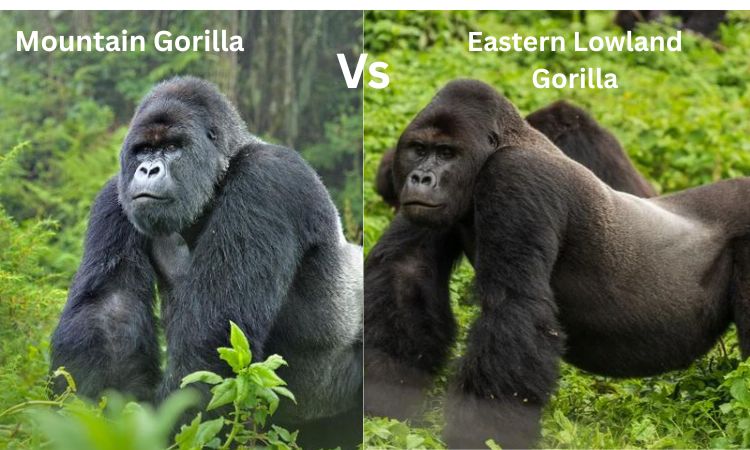
Mountain Gorilla vs Eastern Lowland Gorilla – Quick Comparison Table
|
Feature |
Mountain Gorilla |
Eastern Lowland Gorilla (Grauer’s) |
|
Size |
Smaller; adult males ~150–220 kg (avg. ~195 kg), up to ~1.7–1.8 m tall |
Larger; adult males up to 250+ kg (sometimes 400+ lbs reported), longer limbs |
|
Fur |
Thicker, longer, shaggier; darker black for cold insulation |
Shorter, finer; can appear brownish or reddish in places |
|
Habitat |
High-altitude montane/cloud forests (2,200–4,300 m) |
Lowland to submontane tropical forests (600–2,900 m) |
|
Location |
Virunga Mountains (Uganda, Rwanda, DRC); Bwindi Impenetrable National Park (Uganda) |
Eastern Democratic Republic of Congo (e.g., Kahuzi-Biéga, Maiko NPs) |
|
Population |
~1,063 (increasing; ~459 in Bwindi, ~604 in Virunga) |
~5,000–6,800 (decreasing; revised estimates higher than prior lows of ~3,800) |
|
Diet |
Mostly folivorous: leaves, stems, shoots, bamboo; very little fruit |
More frugivorous: higher fruit intake (up to 25%), plus stems, leaves, insects |
|
Group Size |
Often 10–20 (up to 65); stable, multi-male possible |
Variable, often larger harems; more fluid in resource-rich areas |
|
Conservation |
Endangered (IUCN); recovering due to tourism-funded protection |
Critically Endangered; severe declines from conflict and poaching |
This table provides a snapshot for quick reference and helps highlight why these subspecies face different challenges.
Habitat & Distribution
Where do mountain gorillas live?
Mountain gorillas are restricted to two isolated populations in the Albertine Rift. One inhabits the Virunga Mountains, a chain of extinct volcanoes straddling Uganda (Mgahinga Gorilla National Park), Rwanda (Volcanoes National Park), and the Democratic Republic of Congo (Virunga National Park).
The second lives in Uganda’s Bwindi Impenetrable National Park and the adjacent Sarambwe forest. They occupy dense montane and bamboo forests at elevations of 2,200–4,300 meters, where temperatures can drop low and vegetation is lush but fruit is scarce.
These habitats feature steep slopes, misty cloud forests, and seasonal bamboo zones. The limited range makes them vulnerable but also easier to protect through transboundary efforts.
Eastern lowland gorilla facts and range
Eastern lowland gorillas are endemic to the eastern Democratic Republic of Congo. Key strongholds include Kahuzi-Biéga National Park (with both highland and lowland sectors), Maiko National Park, Tayna Gorilla Reserve, Itombwe Massif, and parts of Virunga National Park.
Their habitat spans lowland tropical rainforests, transitional forests, swamps, and submontane areas from about 600 to 2,900 meters. The range has shrunk significantly due to human activity, now occupying only a fraction of historical territory.
Unlike mountain gorillas’ compact highland zones, eastern lowland habitats are more fragmented and vast, complicating monitoring amid ongoing insecurity.
Physical Differences
Mountain gorillas and eastern lowland gorillas share the robust build of great apes but show clear distinctions shaped by their environments.
- Size and weight: Sources vary slightly due to measurement challenges, but eastern lowland gorillas are generally considered the largest primate subspecies. Adult males can exceed 200–250 kg (up to 400+ lbs in some reports), with longer arms and limbs suited for terrestrial travel in flatter forests. Mountain gorilla males average around 150–220 kg (often cited ~195 kg), standing 1.4–1.8 m when upright, with stockier builds for navigating steep terrain. Females in both are roughly half the male weight.
- Fur: Mountain gorillas have the thickest, longest, and shaggiest fur among gorillas—dark black to protect against cold, wet conditions at high altitudes. Eastern lowland gorillas have shorter, finer fur that may show brownish or reddish tones, better suited to warmer lowlands.
- Body structure: Mountain gorillas often display broader foreheads and more pronounced features adapted for high-altitude life. Eastern lowlands tend toward longer limbs, a stockier yet slightly narrower frame in some descriptions, and adaptations for foraging across wider areas. Both have powerful arms, but mountain gorillas’ shorter arms aid stability on slopes.
These traits reflect evolutionary pressures: thicker fur and compact builds for mountains versus size and reach for lowlands.
Diet Differences
Both are primarily herbivorous, consuming up to 40+ pounds of vegetation daily, but their diets diverge due to available resources.
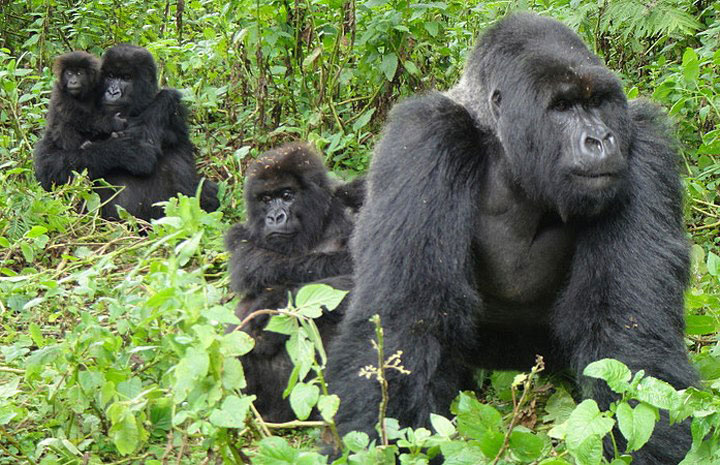
Mountain gorillas → mostly vegetation. They consume parts of over 140 plant species, with ~86% leaves, stems, shoots, and pith (including bamboo). Fruit makes up only ~2%, as high altitudes limit fruiting trees. They occasionally eat ants, grubs, or snails. Their folivorous diet supports stable home ranges since food is abundant year-round in the understory.
Eastern lowland gorillas → more fruit. They eat from over 100 plant species, with fruit comprising a larger portion (up to 25% or more seasonally). They also consume stems, leaves, bark, seeds, and insects like termites and ants. In fruit-scarce periods, they shift toward foliage, but overall greater frugivory leads to larger daily ranges as they search for ripe fruit.
This dietary flexibility in eastern lowlands influences movement and group dynamics more than in mountain populations.
Behavior & Social Structure
Gorillas are highly social, living in groups led by a dominant silverback male who protects the troop and makes decisions.
- Group size: Mountain gorilla groups average 10–20 individuals (up to 65 recorded), often with one or more silverbacks, several females, and offspring. Multi-male groups occur, especially in Virunga. Eastern lowland groups are variable—sometimes described as larger harems—but can be more fluid, averaging similar or slightly different sizes depending on resources.
- Movement patterns: Mountain gorillas have smaller home ranges due to consistent foliage availability; they move shorter distances daily. Eastern lowlands travel farther when fruit is abundant or scarce, covering larger territories in search of varied foods.
- Temperament: Both are generally peaceful and intelligent, using vocalizations, gestures, and displays for communication. Mountain gorillas may show strong family bonds in stable highland groups. Eastern lowlands are often noted as approachable in habituated settings, though all gorillas can be defensive if threatened. Silverbacks in both play key protective roles, with occasional infanticide risks if a silverback dies.
Daily life involves foraging, resting, and social grooming. Intelligence shines in problem-solving and tool use (rarely observed in wild mountain gorillas but noted in lowlands).
Conservation Status
Both subspecies fall under the eastern gorilla species and are threatened, but their IUCN statuses differ:
- Mountain gorilla: Endangered (downgraded from Critically Endangered thanks to population growth).
- Eastern lowland gorilla: Critically Endangered.
The International Union for Conservation of Nature (IUCN) tracks these based on population trends, habitat quality, and threats. Mountain gorillas have rebounded due to intensive protection, while eastern lowlands have suffered steeper declines.
Population & Threats
Mountain gorillas: 1,063 individuals as of recent 2024–2025 data (up from ~1,004 in 2018 and far below 1980s lows of ~250–400). Bwindi holds roughly half (459), with the Virunga massif the rest. Numbers continue rising slowly through births and conservation.
Eastern lowland gorillas: Estimates range 5,000–6,800 (revised upward from earlier ~3,800 lows), down over 50% since the 1990s (17,000). Most remain in fragmented DRC habitats, with Kahuzi-Biéga a key but challenged stronghold.
Shared and unique threats:
- Habitat loss: Agriculture, firewood collection, and logging affect both; lowlands face more mining (e.g., coltan) and fragmentation.
- Poaching: Snares for other animals accidentally harm gorillas; direct poaching occurs amid instability.
- Civil unrest: Particularly severe for eastern lowlands in DRC, with militias, refugees, and conflict disrupting protection. Mountain gorillas in Virunga also face risks from regional insecurity.
- Disease: Human respiratory illnesses and Ebola pose risks, especially with tourism.
- Other: Climate change may alter vegetation; human population pressure surrounds parks.
Success stories include community benefits from tourism funding patrols and anti-poaching.
Gorilla Trekking Experience
Gorilla trekking offers an unforgettable, regulated encounter (one hour with habituated groups, small visitor limits).
Mountain gorillas are easier to track in many ways. In Uganda’s Bwindi or Rwanda’s Volcanoes NP, treks involve hikes through steep but well-managed trails.
Permits allow reliable sightings, with habituated groups accustomed to humans. Rwanda offers more structured experiences; Uganda provides varied family options. Treks can take 1–5+ hours depending on location and fitness.
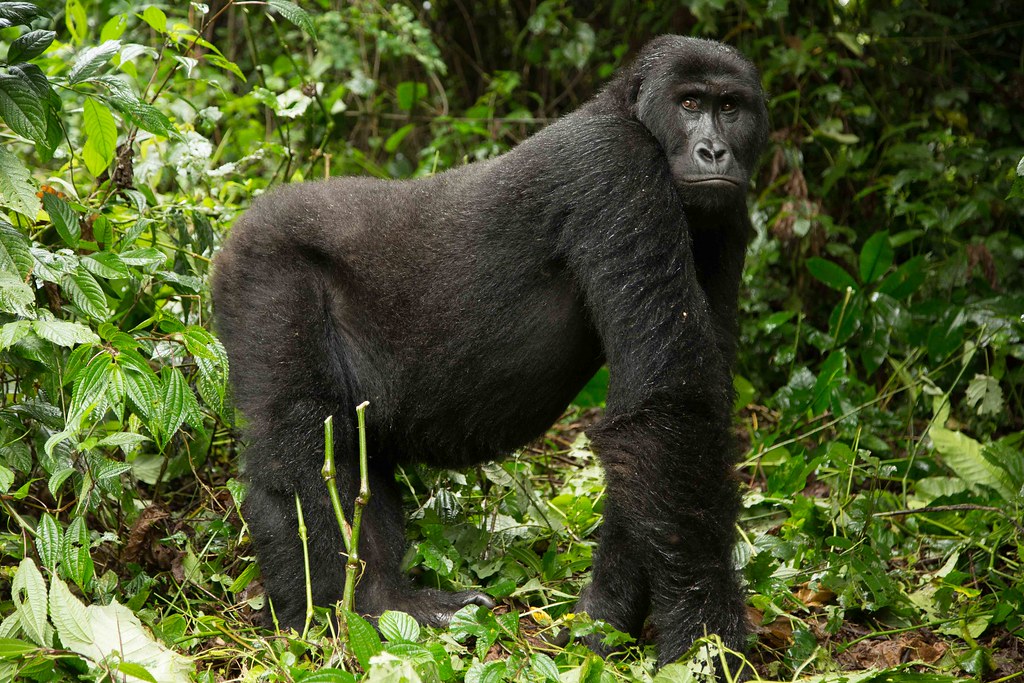
Eastern lowland gorillas are more remote. Trekking occurs mainly in DRC’s Kahuzi-Biéga (when security allows), involving denser forests and potentially longer, more adventurous hikes.
Fewer habituated groups and logistical challenges make it less accessible but rewarding for intrepid travelers seeking a wilder feel. Costs are often lower, but safety and availability fluctuate.
Both experiences emphasize respect: maintain distance, follow rules, and support conservation through fees.
Pros & Cons Comparison
Mountain Gorilla Trekking (Uganda/Rwanda):
- Pros: Higher success rate, better infrastructure, community benefits, population recovery visible; easier logistics from major hubs.
- Cons: Steep terrain requires fitness; higher permit costs (Uganda ~$800, Rwanda ~$1,500); more visitors in peak seasons.
Eastern Lowland Gorilla Trekking (DRC):
- Pros: Lower cost (~$400 permit); rarer, more remote wilderness experience; chance to see the largest gorillas.
- Cons: Security concerns in parts of eastern DRC; fewer habituated groups; longer travel and variable access; habitat challenges.
For most, mountain gorilla trekking in Uganda or Rwanda offers the best balance of accessibility and impact.
Book Gorilla Trekking in Uganda or explore Congo Gorilla Tours for tailored safaris combining primates with broader wildlife and cultural experiences.
Uganda and Rwanda packages often include Bwindi or Volcanoes with gorilla permits, guides, and accommodations supporting local communities.
FAQs – Mountain gorilla vs eastern lowland gorilla
Which gorilla is bigger?
Eastern lowland gorillas are generally larger, with adult males often heavier and possessing longer limbs than mountain gorillas.
Are mountain gorillas more endangered?
No—mountain gorillas are Endangered with increasing numbers, while eastern lowland gorillas are Critically Endangered and declining. Both need protection, but mountain populations show conservation success.
Where can I see eastern lowland gorillas?
Primarily in the Democratic Republic of Congo, especially Kahuzi-Biéga National Park and surrounding reserves (subject to security).
Which is better for trekking?
Mountain gorillas in Uganda or Rwanda are generally better for most visitors due to reliability, infrastructure, and established programs. Eastern lowland treks suit adventurers seeking remoteness, but check current conditions.
Other common questions: Do they interbreed? No, populations are geographically separated. Can I photograph them? Yes, with guidelines. Are they aggressive? Habituated groups are calm when rules are followed.
Why These Gorillas Matter
Mountain and eastern lowland gorillas represent the diversity and resilience of great apes. Their differences—thicker fur versus larger size, stable foliage diets versus fruit-seeking—illustrate adaptation. Yet shared threats underscore the importance of transboundary and community-led conservation.
Tourism revenue has helped mountain gorillas recover, funding rangers and local development. Similar models could aid eastern lowlands if stability improves. Supporting ethical safaris contributes directly to protection.
For those inspired to visit, Uganda gorilla trekking packages or Congo gorilla tours provide meaningful ways to experience these animals while aiding their survival. Plan responsibly, respect habitats, and help ensure future generations witness these gentle giants.