Top Facts about an Hippopotamus: Weight, Teeth, Nose, Diet
The hippopotamus, often called the hippo animal, ranks among Africa’s most iconic yet misunderstood creatures. Despite their calm, bulky appearance lounging in rivers, hippos stand as one of the continent’s most aggressive and deadly animals.
These massive semi-aquatic mammals command respect from locals and safari-goers alike. Their sheer size combined with surprising speed and territorial fury makes encounters potentially fatal.
Hippopotamus Scientific Classification
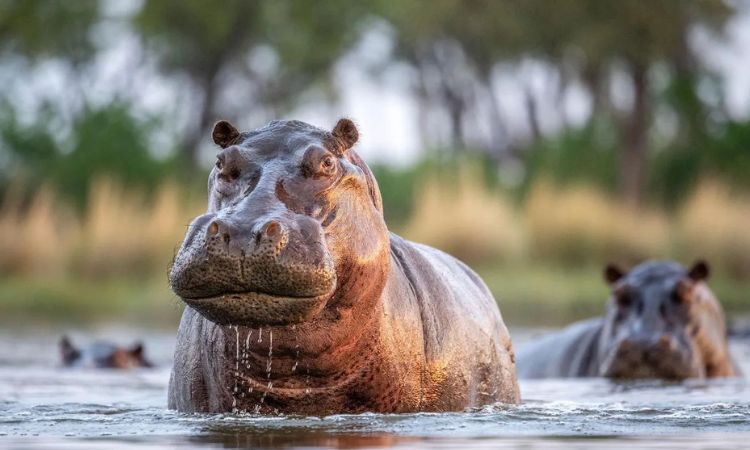
The common hippopotamus carries the scientific name Hippopotamus amphibius. It belongs to the family Hippopotamidae. Its name derives from Greek words meaning “river horse,” reflecting its love for water despite not being closely related to horses. The closest living relatives are actually whales and dolphins, a fascinating evolutionary link.
A smaller relative, the pygmy hippopotamus (Choeropsis liberiensis), inhabits West African forests. It weighs far less and leads a more solitary, terrestrial life. While the common hippo thrives in open waterways, the pygmy version remains elusive and endangered.
Physical Characteristics: How Big Is a Hippopotamus?
People frequently search “hippopotamus size and weight” or “hippopotamus weight in kg.” Adult males typically weigh 1,500–3,200 kg (3,300–7,000 lbs), with some reaching up to 4,500 kg in exceptional cases.
Females average 1,300–2,350 kg, about 30% lighter. Length ranges from 3.3–5 meters (10.8–16.5 feet), and shoulder height reaches up to 1.6 meters (5.2 feet). These stats make hippos the third-largest land mammals after elephants and white rhinos.
Their barrel-shaped body features short legs, a massive head, and nearly hairless, thick skin up to 5 cm (2 inches) deep in places. The skin appears grayish-brown with pinkish undersides and secretes a reddish “blood sweat” fluid that acts as a natural sunscreen and antibiotic, protecting against dehydration and infection.
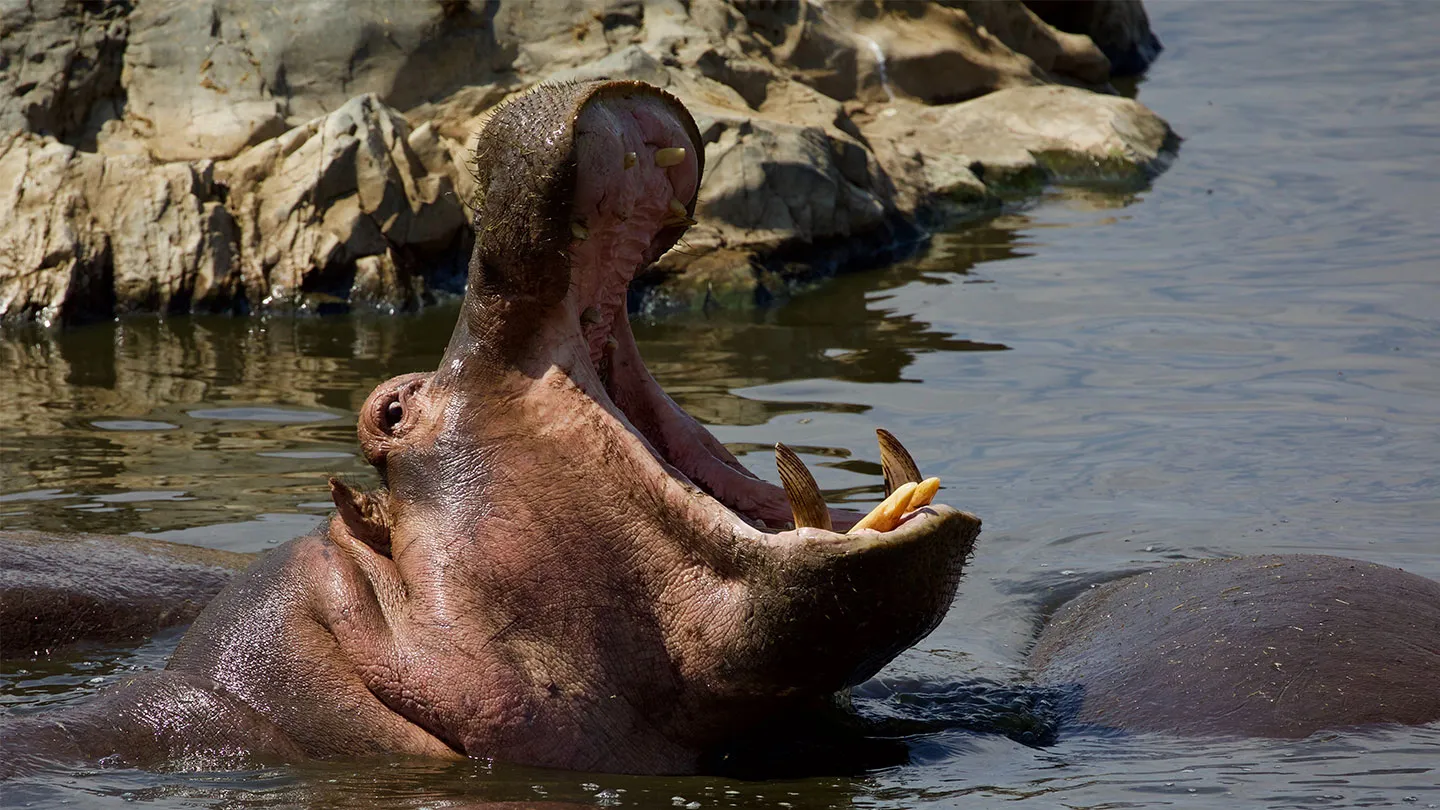
Hippopotamus teeth and jaws define their fearsome reputation. The mouth opens 150–180 degrees, revealing large canine tusks up to 50 cm (20 inches) long (sometimes longer) and sharp incisors.
These self-sharpening weapons deliver a bite force of around 1,800 PSI—strong enough to crush bones or split a crocodile. Molars grind vegetation, while tusks serve for fighting and display.
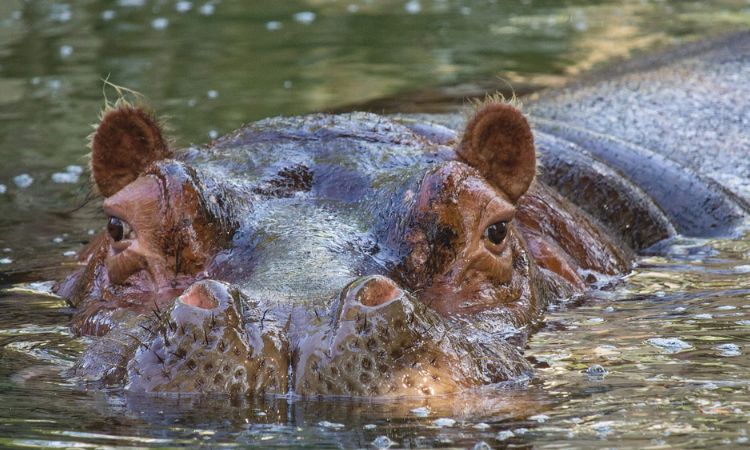
Hippopotamus nose, eyes, and ears sit high on the head, allowing the animal to remain mostly submerged while breathing, seeing, and hearing. Nostrils close tightly underwater, and hippos can hold their breath for up to five minutes.
They produce deep grunts, roars, and honks as hippopotamus sound—vocalizations that carry far across water to communicate dominance or alarm.
Habitat & Distribution: Where Do Hippos Live?
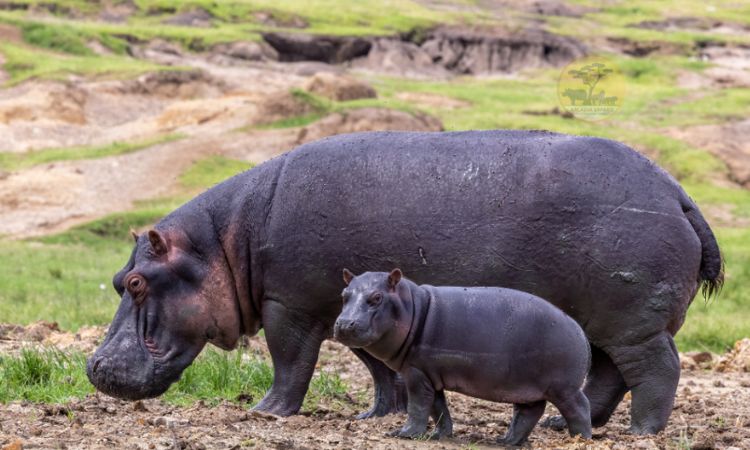
Hippos inhabit rivers, lakes, and swamps across sub-Saharan Africa. They require permanent water bodies for daytime cooling and short grasses nearby for nighttime grazing.
Populations concentrate in East and Southern Africa, with strongholds in countries like Uganda, Tanzania, Zambia, and South Africa. They have disappeared from some former ranges due to human pressures.
In Uganda, hippos thrive in famous safari destinations. Queen Elizabeth National Park boasts one of Africa’s highest concentrations, especially along the Kazinga Channel—sometimes called the “hippo capital of the world” with thousands of individuals. Murchison Falls National Park offers excellent views along the Nile River. Other spots include Lake Edward, Lake George, and various wetlands.
Hippopotamus habitat demands both deep water for wallowing and accessible grazing lands. During droughts, hippos crowd limited pools, increasing aggression and disease risk.
Diet: What Do Hippos Eat?
Hippos are primarily herbivores. They consume 30–40 kg (66–88 lbs) of grass per night—roughly 1–1.5% of their body weight. They emerge from water after sunset and travel up to 5 km (3 miles) to graze on short savanna grasses, using wide lips to crop vegetation like a lawnmower. They occasionally eat fruits, aquatic plants, or fallen foliage but rarely browse leaves high up.
Does a hippopotamus eat meat? Mostly no—they stick to plants. However, rare opportunistic scavenging of carcasses occurs, especially in nutrient-stressed environments. This does not make them predators; meat forms a tiny, exceptional part of their hippopotamus diet.
Their digestive system features a multi-chambered stomach suited for fermenting tough grasses, though they do not chew cud like true ruminants.
Behavior & Lifestyle of an Hippopotamus
Hippopotamus behavior revolves around water. They spend most daylight hours submerged or wallowing in mud to regulate body temperature and protect skin. Pods (or “schools/bloats”) typically number 10–40 individuals, though larger groups form in prime habitats. A dominant bull defends a territory, mating with females in his group and using dung-flinging (with a spinning tail) to mark boundaries.
At night, hippos leave water to graze individually or in small parties. They are surprisingly agile on land despite their bulk, reaching speeds of 30 km/h (18.6 mph) in short bursts—fast enough to outrun most humans over short distances.
What is the behavior of a hippo? Highly territorial and protective, especially mothers with calves or males during mating season. They communicate via grunts, yawns, showing teeth as threat displays, and physical charges. Social bonds strengthen through physical contact in water.
Why Hippos Are Dangerous: Are Hippos Dangerous?
Yes—hippos rank among Africa’s deadliest animals. Estimates suggest they cause around 500 human deaths annually, far more than lions in many accounts. Their territorial nature drives attacks on boats, people near water edges, or anything perceived as a threat.
Key factors include:
- Massive size and weight crushing victims.
- Speed on land and in shallow water.
- Enormous bite force and razor tusks capable of severing limbs or bisecting bodies.
- Unpredictable aggression when feeling cornered, especially at night or with young.
Hippos attack more often from water (capsizing boats) or when people block their path back to safety. They do not hunt humans but defend space fiercely.
Reproduction & Lifespan
Females reach maturity at 5–10 years; males around 7–7.5 years. Gestation lasts about 8 months (roughly 240–324 days). Calves, weighing 25–50 kg (55–110 lbs) at birth, usually arrive in water for immediate buoyancy and protection. Mothers nurse underwater or on land and remain highly protective for years.
Hippos produce one calf every 1–2 years. Lifespan reaches 40–50 years in the wild, sometimes longer in captivity (up to 61 years recorded).
Hippos vs Other Animals
Comparisons fascinate wildlife enthusiasts:
- Hippo vs crocodile: Hippos dominate in many river conflicts. Their size, aggression, and bite overpower crocs, though large crocodiles may prey on young or weakened hippos. Battles often end with hippos chasing crocs away.
- Hippo vs lion: Lions rarely tackle healthy adult hippos. Prides may scavenge dead ones or target calves, but a charging hippo sends lions fleeing. Hippos win most direct confrontations on land or water’s edge.
- Hippopotamus vs rhinoceros: Both are massive herbivores with formidable weapons (hippo tusks vs rhino horn). On land, a rhino’s charge and agility might prevail in some scenarios, but hippos’ aquatic advantage and aggression often tip scales. Real encounters are rare and context-dependent; neither routinely dominates the other.
Conservation Status
The IUCN lists the common hippopotamus as Vulnerable. Population estimates range from 115,000–130,000, trending downward. Threats include habitat loss from agriculture and dams, poaching for meat and ivory-like teeth, human-wildlife conflict, and climate change affecting water availability. The pygmy hippo faces even greater peril as Endangered due to forest destruction.
Conservation efforts focus on protected areas, community education, and reducing poaching. Hippos serve as ecosystem engineers—their grazing and dung nutrient cycling benefit wetlands and fish populations.
Hippos in Uganda: Safari Highlights
Uganda offers world-class hippo viewing. The Kazinga Channel in Queen Elizabeth National Park hosts thousands, making it a prime spot. Murchison Falls National Park provides dramatic Nile River sightings with hippos alongside crocodiles and elephants.
Best places to see hippos include boat safaris on the Kazinga or Nile. These peaceful cruises let you observe pods yawning, fighting, or nursing calves at close but safe range. Combine with game drives for land-based grazing views during cooler hours.
Best Time to See Hippos
Dry seasons (June–September and December–February) concentrate hippos in reliable water sources, improving visibility. Morning and late afternoon boat trips or drives prove ideal—hippos remain active before retreating deeper or emerging to graze. Wet seasons bring dispersed animals and greener landscapes but can limit access.
Real Safari Tips & Safety Around Hippos
From Uganda-based experiences:
- Always view from boats or vehicles—never approach on foot near water.
- Maintain distance; a hippo can charge suddenly.
- Avoid nighttime walks along rivers; hippos graze then.
- Respect guides’ instructions; they know territorial bulls.
- If in a small boat and a hippo approaches, stay calm and move slowly away without sudden noise.
- Hippos appear calm but can flip canoes—larger safari launches offer better safety.
These tips help you enjoy Uganda wildlife Safaris responsibly while minimizing risks.
5 Interesting Facts About Hippos
- Hippos “sweat blood”—their red skin secretion protects from sun and bacteria.
- They can run faster than humans on land despite weighing tons.
- A hippo’s yawn signals threat, not tiredness—showing massive teeth.
- Their closest relatives are whales, not pigs or horses.
- Dung “fanning” marks territory and fertilizes aquatic ecosystems.
FAQs about Hippos
Are hippos more dangerous than lions?
In terms of human fatalities, yes—hippos cause far more deaths annually through territorial defense than lions do via predation.
Can a hippo outrun a human?
Yes, over short distances. Hippos reach 30 km/h; humans average much slower. Never try to outrun one—climb or get behind solid barriers instead.
Do hippos eat meat?
Primarily no. They are herbivores focused on grass, with only rare scavenging.
Why do hippos stay in water?
To stay cool, protect sensitive skin from sun, and avoid dehydration. Water also offers safety from predators and a place to birth calves.
Hippopotamus meaning?
From Greek: “hippo” (horse) + “potamos” (river)—literally “river horse.”
Hippopotamus sound?
Deep grunts, honks, and roars used for communication within pods.
This guide blends hippopotamus facts with practical advice for an unforgettable experience.
Ready to witness these giants yourself? Book a Uganda safari package featuring boat cruises in Queen Elizabeth National Park or Murchison Falls. Contact us today—see hippos up close on a safe, expert-led boat safari!