Gorilla – Species, Size, Strength, Habitat & Top Facts
Gorilla: Gorillas are the largest living primates on Earth, majestic and powerful creatures that captivate anyone fortunate enough to encounter them.
Closely related to humans, sharing about 98% of our DNA, these gentle giants inhabit the dense tropical forests of central Africa.
As members of the genus Gorilla, they exhibit remarkable intelligence, complex social structures, and behaviors that mirror aspects of human society.
Gorillas live in family groups led by a dominant silverback, communicate through vocalizations and gestures, and play a vital role in their ecosystems as seed dispersers and habitat maintainers.
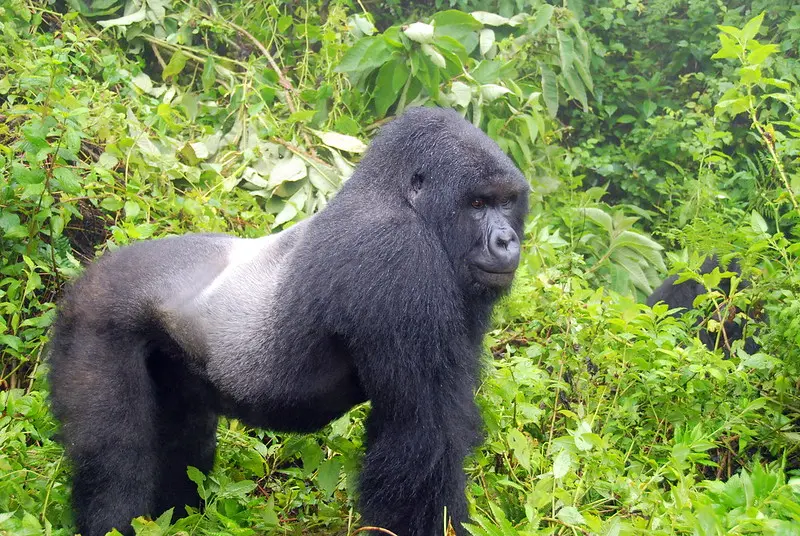
Despite their imposing size and strength, gorillas are primarily peaceful herbivores, only becoming aggressive when defending their families.
Today, all gorilla populations face serious threats, making encounters with them in the wild a profound and increasingly rare privilege. Exploring the world of gorillas reveals not just an animal, but a window into our own evolutionary past.
Types of Gorilla
There are two main species of gorillas: the eastern gorilla (Gorilla beringei) and the western gorilla (Gorilla gorilla). Each species includes two subspecies, resulting in four distinct types.
- Mountain Gorilla (Gorilla beringei beringei): These are found in high-altitude forests of the Virunga Mountains and Bwindi Impenetrable Forest. They have thicker, darker fur adapted to cooler climates, broader chests, and shorter arms relative to their bodies. They are the most studied and famous due to conservation efforts.
- Eastern Lowland Gorilla (also known as Grauer’s gorilla, Gorilla beringei graueri): The largest subspecies, living in lowland forests of the Democratic Republic of the Congo. They have longer arms, shorter fur, and a more robust build suited to warmer, lower elevations.
- Western Lowland Gorilla (Gorilla gorilla gorilla): The most numerous and widespread, inhabiting lowland rainforests across several central African countries. They are slightly smaller than eastern counterparts, with a more varied diet including more fruits.
- Cross River Gorilla (Gorilla gorilla diehli): The rarest and most endangered, found in fragmented forests along the Nigeria-Cameroon border. They have subtle differences in skull and nose shape, and live in smaller, isolated groups.
These differences arise from adaptations to varied habitats, with eastern gorillas generally larger and hairier than western ones.
Gorilla Habitat
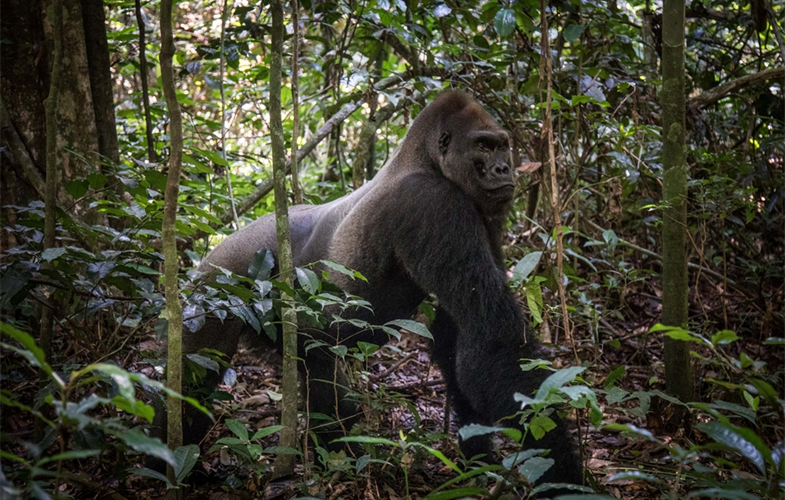
Gorillas are native to the equatorial forests of central Africa, where dense vegetation provides food and protection. Their habitats range from lowland rainforests to montane cloud forests at elevations up to 4,000 meters.
Mountain gorillas live in two isolated populations: the Virunga Massif (spanning Rwanda, Uganda, and the Democratic Republic of the Congo) and Bwindi Impenetrable National Park in Uganda. These areas feature bamboo zones, alpine meadows, and misty volcanoes.
Eastern lowland gorillas inhabit the eastern DRC’s lowland forests, while western lowland gorillas range across countries like Gabon, Republic of Congo, Cameroon, Central African Republic, and Equatorial Guinea. Cross River gorillas occupy fragmented forests on the Nigeria-Cameroon border.
Key protected areas include Bwindi Impenetrable National Park (Uganda), Volcanoes National Park (Rwanda), and Virunga National Park (DRC), which safeguard critical gorilla populations amid ongoing threats.
Physical Characteristics of a Gorilla
Gorillas exhibit striking sexual dimorphism, with males significantly larger than females.
Adult silverback males (dominant males) stand 1.65–1.8 meters tall when upright and weigh 135–220 kg (300–485 lbs), with some eastern lowland individuals reaching higher weights. Females are smaller, around 1.4–1.5 meters tall and 70–100 kg.
Gorillas have powerful arms longer than their legs, enabling knuckle-walking. Their chests are broad, shoulders massive, and heads feature pronounced sagittal crests for jaw muscle attachment.
Silverbacks develop distinctive silver-gray hair on their backs around age 12–15, signaling maturity and dominance. Their skin is dark, often black, with expressive faces.
Gorilla weight and gorilla size make them the largest primates, with immense upper-body strength for foraging and defense.
Gorilla Diet
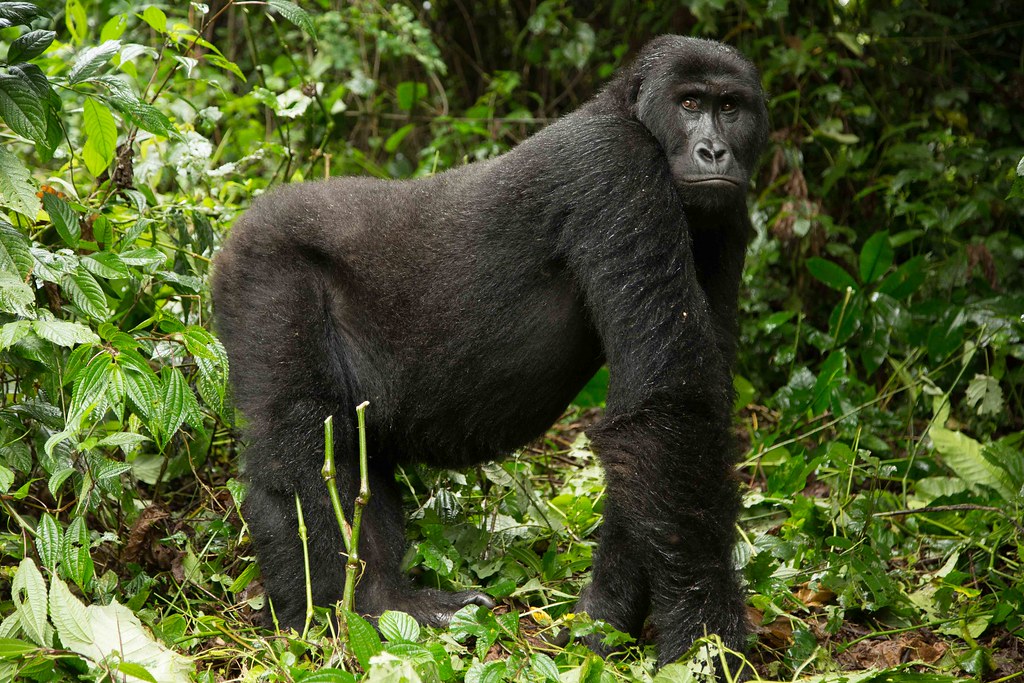
Gorillas are primarily herbivores, consuming up to 30 kg of vegetation daily. Their diet includes leaves, stems, pith, bark, and shoots. Fruits form a significant part for lowland species, while mountain gorillas rely more on foliage like wild celery, thistles, and bamboo shoots.
They occasionally eat insects like termites or ants for protein. Gorillas have large guts for fermenting fibrous plants, spending much of the day foraging.
This vegetarian diet supports their massive size while maintaining a gentle disposition.
Gorilla Behavior and Social Structure
Gorillas live in cohesive family groups called troops, typically 5–30 individuals, led by a dominant silverback. The silverback protects the group, makes decisions on movement, and mediates conflicts.
Females and offspring form the core, with younger males (blackbacks) assisting. Groups are stable, with females transferring between groups at maturity.
Communication includes vocalizations (grunts, roars), facial expressions, and dramatic chest-beating displays by silverbacks to assert dominance or ward off threats.
Gorillas are diurnal, resting midday and building fresh nests nightly from vegetation for sleeping.
Gorilla Strength
Gorillas possess extraordinary power, estimated at 4–10 times stronger than an average human, with silverbacks capable of lifting over 800 kg (1,760 lbs) in dead weight.
Their strength stems from dense muscle fibers, optimized for short bursts rather than endurance. Compared to humans, a silverback’s upper body can overpower multiple strong men.
In the wild, this strength fells trees for food, defends against leopards or intruders, and maintains group hierarchy. While peaceful, a provoked silverback’s charge is formidable.
Gorilla Lifespan
In the wild, gorillas live 35–40 years, limited by disease, injury, or predation. In captivity, with veterinary care, they reach 50+ years, with records over 60.
Factors affecting lifespan include habitat quality, human threats, and genetics.
Gorilla Conservation Status
All gorillas are endangered or critically endangered per IUCN. Mountain gorillas number around 1,000+, a conservation success from Dian Fossey’s work, but threats persist.
Major threats: habitat loss from agriculture/logging, poaching for bushmeat/trophies, disease (e.g., from humans), and conflict.
Organizations like World Wildlife Fund (WWF) and Dian Fossey Gorilla Fund lead anti-poaching patrols, habitat protection, and community programs.
Gorilla Trekking
Gorilla trekking offers ethical wildlife tourism in Uganda, Rwanda, and DRC. Visitors spend one hour observing habituated groups.
In Bwindi Impenetrable National Park (Uganda), treks involve navigating dense forest for close encounters. Volcanoes National Park (Rwanda) provides scenic volcano views.
The experience: early briefing, guided hike (1–8 hours), then observing feeding, playing, and resting gorillas. Permits support conservation.
For more, check our gorilla trekking safaris , chimpanzee trekking , or Uganda wildlife tours .
Interesting Gorilla Facts
Gorillas share 98% DNA with humans (not “98% human,” but very close genetically).
They build new nests daily for rest and sleep.
Gorillas are peaceful unless threatened, often avoiding conflict.
5 facts about gorillas:
- Largest primates.
- Use tools occasionally.
- Show emotions like joy/sadness.
- Infants ride on mothers’ backs.
- Silverbacks lead with care.
Are gorillas 98% human? No—they share ~98% DNA with humans.
Is gorilla friendly to humans? Generally shy and non-aggressive if respected; habituated ones tolerate observers.
How intelligent are gorillas? Highly intelligent, showing problem-solving, tool use (e.g., sticks), empathy, and complex social bonds—comparable to young humans in some cognitive tests.
FAQ – Gorilla
What is a gorilla?
The largest living primate, a great ape native to African forests.
Where do gorillas live?
Central African forests in Uganda, Rwanda, DRC, and more.
How strong is a gorilla?
4–10 times stronger than humans, lifting up to 800+ kg.
What do gorillas eat?
Mostly leaves, fruits, stems, and bamboo as herbivores.
Are gorillas dangerous?
Not inherently; peaceful but protective if threatened.