
Female Gorilla: Characteristics, Behavior & Role in the Group
A female gorilla is the backbone of every gorilla family in the misty highlands of Africa. Smaller and sleeker than her male counterparts, she spends her life nurturing the next generation while weaving the social fabric that keeps the group strong and harmonious.
Unlike the dominant silverback who leads and protects, the female gorilla focuses on reproduction, infant care, and daily bonding that ensures group stability.
In places like Uganda’s Bwindi Impenetrable National Park and the Virunga Mountains, female gorillas raise infants with fierce dedication, forage for nutrient-rich vegetation, and form lifelong bonds through grooming and gentle interactions.
Their role in reproduction and motherhood is vital—without healthy breeding females, gorilla populations cannot thrive.
Understanding the female gorilla reveals the quiet strength and maternal power that sustains these endangered great apes.
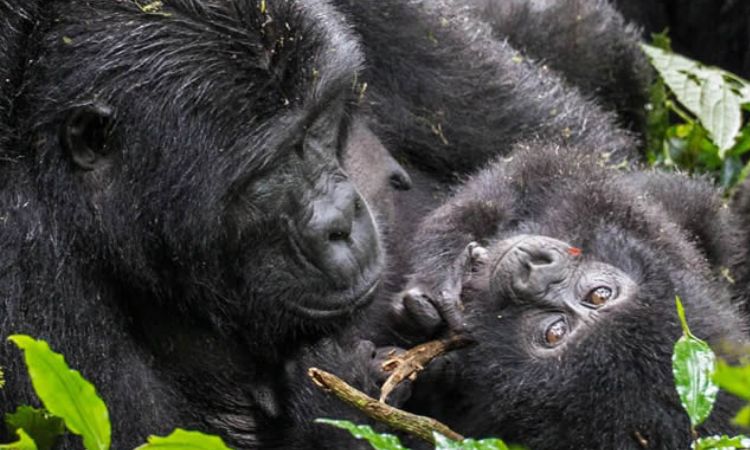
Physical Characteristics of Female Gorillas
Female gorillas are noticeably smaller and more slender than males, lacking the iconic silverback saddle of mature males. An adult female mountain gorilla typically stands 1.25–1.5 metres tall when upright and weighs between 70 and 110 kg. Her build is compact and agile, with shorter arms and a slimmer chest compared to the massive, muscular frame of silverbacks.
This smaller size allows her to navigate dense forest undergrowth with ease while carrying infants or foraging. Female gorillas share the same thick black hair and expressive dark eyes as the rest of the troop, but without the grey-white back hair that signals male maturity after age 12.
Their hands and feet are strong for knuckle-walking, yet proportionally smaller, reflecting a body optimised for endurance and care rather than raw power. These female gorilla characteristics make them perfectly suited for the nurturing role they play every day.
Female Gorilla vs Male Gorilla
The differences between a female gorilla and a male gorilla are striking and serve clear purposes in group survival. Size is the most obvious: adult males reach 1.7–1.8 metres tall and weigh 135–220 kg—roughly twice the weight of females. Males develop broad shoulders, massive arms, and the silverback crest, while females remain slimmer and lighter.
Strength follows suit. Male gorillas, especially silverbacks, are far more powerful, capable of charging, tree-breaking displays, and defending the entire group.
Female gorillas are strong for their size—able to carry growing infants and forage efficiently—but they are not as strong as male gorillas. Their power supports motherhood and social harmony rather than leadership or combat.
Roles also differ sharply. The silverback protects the troop and makes key decisions, while female gorillas focus on raising young, maintaining bonds, and ensuring group cohesion.
Females may transfer between groups as adults, but males usually stay or form new troops. This clear division highlights why female gorilla size and behaviour complement the male’s protective strength perfectly.
Role of Female Gorillas in the Group
Female gorillas are the heart of family life in every troop. They care for infants from birth, carrying them constantly for the first months and later allowing piggyback rides as the young grow. Their constant presence provides security and teaches social skills through play and observation.
Beyond motherhood, females maintain group harmony through grooming sessions that strengthen bonds and reduce tension. They forage together, share resting spots, and support one another when infants need extra care.
In Bwindi and Virunga groups, multiple females often raise young side by side, creating a supportive network that helps the silverback focus on protection.
Without the steady, nurturing work of female gorillas, the group would lack the emotional glue that keeps families together across decades.
Female Gorilla Behavior
Female gorilla behaviour centres on cooperation and communication. They spend hours grooming each other and infants, removing parasites while reinforcing trust and friendship.
Vocalisations—soft grunts, hums, and belches—keep the group connected during travel and feeding. Gestures like gentle touches or playful wrestling with juveniles also play a big role.
Their relationship with the silverback is respectful yet active. Females often initiate close interactions and, when receptive, approach him directly.
Social ranking among females exists but remains flexible, with older, experienced mothers sometimes enjoying preferred resting spots or first access to choice food.
Overall, female gorillas are calm, social, and highly attuned to the needs of the group—traits that ensure long-term stability in the forest.
How do female gorillas seduce male gorillas?
Females initiate mating through clear signals rather than “seduction” in the human sense. When ready, a female gorilla approaches the silverback slowly, makes sustained eye contact, purses her lips, and may slap the ground lightly to gain attention.
The silverback may respond by touching her or displaying gently. Mating occurs year-round, usually with the female kneeling and the male mounting from behind. This proceptive behaviour ensures successful reproduction within the stable family unit.
Reproduction & Motherhood
Reproduction is the most vital duty of every female gorilla. Gestation lasts about 8.5 months—similar to humans—and births usually produce a single infant weighing 2–4 kg. Twins are extremely rare. A female gives birth to her first infant around age 10 and then every four years thereafter.
Motherhood defines her life. For the first three months, the tiny infant clings to her chest 24/7. By four months, it rides on her back during travel. She nurses for three to four years while teaching the youngster what plants are safe to eat and how to interact safely with the group.
Strong maternal instincts drive constant protection, even against threats. This intensive care explains why female gorilla populations grow slowly but steadily when protected.
Diet of Female Gorillas
Female gorillas eat the same nutrient-rich vegetation as the rest of the troop: leaves, stems, shoots, bamboo, herbs, and small amounts of fruit and bark. In Bwindi and Virunga, where fruit is scarce, they consume up to 18 kg of foliage daily—mostly wild celery, nettles, and thistles.
Their smaller size means they need slightly less than males, but the diet supports lactation and constant energy demands of motherhood. They rarely drink water, obtaining moisture from succulent plants.
Habitat of Female Gorillas
Female gorillas thrive in the high-altitude forests of Bwindi Impenetrable National Park in Uganda and the Virunga Mountains spanning Uganda, Rwanda, and the Democratic Republic of Congo.
These misty, rugged environments at 2,500–4,000 metres provide dense herbaceous vegetation perfect for daily foraging. Females move daily within the group’s home range, staying close to the silverback for protection while raising young in the safety of thick bamboo and montane forest.
Lifespan of Female Gorillas
In the wild, female gorillas live an average of 35–40 years, with some reaching 44–50 years in protected populations. Factors affecting lifespan include food availability, disease, snares, and human disturbance.
Many females enter a post-reproductive phase after age 35, living 10+ years beyond their last birth while still contributing to group stability through wisdom and experience.
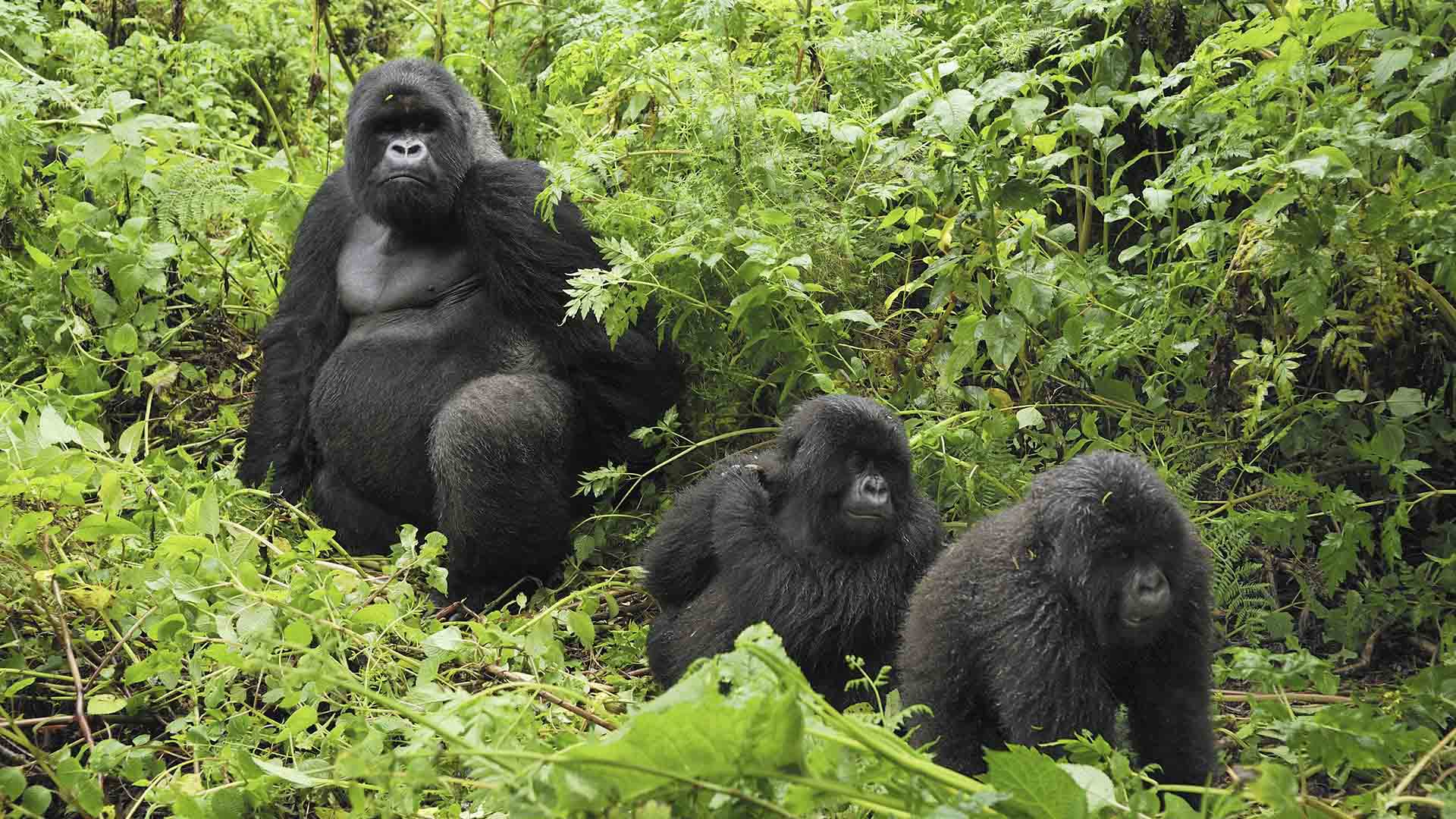
Interesting Facts About Female Gorillas
- Female gorillas display incredibly strong maternal instincts, often adopting orphaned infants within the group.
- They form close social bonds that last decades, recognising family members even after years apart.
- Adult females frequently transfer between groups to avoid inbreeding and seek stronger silverbacks—sometimes multiple times in their lives.
- Despite their smaller size, they are excellent climbers and can carry infants while navigating steep volcanic slopes.
Conservation
Female gorillas face the same threats as the species: habitat loss, poaching for bushmeat, snares that injure mothers and infants, and disease transmission from humans. Protecting breeding females is critical because each one supports multiple generations.
Organisations like the World Wildlife Fund (WWF) work tirelessly with local communities and governments to safeguard Bwindi and Virunga habitats, enforce anti-poaching patrols, and support eco-tourism that funds conservation. Every healthy female gorilla helps the entire population recover.
FAQs about Female Gorilla
What is a female gorilla called?
A female gorilla is simply called a “female gorilla” or “adult female.” Unlike males (called silverbacks once mature), there is no special name. Young females are infants or juveniles until they reach adulthood around age 10.
How big is a female gorilla?
An adult female gorilla stands 1.25–1.5 metres tall and weighs 70–110 kg—roughly half the size of a silverback.
Do female gorillas have silverbacks?
No. The silverback is the mature male leader. Females never develop the silver-grey back hair or the dominant physical traits of silverbacks.
What role do female gorillas play?
They are the primary caregivers, raising infants, maintaining social bonds through grooming, and ensuring group harmony while the silverback protects the troop.
How long do female gorillas live?
In the wild, 35–40 years on average, with some females living into their mid-40s and even entering a post-reproductive phase similar to humans.
Are female gorillas as strong as male gorillas?
No. Females are strong for their size and excellent at carrying infants and foraging, but males are significantly stronger due to their much larger body mass and muscle structure—roughly twice as heavy and far more powerful.
How do female gorillas seduce male gorillas?
Females initiate mating by approaching the silverback with eye contact, pursed lips, and gentle gestures. This clear communication ensures reproduction happens smoothly within the family group.