
How Many Mountain Gorillas Are Left? Population Update 2026
How Many Mountain Gorillas Are Left: There are about 1,000–1,100 mountain gorillas left in the wild today, making them one of the rarest great apes.
As of 2026, the most reliable estimates place the global mountain gorilla population at 1,063 individuals — the highest count ever recorded and a remarkable conservation success story.
This number reflects steady growth from the critically low figures of past decades, thanks to intensive protection across their two isolated habitats.
While still vulnerable, these majestic primates — with their thick black fur adapted to high-altitude cold — represent hope amid the challenges facing great apes worldwide.
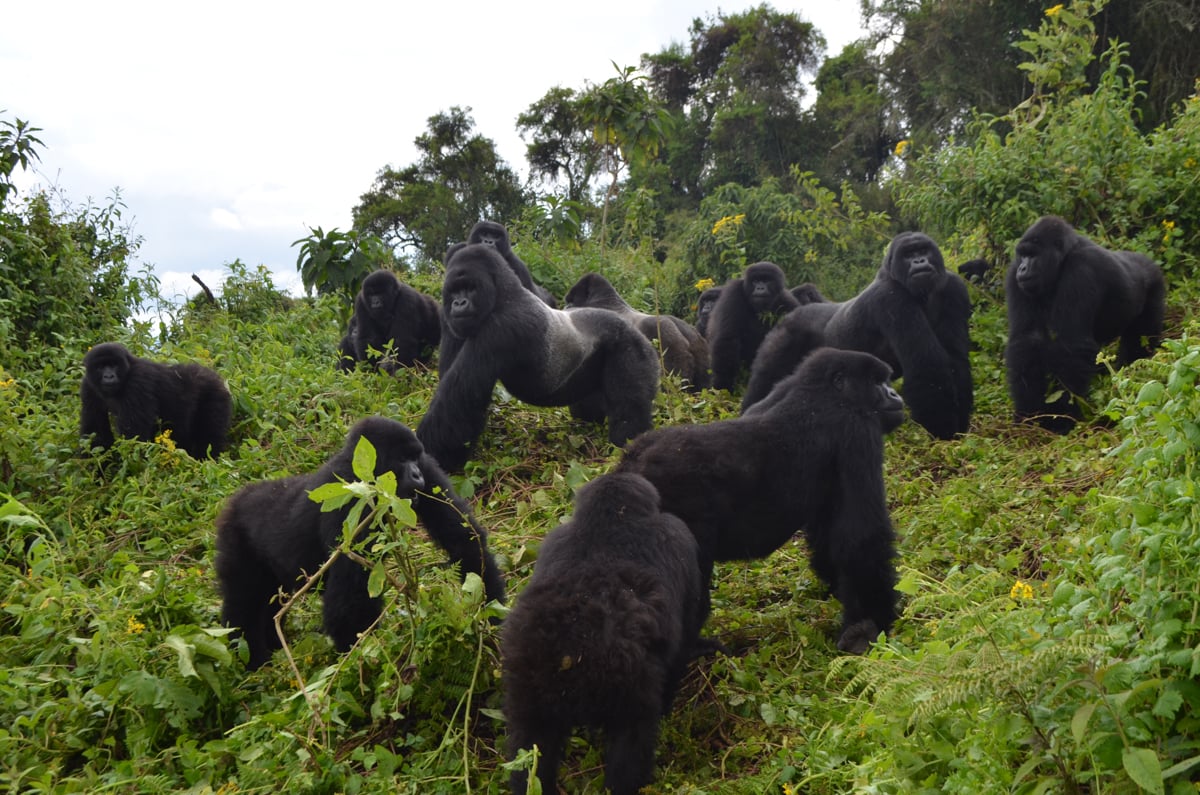
Latest Population Estimates (2026 Update)
The mountain gorilla population is split between two main strongholds, with the latest censuses providing a clear breakdown:
- Bwindi-Sarambwe ecosystem: Approximately 459 individuals. This includes Bwindi Impenetrable National Park in Uganda and the adjacent Sarambwe Nature Reserve in the Democratic Republic of the Congo (DRC). The 2018 census (the most recent complete count) documented 36 social groups plus 16 solitary males, marking the highest number ever recorded here.
- Virunga Massif: Approximately 604 individuals. This transboundary population spans Volcanoes National Park (Rwanda), Mgahinga Gorilla National Park (Uganda), and Virunga National Park (DRC). Data from the 2016 census, combined with ongoing monitoring, shows continued stability and growth.
- Total estimate: 1,063 mountain gorillas worldwide. No full coordinated census has updated this exact figure in 2025–2026, but a new Bwindi-Sarambwe survey launched in 2025 is expected to confirm further increases due to births and protection. Projections for 2026 hold steady at this level, with an average annual growth rate of around 3–4% in recent years.
These figures come from rigorous nest-counting methods and genetic sampling coordinated by the Greater Virunga Transboundary Collaboration (GVTC).
How Mountain Gorilla Numbers Have Changed Over Time
Mountain gorillas were formally discovered in 1902, but their population was already under pressure from hunting and habitat encroachment. Exact numbers from 1900 are unknown, but early 20th-century estimates suggest several hundred individuals across the Virunga and Bwindi regions before heavy declines set in.
By the early 1980s, the total had plummeted to fewer than 400 worldwide — with Virunga dropping to just 254 in 1981 due to intense poaching during civil unrest. Bwindi hovered around 300–340 in the 1990s and 2000s.
Thanks to dedicated efforts, numbers rebounded:
- 2010: ~880 total
- 2018–2019: 1,063
- 2026: Stable at 1,063 with ongoing growth
This roughly quadrupling from the 1980s low point is one of the few bright spots in great ape conservation.
Why Are Mountain Gorillas Endangered? (And Why Are There So Few?)
Mountain gorillas remain classified as Endangered by the IUCN Red List (downgraded from Critically Endangered in 2018 due to population gains, but still at high risk). Their tiny numbers stem from multiple interconnected threats:
- Habitat loss: Agriculture, charcoal production, livestock grazing, and human settlement have fragmented their montane forests. In Virunga, thousands of acres were illegally cleared in past decades.
- Poaching: Gorillas are rarely targeted directly but frequently die in snares set for antelope or other bushmeat. Civil wars have worsened this.
- Disease: As great apes sharing ~98% of our DNA, they are highly susceptible to human illnesses like respiratory infections, Ebola, and COVID-19. Tourism and proximity to communities increase transmission risks.
- Human conflict: Decades of war in DRC and Rwanda displaced people into gorilla habitat, while militias and refugees caused further destruction. Over 200 park rangers have been killed protecting these areas since the 1920s.
These pressures explain why, despite growth, the species stays conservation-dependent.
Where the Remaining Mountain Gorillas Live
All wild mountain gorillas are confined to just two small, high-altitude regions in Central Africa:
- Uganda (largest share): Bwindi Impenetrable National Park (~459) plus Mgahinga Gorilla National Park (part of Virunga, ~30–35 individuals). Uganda thus hosts roughly 490–500 mountain gorillas — nearly half the global total.
- Rwanda: Volcanoes National Park (major portion of the Virunga Massif).
- Democratic Republic of the Congo (DRC): Virunga National Park and Sarambwe Reserve (smaller shares).
The forests sit at 8,000–13,000 feet, providing the cool, misty environment these gorillas need.
How many mountain gorillas are left in Uganda? Approximately 490, making it the country with the biggest population.
How many silverback gorillas are left in the world? Exact counts are not published separately (censuses focus on total individuals and groups), but silverbacks — the mature adult males with distinctive silver backs — lead nearly every family group. With dozens of social groups across both populations, there are likely 50–80 silverbacks forming the backbone of the 1,063 total.
Conservation Efforts That Are Making a Difference
Intensive protection has reversed the decline:
- Anti-poaching measures: Daily ranger patrols, SMART technology, camera traps, and snare removal have dramatically reduced illegal activity.
- Protected parks: Strict enforcement in Bwindi Impenetrable National Park, Virunga National Park, and Volcanoes National Park, supported by transboundary collaboration.
- Tourism support: Habituated groups (about 70% of the population) generate revenue shared with local communities for schools, health clinics, and alternative livelihoods like beekeeping and crafts.
Key organizations include:
- World Wildlife Fund (WWF)
- Dian Fossey Gorilla Fund (long-term monitoring via Karisoke Research Center)
- International Gorilla Conservation Programme (IGCP) — a coalition with Conservation International and Fauna & Flora International
Veterinary teams provide emergency care, and buffer-zone crops (tea, lemongrass) reduce human-gorilla conflict.
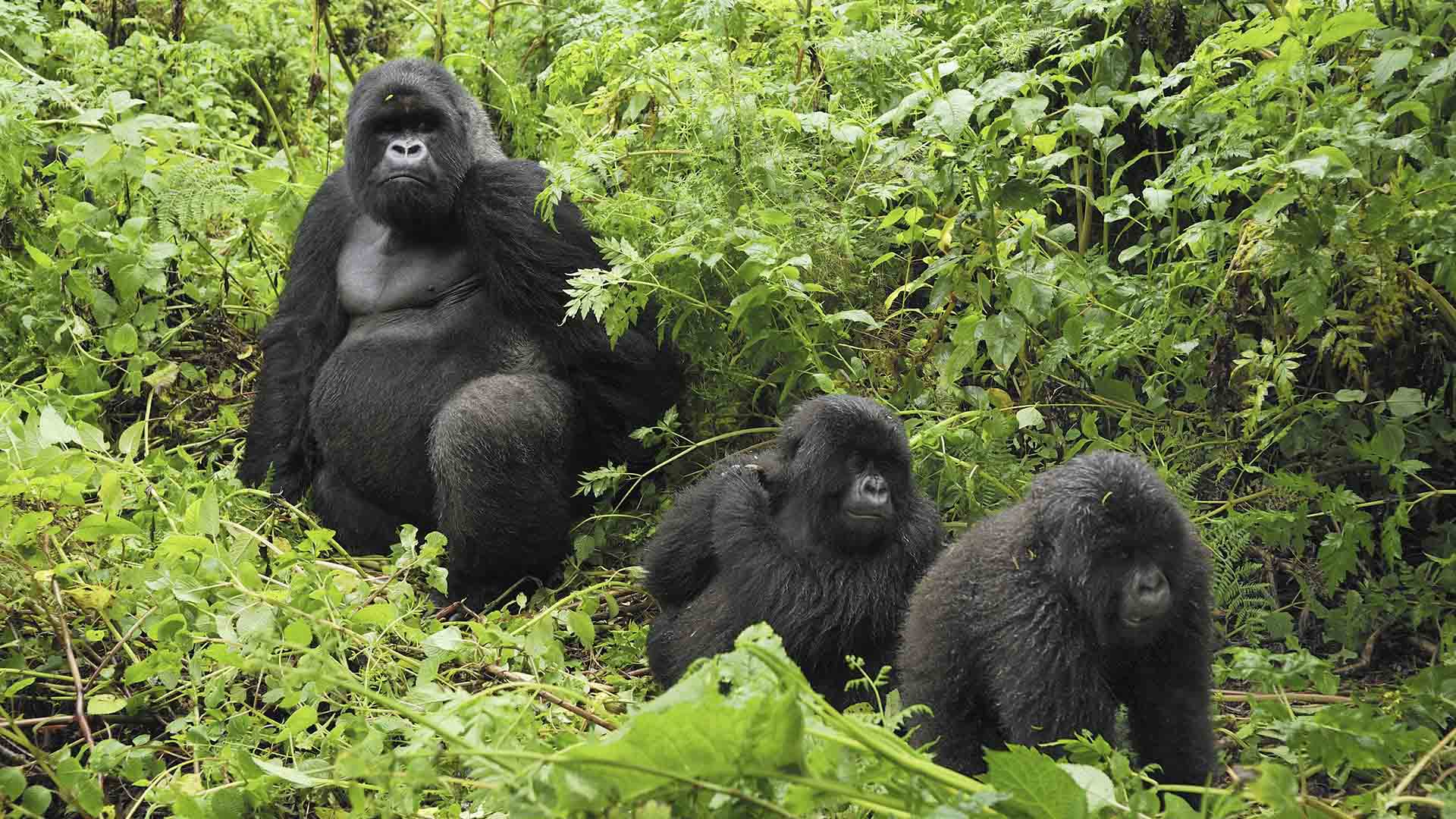
Are Mountain Gorillas Still Endangered?
Yes, they are officially Endangered and remain conservation-dependent. However, their numbers are improving — the only great ape subspecies with a documented increase. Continued protection is essential to prevent any reversal.
Why the Mountain Gorilla Population Is Increasing
Success comes from:
- Decades of community involvement and revenue-sharing from gorilla tourism
- Rigorous daily monitoring and anti-poaching
- International funding and scientific research
Gorilla tourism has been pivotal: fees fund conservation while giving locals economic incentives to protect the animals rather than convert forests to farmland.
Can Tourists See Mountain Gorillas?
Yes — responsibly. Gorilla trekking offers a once-in-a-lifetime experience with strict rules (distance, group size, health checks) to minimize disease risk.
The best location is Bwindi Impenetrable National Park in Uganda, home to multiple habituated families. Permits are limited daily to protect the gorillas.
bwindinationalparkuganda.com
How Can We Help Mountain Gorillas?
- Donate to or adopt a gorilla through WWF or the Dian Fossey Gorilla Fund
- Visit responsibly on ethical gorilla trekking safaris (book through licensed operators)
- Support community projects and avoid products linked to habitat destruction (e.g., unsustainable charcoal)
- Spread awareness and advocate for stronger anti-poaching laws
- Volunteer or fund research via organizations like IGCP
Every action counts toward securing their future.
FAQs about How many mountain gorillas are left
How many mountain gorillas are left in 2025 / 2026?
The latest estimate is 1,063 as of 2026, with potential slight growth from the ongoing Bwindi census.
Are mountain gorillas endangered?
Yes — IUCN Endangered status, though numbers are rising thanks to conservation.
Where do most mountain gorillas live?
In Uganda’s Bwindi Impenetrable National Park and the transboundary Virunga Mountains across Rwanda, Uganda, and DRC.
Why are there so few mountain gorillas?
Habitat loss, poaching, disease, and historical human conflict reduced them from hundreds in the early 1900s to a low of ~250–400 in the 1980s.
Is the mountain gorilla population increasing?
Yes — the only great ape population known to be growing, up from under 400 in the 1980s to 1,063 today.
How many mountain gorillas are left in Uganda?
Approximately 490, primarily in Bwindi.
How many silverback gorillas are left in the world?
Not counted separately, but dozens of silverbacks lead the family groups within the total population of 1,063.
How many mountain gorillas were there in 1900?
No precise census exists (discovery was 1902), but early pressures suggest several hundred before sharp declines from hunting and habitat loss.
For more on gorilla trekking safaris, gorilla conservation, or gorilla habitat protection, explore our related guides.
The mountain gorilla population’s remarkable recovery—from near extinction to over 1,000 individuals—stands as a testament to dedicated conservation. Yet their future remains in our hands.
By choosing ethical gorilla trekking in Uganda‘s Bwindi Impenetrable National Park, you directly fund anti-poaching patrols, community projects, and habitat protection—ensuring these gentle giants thrive for generations.
Join All Uganda Safari Tours for an unforgettable, responsible adventure. Witness a silverback and his family up close in their misty forest home, creating memories that inspire lifelong advocacy. Book today and be part of the solution!
Related Gorilla Safari Packages:
These packages emphasize sustainable tourism, with proceeds supporting local communities and gorilla conservation. Contact Us Now to secure your spot!