
Where Do Chimpanzees Live? Habitat, Countries & Forests Explained
Where Do Chimpanzees Live: Chimpanzees live in tropical forests and savannahs across Central and West Africa. The common chimpanzee (Pan troglodytes) is found exclusively in the wild across a vast but fragmented range stretching from West Africa through Central Africa and into parts of East Africa.
Their chimpanzee habitat is defined by dense tree cover, abundant fruit sources, and suitable nesting sites — never outside Africa in the wild.
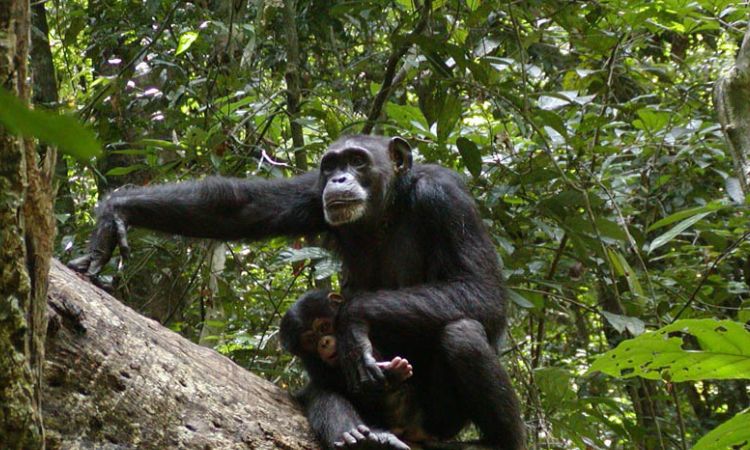
Countries Where Chimpanzees Live
Chimpanzees are found in more than 20 African countries, but the strongest and most accessible populations for conservation and observation occur in these key nations:
- Uganda — Home to large eastern chimpanzee communities in protected forests.
- Tanzania — Famous eastern chimpanzee populations along Lake Tanganyika.
- Democratic Republic of the Congo (DRC) — Vast central chimpanzee numbers in the Congo Basin jungles.
- Rwanda — Small but protected eastern chimpanzee groups in western forests.
- Gabon — Dense central chimpanzee populations in pristine equatorial forests.
- Cameroon — Nigeria-Cameroon and central subspecies in southern rainforests.
- Ivory Coast — Critical western chimpanzee strongholds despite recent declines.
These countries represent the core of the modern chimpanzee range, with the largest wild populations concentrated in the DRC, Gabon, Cameroon, and Uganda.
Smaller or declining groups exist in Guinea, Liberia, Sierra Leone, Ghana, Senegal, and others, but the listed nations host the majority of viable habitats today.
Types of Habitats Chimpanzees Live In
Chimpanzees adapt to several interconnected environments across their African range:
Tropical Rainforests
Dense, multi-layered vegetation with year-round high rainfall (over 2,000 mm annually). These provide constant fruit, leaves, and insects. Canopy cover reaches 80-90%, ideal for nesting and travel. Most central and western chimpanzees thrive here.
Woodland & Savanna
Open woodlands mixed with grassland patches. These drier habitats feature seasonal fruiting trees and allow chimpanzees to range farther. Eastern and some western populations use these mosaic areas where forest meets savanna.
Mountain Forests
Cooler, higher-elevation forests (up to 3,000 m). Montane habitats in Uganda, Rwanda, and Tanzania offer unique vegetation and cooler microclimates while maintaining dense tree cover for shelter.
All habitats share three essentials: tall trees for night nests, reliable water sources (rivers, streams), and diverse plant foods.
Famous Places Where Chimpanzees Live
Several iconic protected areas showcase the best chimpanzee habitats:
- Kibale Forest National Park, Uganda — One of Africa’s premier chimpanzee destinations, with over 1,500 individuals in lush rainforest and woodland. Habitats include high-canopy forests rich in figs and other fruit trees.
- Budongo Forest, Uganda — Ancient mahogany and ironwood forests near Murchison Falls, supporting around 600 chimpanzees in dense woodland-savanna transitions.
- Gombe Stream National Park, Tanzania — Steep, forested valleys along Lake Tanganyika. This historic site features riverine forests and montane slopes where chimpanzees have been studied continuously since the 1960s.
- Mahale Mountains National Park, Tanzania — Rugged mountain forests rising from Lake Tanganyika. Chimpanzees inhabit both lowland and high-elevation habitats with dramatic escarpments and diverse tree species.
These locations offer some of the most intact chimpanzee range remaining in East Africa.
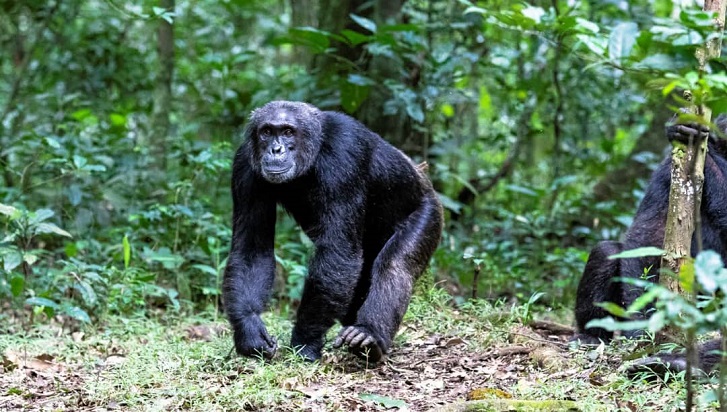
Why Chimpanzees Live in These Areas
These specific habitats meet every survival need:
- Food availability — Year-round access to over 200 plant species, especially ripe fruits, leaves, and insects.
- Forest cover for shelter — Tall trees for building fresh nests every night and protection from predators and rain.
- Climate conditions — Tropical temperatures (20-30°C) with consistent rainfall supporting lush vegetation.
- Water sources — Rivers, streams, and seasonal pools within daily travel range.
The combination creates stable communities across the chimpanzee range.
Chimpanzee Range in Africa
The chimpanzee range spans more than 2.6 million square kilometres but is now highly fragmented:
- West Africa → Forest regions from Senegal to Ivory Coast and Ghana (western subspecies).
- Central Africa → Dense jungles of the Congo Basin and coastal forests (central and Nigeria-Cameroon subspecies) — the largest remaining stronghold.
- East Africa → Smaller, isolated populations in Uganda, Tanzania, Rwanda, and parts of DRC (eastern subspecies).
Natural barriers like the Congo River and Sanaga River separate subspecies, shaping distinct regional habitats.
Do Chimpanzees Live in Zoos or Only in the Wild?
Chimpanzees are native only to the wild habitats of Africa. All wild populations live exclusively in their natural chimpanzee range across the listed countries.
Captive chimpanzees exist in accredited zoos, sanctuaries, and rescue centres worldwide, but these are not part of the natural distribution. True chimpanzee habitat and behaviour can only be observed in Africa’s forests.
Conservation & Habitat Threats
Chimpanzees are endangered primarily due to habitat loss. Deforestation for agriculture, logging, and mining fragments forests, reducing available chimpanzee range. Human encroachment brings disease risk and conflict.
Where do chimpanzees live in Africa today is increasingly limited to protected pockets because of these pressures. Organisations like the World Wildlife Fund (WWF) work to protect core habitats and corridors.
Can Tourists See Chimpanzees in the Wild?
Yes — responsibly. Chimpanzee trekking experiences in Uganda’s Kibale Forest National Park and Budongo Forest offer guided forest walks with habituated communities. Similar primate safaris are available in Tanzania’s Gombe and Mahale parks.
These tours are strictly regulated to protect chimpanzee habitat. At All Uganda Safari Tours, we specialise in ethical chimpanzee trekking safaris and Uganda tours that support conservation while letting visitors experience chimpanzees in their natural environment.
FAQ – Where Do Chimpanzees Live?
Where do chimpanzees live in Africa?
Across tropical forests and savannahs from West Africa (Ivory Coast, Guinea) through Central Africa (DRC, Gabon, Cameroon) to East Africa (Uganda, Tanzania, Rwanda).
What type of habitat do chimpanzees live in?
Primarily tropical rainforests, woodland-savanna mosaics, and mountain forests — all featuring dense trees for nesting and abundant food.
Are chimpanzees only found in Uganda?
No. Uganda hosts excellent populations, but chimpanzees live in over 20 African countries, with major strongholds in the DRC, Gabon, Cameroon, Tanzania, and Ivory Coast.
Do chimpanzees live in forests or savannas?
Both. Most prefer dense forests, but many groups thrive in woodland-savanna habitats where grassland meets forest.
Can tourists see chimpanzees in the wild?
Yes, through guided chimpanzee trekking in protected parks like Kibale (Uganda), Gombe, and Mahale (Tanzania). These experiences are available via specialist operators like Nature Safaris Africa.
What countries do chimpanzees live in?
Key countries include Uganda, Tanzania, Democratic Republic of the Congo, Rwanda, Gabon, Cameroon, and Ivory Coast, plus others in West and Central Africa.