Intriguing Facts about an African Penguin: Habitat, Diet, Behavior & more
African Penguin Facts: Where They Live, What They Eat & Why They’re Endangered
The African penguin is the only penguin species found in Africa, known for its unique coastal habitat and endangered status.
These charismatic seabirds, with their distinctive black-and-white plumage and donkey-like braying calls, capture the hearts of wildlife enthusiasts worldwide.
Unlike the ice-bound penguins of Antarctica, African penguins thrive in the temperate waters and shores of southern Africa, showcasing remarkable adaptations to a warmer environment. They represent a vital part of Africa’s marine biodiversity and serve as a flagship species for coastal conservation.
Found primarily along the southwestern coast of the continent, these penguins highlight the delicate balance between ocean ecosystems and human activities.
Their declining numbers underscore urgent environmental challenges, making them a symbol of both natural wonder and the need for proactive protection.
Whether you’re a birdwatcher, traveler, or conservation advocate, learning about the African penguin habitat, African penguin facts, and their plight offers insights into one of Africa’s most endearing yet vulnerable wildlife treasures.
Where African Penguins Live
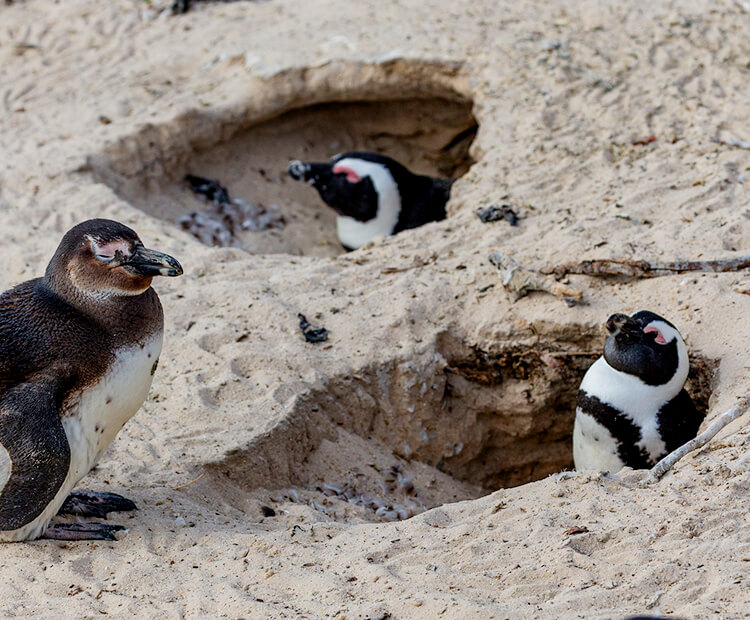
African penguins inhabit the coastal regions of southwestern Africa, specifically in South Africa and Namibia. Their breeding range extends from Hollamsbird Island in Namibia southward to Bird Island in Algoa Bay, South Africa. They remain relatively close to shore, typically foraging within 40 kilometers of the coastline.
The species once thrived in massive colonies numbering in the millions, but today their distribution is fragmented across a handful of islands and mainland sites.
Key strongholds include islands off the Western Cape and Namibian coasts, where cold Benguela Current waters provide nutrient-rich upwellings that support their prey.
Are there any penguins that live in Africa? Yes — the African penguin (Spheniscus demersus) is the sole penguin species native to the African continent.
No other penguin types breed or reside here permanently, distinguishing them from the 17–18 penguin species found elsewhere, mostly in the Southern Hemisphere.
African Penguin Habitat
The African penguin habitat consists of coastal islands, rocky shores, and sandy beaches. They prefer areas with guano deposits for nesting burrows or man-made alternatives like artificial nests in protected reserves.
On land, they seek shaded or sheltered spots to avoid overheating, as their bodies are better suited to cold ocean waters than hot terrestrial environments.
These habitats provide essential protection from predators while offering easy access to the sea. Colonies form on offshore islands to minimize land-based threats, though some mainland sites like Boulders Beach now host habituated populations.
Climate change and coastal development increasingly threaten these sites by altering nesting microclimates and increasing heat stress.
What African Penguins Eat (Diet)
The African penguin diet centers on pelagic fish, particularly sardines (pilchards) and anchovies, supplemented by squid and occasionally small crustaceans.
As pursuit divers, they hunt in the upper water column, using their streamlined bodies and flipper-like wings to chase prey at speeds up to 19 km/h in short bursts (normal cruising around 3–10 km/h).
Breeding adults typically forage within 15–40 km of their colonies, diving to depths of less than 50 meters for 1–2 minutes per dive.
Overfishing has depleted these fish stocks, forcing penguins to travel farther and expend more energy, which impacts breeding success. In lean years, they rely more on less nutritious squid, leading to poorer chick condition.
Behavior & Social Life
African penguins are highly social, living in colonies that can number from dozens to thousands of individuals. They form monogamous pairs, often returning to the same mate and nesting site year after year, unless breeding fails.
Vocal communication plays a key role — their loud, braying calls (resembling a donkey’s) earned them the nickname “jackass penguin.” Why is the African penguin called the jackass penguin? The distinctive braying sound used for territory defense, mate recognition, and chick location mimics the sound of a donkey.
They exhibit complex behaviors on land and at sea, including group foraging and synchronized diving. On shore, they engage in preening to maintain waterproof feathers and thermoregulation through panting or seeking shade.
Breeding & Life Cycle – African Penguin Baby
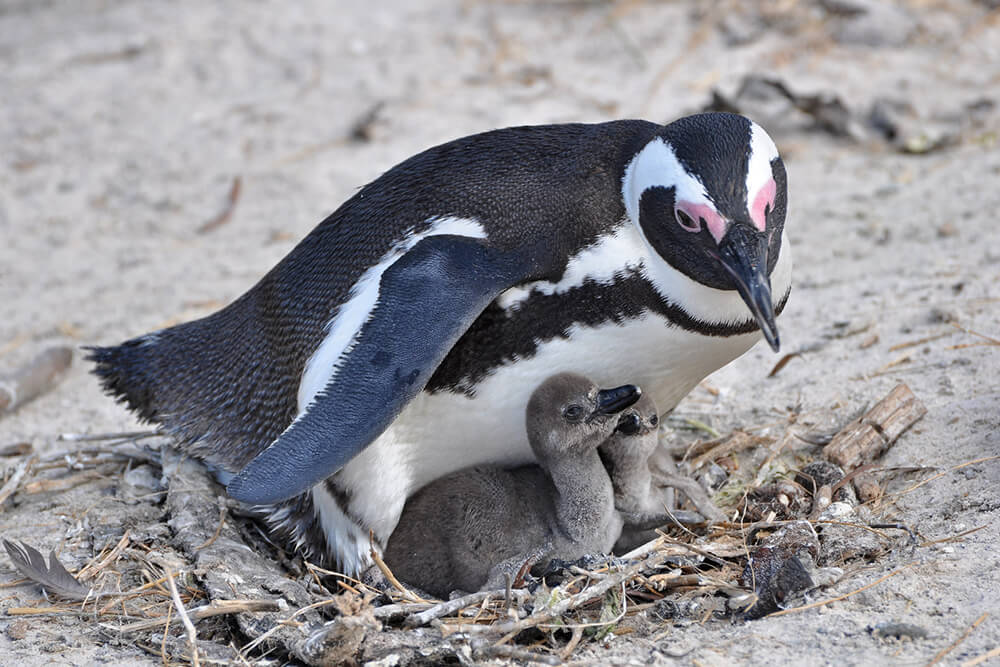
Breeding occurs year-round but peaks seasonally, with pairs laying one to two white eggs in burrows, scrapes, or artificial nests. Incubation lasts 38–42 days, shared equally by both parents.
African penguin babies (chicks) hatch covered in downy gray feathers. Parents take turns brooding and feeding them regurgitated food for 60–130 days until fledging. Chicks then molt into juvenile plumage and head to sea, returning to natal colonies after 1–2 years to mature.
Sexual maturity arrives at 4–6 years. African penguin lifespan in the wild averages 10–27 years, with some reaching over 20; in managed care, median expectancy reaches around 18 years. Molting is an energy-intensive annual event where adults fast on land for weeks.
Conservation Status: Why African Penguins Are Endangered
The African penguin is classified as Critically Endangered on the IUCN Red List, with an extremely rapid population decline.
Fewer than 19,800 mature individuals remain (approximately 9,900–10,000 breeding pairs as of recent 2023–2025 estimates), down from over 140,000 pairs in the 1950s and millions historically. This represents a roughly 97% decline in a century, with ongoing annual drops of about 8%.
How many African penguins are left? Current figures indicate fewer than 20,000 mature birds globally, with breeding pairs below 10,000. Without intervention, functional extinction in the wild could occur by around 2035.
African penguin endangered status stems from multiple threats:
- Overfishing: Commercial fisheries compete directly for sardines and anchovies, causing food shortages and mass starvation events (e.g., tens of thousands starving in recent years).
- Oil spills: Chronic pollution and major incidents (like the 2000 MV Treasure spill) coat feathers, impairing insulation and hunting. Over 70 spills have affected tens of thousands of birds.
- Climate change: Shifting ocean currents and warming waters alter prey distribution, while hotter land temperatures increase heat stress on nests and chicks.
- Additional pressures include habitat loss, predation, disease, and human disturbance.
Conservation efforts include no-take fishing zones around colonies, artificial nest provision, chick-rearing programs by organizations like SANCCOB, and rehabilitation after oil spills. African penguin facts like these emphasize the need for sustainable fisheries and marine protected areas.
Best Places to See African Penguins
Seeing penguins in Africa offers a unique wildlife experience beyond traditional safaris. The top accessible sites are:
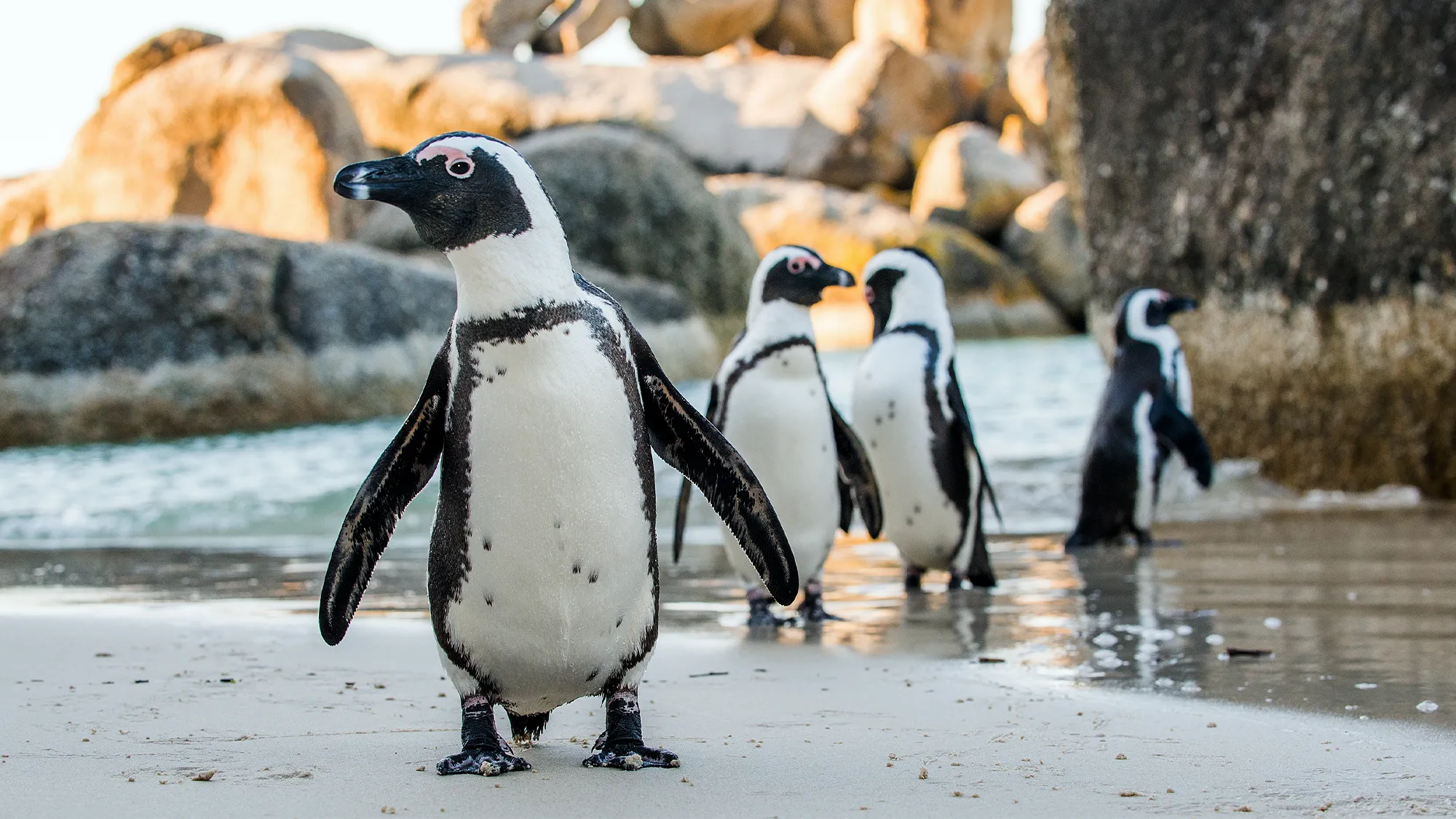
- Boulders Beach (Simon’s Town, near Cape Town, South Africa): A world-famous colony where visitors can walk boardwalks and even swim alongside penguins on the public beach section. The colony grew from a few pairs in the 1980s to thousands, though numbers fluctuate.
- Stony Point Nature Reserve (Betty’s Bay, South Africa): Often less crowded and more natural than Boulders, with excellent viewing platforms over a thriving colony. It’s praised for its rugged setting and proximity to other attractions like whale watching in Hermanus.
These sites attract thousands of eco-tourists annually, supporting local economies while raising awareness. Responsible viewing means staying on paths, not touching birds, and supporting conservation-linked tours.
See African Penguins in the Wild: African penguins can be seen along the coasts of southern Africa, offering a unique wildlife experience beyond traditional safaris.
Combine a penguin visit with East Africa safaris for an unforgettable journey — from Cape Town’s penguins to the Big Five in Kenya, Tanzania, or Uganda’s national parks.
Interesting Facts
- Nicknamed “jackass penguin” due to their braying vocalizations.
- Each bird has unique black spotting patterns on the chest, like human fingerprints, aiding individual identification.
- They can swim fast and dive efficiently but are clumsy on land, waddling or tobogganing on bellies.
- African penguin drawing often highlights their tuxedo-like appearance and expressive faces, making them popular in art and education.
- They tolerate warmer climates better than Antarctic species but still face heat stress on land.
African Penguins vs Other Penguins
African penguins differ significantly from Antarctic penguins (e.g., Emperor or Adélie). While polar species have thick blubber and dense feathers for extreme cold, African penguins feature adaptations for temperate waters and warmer shores, including behavioral thermoregulation like panting and seeking shade.
They belong to the Spheniscus genus (banded penguins), sharing traits with Humboldt and Magellanic penguins, such as pink facial glands for heat dissipation.
Unlike ice-dependent types, they nest in burrows or surface scrapes rather than on snow. These penguin types illustrate evolutionary diversity: African penguins highlight resilience in non-polar habitats but vulnerability to human-induced changes.
FAQs – African penguin
Where do African penguins live?
Along the southwestern coasts and islands of South Africa and Namibia.
Are African penguins endangered?
Yes, they are Critically Endangered, with rapid ongoing declines.
Can you see penguins in Africa?
Absolutely — at sites like Boulders Beach and Stony Point in South Africa.
What do African penguins eat?
Primarily sardines, anchovies, and squid.
How many African penguins are left?
Fewer than 19,800 mature individuals (around 9,900–10,000 breeding pairs).
What is the African penguin lifespan?
10–27 years in the wild.
What does an African penguin baby look like?
Chicks hatch with gray down and fledge after 2–4 months.
Conclusion
The African penguin is a unique and endangered species that highlights the importance of conservation efforts along Africa’s coastlines. From their specialized African penguin habitat and African penguin diet to their social behaviors and breeding cycles, these birds embody the wonders of marine life in a changing world.
Their story — marked by dramatic population drops due to overfishing, oil spills, and climate impacts — calls for global awareness and action.
By supporting sustainable practices, marine protections, and eco-tourism, we can help ensure future generations experience penguins in Africa.
Planning your next adventure? Explore southern Africa’s penguins and then venture into East Africa’s iconic safaris for a complete wildlife odyssey.
AUWT specializes in responsible East Africa tours that connect you with Africa’s best — from coastal penguins to savanna giants. Reach out to craft your personalized journey today.