
1 Day Mabamba Swamp Birding Tour – Top Shoebill Watching Safari in Uganda
The 1 Day Mabamba Swamp Birding Tour – Shoebill Watching Safari in Uganda offers an unforgettable opportunity for bird enthusiasts to witness one of the world’s most iconic and prehistoric-looking birds in its natural habitat.
Introduction:
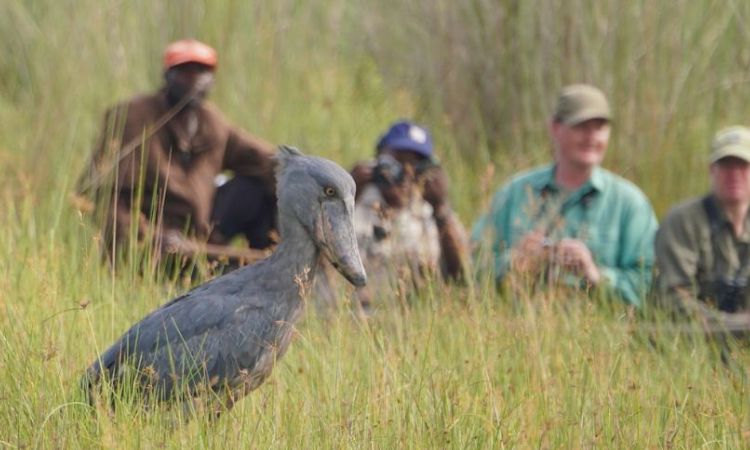
Mabamba Swamp stands out as one of Uganda’s premier birding destinations, renowned worldwide for its reliable sightings of the elusive Shoebill (Balaeniceps rex), often called the most sought-after bird in Africa.
This massive stork-like bird, with its distinctive shoe-shaped bill, prehistoric appearance, and statuesque hunting posture, draws birdwatchers from across the globe. Located along the northwestern shores of Lake Victoria, the swamp’s vast papyrus channels and open marshes create an ideal wetland ecosystem teeming with life.
Birdwatchers flock here not only for the Shoebill but also for the chance to observe a rich diversity of waterbirds, migrants, and endemics in a serene, accessible setting.
As a gateway to Uganda’s birding wonders, Mabamba provides an excellent introduction to the country’s avian treasures, especially for those with limited time.
Brief 1 Day Mabamba Swamp Birding Tour Itinerary
- 5:30–7:00 AM: Hotel pickup in Entebbe/Kampala & drive to Mabamba landing site
- 7:00–12:00 PM: Canoe birding safari – search for Shoebill & waterbirds
- 12:00–2:00 PM: Return to landing site & lunch in Entebbe
- 2:00–5:00 PM: Transfer back to hotel/airport
1 Day Mabamba Swamp Birding Tour – Detailed Itinerary
This full-day adventure focuses on Mabamba Swamp, Uganda’s premier site for Shoebill bird watching, located along Lake Victoria just 1–1.5 hours from Entebbe or Kampala. The tour emphasizes early starts for optimal bird activity, expert guiding, and serene canoe exploration in papyrus channels.
5:30–6:30 AM: Early Morning Pickup and Departure
Your experienced English-speaking driver-guide collects you from your hotel in Entebbe (or Kampala) after an optional light breakfast or tea/coffee. ‘
The scenic drive heads west/northwest via rural roads (e.g., through Nakawuka or Kasanje), passing Lake Victoria views and small villages.
Expect 1–1.5 hours travel time, arriving at Mabamba landing site around 7:00–8:00 AM. En route, spot roadside birds like weavers, barbets, or raptors to build excitement.
7:00–8:00 AM: Arrival and Preparation
At the Mabamba Bay community landing, meet your local bird guide (a skilled spotter from the wetland community). Pay any entrance/community fees (typically included). Board a traditional motorized wooden canoe (stable and quiet for close approaches).
Guides provide safety briefings and share wetland ecology insights. Calm morning waters enhance visibility.
8:00 AM–12:00 PM: Canoe Birding Safari in the Swamp (Core Activity)
Glide through narrow papyrus channels and open marshes for 3–4 hours. The primary target is the prehistoric Shoebill (Balaeniceps rex)—statuesque, often standing motionless while hunting lungfish. Sightings are highly reliable (90%+ success rate). Scan for other highlights:
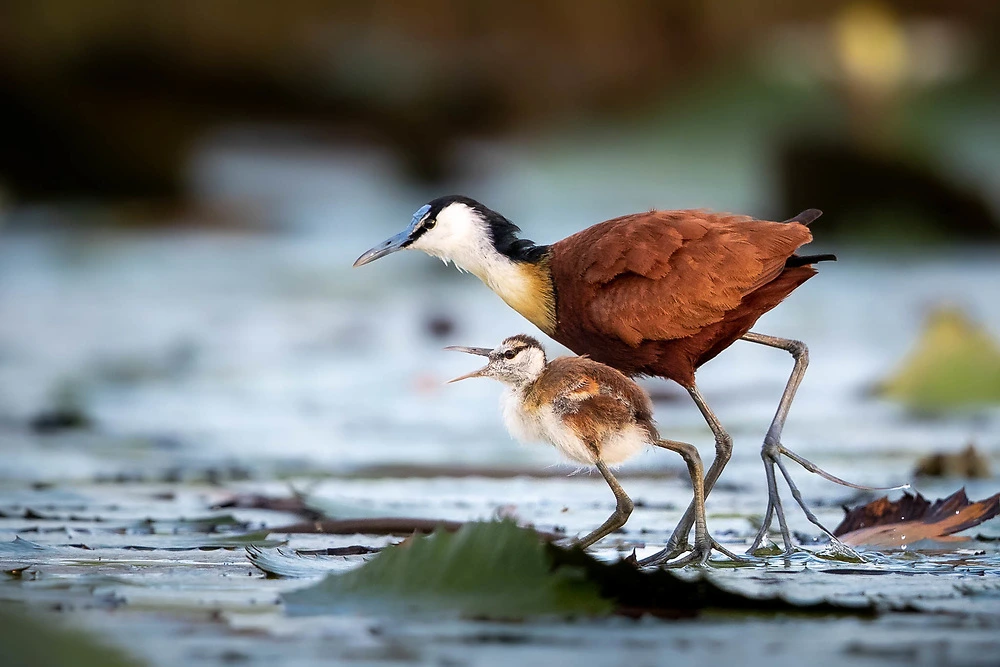
- African Jacana tiptoeing on lilies
- Vibrant Malachite Kingfisher
- Purple Swamphen and Goliath Heron
- African Fish Eagle soaring overhead
- Papyrus specialists like Papyrus Gonolek or Blue Swallow (seasonal)
Photography is superb with close, unobtrusive approaches. Observe butterflies, wetland plants, and possibly shy Sitatunga antelope. The peaceful paddle immerses you in this Ramsar-protected Important Bird Area.
12:00–1:30 PM: Return to Landing Site and Lunch
Return to the landing site. Drive back toward Entebbe (or nearby) for a relaxed lunch—often at a local restaurant, picnic spot, or hotel (packed lunch option available). Enjoy fresh Ugandan dishes like matooke, fish, or Rolex while reviewing morning sightings.
1:30–4:00/5:00 PM: Afternoon Transfer and Optional Add-Ons
Relax on the return drive. Some tours include a brief stop at Entebbe Botanical Gardens for extra species (e.g., sunbirds, weavers) if time allows, or direct transfer to your hotel/Entebbe airport. Arrive by late afternoon, concluding around 4:00–5:00 PM.
This itinerary maximizes Shoebill chances during peak activity hours while offering flexibility. Total duration: 8–10 hours. Bring binoculars, camera, sunscreen, insect repellent, hat, light jacket, water, and snacks for an enriching Shoebill safari Uganda experience!
Total tour: 8-10 hours, flexible based on travel starting point.
End of the 1 Day Mabamba Swamp Birding Tour
Tour inclusions and exclusions for a 1 Day Mabamba Swamp Birding Tour
Inclusions:
- Pickup & drop-off from Entebbe/Kampala hotel
- Transport in 4×4 vehicle
- English-speaking bird guide/driver
- Canoe/boat ride in the swamp
- Entrance/community fees
- Bottled drinking water
- Lunch
Exclusions:
- Tips & gratuities
- Personal drinks/snacks
- Travel insurance
- Visa & airfares
- Personal expenses
Where Mabamba Swamp Is Located
Mabamba Swamp (also known as Mabamba Bay Wetland) lies on the northern edge of Lake Victoria, approximately 40-50 km west of Entebbe town and about 57 km from Kampala, Uganda’s capital.
The drive from Entebbe International Airport or Entebbe hotels typically takes 1-1.5 hours on a mix of tarmac and dirt roads, passing through rural landscapes and small communities like Kisubi, Nakawuka, and Kasanje before reaching the Mabamba landing site.
From Kampala, the journey is around 1.5-2 hours via the Masaka road or alternative routes. Access to the core birding areas involves a short boat transfer from the landing site into the swamp’s intricate papyrus channels, navigated by traditional motorized or paddle canoes.
This proximity to Entebbe makes it perfect for day trips, especially for travelers arriving or departing via the international airport.
Why Mabamba Is Famous for Birding
Mabamba Swamp is designated as an Important Bird Area (IBA) and a Ramsar Wetland of International Importance since 2006, highlighting its global conservation value.
The large wetland ecosystem, covering over 2,400 hectares of papyrus reeds, open water, and marshes, provides exceptional habitat for waterbirds and specialized species.
Its fame primarily stems from hosting one of the highest concentrations of Shoebills anywhere, with reliable sightings (often multiple individuals in a day) making it arguably the best place in the world for this vulnerable species.
Beyond the Shoebill, the swamp supports threatened birds like the Papyrus Gonolek, Blue Swallow, White-winged Warbler, and Pallid Harrier, alongside abundant resident and migrant waterfowl.
This combination of rarity, accessibility, and biodiversity cements Mabamba’s status as a must-visit for serious birders.
Birds You May See in Mabamba Swamp
The swamp and surrounding Lake Victoria wetlands host over 300 bird species, offering incredible variety. The star attraction is the Shoebill, but expect sightings of:
- African Jacana (lily-trotter walking on floating vegetation)
- Malachite Kingfisher (vibrant blue and orange, perching on reeds)
- Purple Swamphen (bold purple plumage in marshy areas)
- African Fish Eagle (iconic calls echoing over the water)
- Yellow-billed Duck and other waterfowl
Additional highlights include Goliath Heron, Pink-backed Pelican, Long-toed Lapwing, Papyrus Gonolek, Blue Swallow (migrant), White-winged Warbler, African Marsh Harrier, Pied Kingfisher, Squacco Heron, Black-headed Gonolek, Winding Cisticola, and various weavers and bee-eaters.
The diversity spans raptors, waders, kingfishers, and papyrus specialists, making every canoe ride rewarding.
For a comprehensive list, here are some of the top 20 birds commonly spotted in Mabamba Swamp:
- Shoebill
- African Jacana
- Malachite Kingfisher
- African Fish Eagle
- Purple Swamphen
- Papyrus Gonolek
- Blue Swallow
- White-winged Warbler
- Goliath Heron
- Pink-backed Pelican
- Long-toed Lapwing
- Pied Kingfisher
- Squacco Heron
- Yellow-billed Duck
- African Marsh Harrier
- Black Crake
- Winding Cisticola
- Hadada Ibis
- Cattle Egret
- Common Moorhen
This list draws from recorded sightings and appeals to birders searching for species checklists.
Activities During the Birding Tour
The core activity is a canoe birding safari, gliding silently through narrow papyrus channels in traditional wooden canoes (often motorized for efficiency).
Local expert guides, skilled in spotting cryptic birds, lead the search for the Shoebill and other species.
Photography is exceptional here, with close-up opportunities for the Shoebill in its natural pose. Beyond birds, observe wetland plants like papyrus and water lilies, butterflies, fish (including lungfish preyed on by Shoebills), and occasionally the shy Sitatunga antelope. The experience combines peaceful paddling, guided interpretation, and immersive nature observation.
Best Time for Birding in Mabamba
Birding is possible year-round, but the best months are December–February and June–September (dry seasons), when water levels are lower, access easier, and Shoebills more visible outside nesting periods.
Avoid heavy rains (March-May, October-November) for better conditions. The best time of day is early morning (sunrise to midday), when waters are calm, birds are active hunting, and Shoebill sighting chances approach 99%. Evening sessions work too, but mornings excel.
What to Pack for Birdwatching
- Binoculars (essential for spotting distant birds)
- Camera with zoom/telephoto lens (for Shoebill photography)
- Hat and sunglasses (sun protection)
- Sunscreen and insect repellent (mosquitoes in wetlands)
- Light rain jacket/poncho (afternoon showers possible)
- Comfortable closed shoes (for landing site)
- Water bottle, snacks, and packed lunch
- Notebook for species lists
These essentials ensure comfort and maximize enjoyment.
Conservation Importance of Mabamba
Protected under the Uganda Wildlife Authority and Ramsar Convention, Mabamba safeguards threatened species like the Shoebill (Vulnerable) and supports biodiversity.
Ecotourism generates revenue for local fishing communities, providing alternative livelihoods and reducing pressure on resources.
Community involvement in guiding and boat operations promotes sustainable practices, ensuring the wetland’s preservation for future generations.
Why Choose a Mabamba Birding Tour
This 1 day Mabamba Swamp tour delivers high success for Shoebill sightings, convenience near Entebbe airport, and an ideal short trip for transit travelers or those adding birding to Uganda itineraries.
It offers an authentic, low-impact experience with expert local guides, stunning wetland scenery, and a strong chance to photograph one of nature’s rarities.
FAQS – 1 Day Mabamba Swamp Birding Tour
Where can you see Shoebills in Uganda?
Primarily Mabamba Swamp (most reliable and accessible) and Murchison Falls National Park.
How much is the Mabamba Swamp birding tour?
$70–$200+ per person, depending on group size and inclusions (boat/guide/entrance ~$35–$80).
How long does the tour take?
Full day (8-10 hours), with 2-4 hours on the water.
What birds live in Mabamba Swamp?
Over 300 species, including Shoebill, African Jacana, Malachite Kingfisher, and papyrus specialists.
Can you see Shoebills near Entebbe?
Yes – Mabamba is just 1 hour from Entebbe, making it perfect for day trips.
This Mabamba Swamp birding tour promises an enriching Shoebill bird watching Uganda adventure –Contact us today to book yours for an experience of a lifetime!